
In a strategic move to diversify its pandemic response, Singapore’s Economic Development Board (EDB) announced on 12 March 2020 a funding commitment of up to USD 10 million for Arcturus Therapeutics. The San Diego-based biotech firm is developing a single-shot RNA vaccine to combat the novel coronavirus, a project the EDB is supporting just eight weeks after the viral sequence was first disclosed by China. The funding is structured in three tranches based on specific milestones.
An initial USD 3 million was transferred on 9 March to fund small-scale fill-finish at a Singapore plant operated by Thermo Fisher, animal toxicology, and GMP-grade reagents. A subsequent USD 4 million will be released upon the filing of an investigational new drug application with the Health Sciences Authority of Singapore.
The final USD 3 million is contingent on first-in-human data demonstrating neutralizing antibody titers comparable to convalescent plasma. Arcturus CEO Joseph Payne told investors on 11 March that their “STARR” technology is the reason for Singapore’s selection, claiming a 30-fold improvement in dosing and a single-shot solution that eliminates the need for boosters by keeping the body’s innate sensors active. This self-replicating RNA construct produces 30 times more viral antigen per microgram than standard messenger RNA in animal models, which could lead to lower costs, faster production, and smaller vials—factors critical for immunizing Singapore’s six million residents and guest workers.
The city-state will own any resulting product and retains the right to purchase 10 million doses at cost for domestic use before exports begin. To move the candidate from bench to bedside, Arcturus is collaborating with the National University of Singapore and Duke-NUS Medical School, with the latter conducting Phase I trials at its SingHealth investigational medicine unit.
While Singapore secures its domestic supply, Arcturus will continue to seek FDA clearance and manufacture at its California site for the U.S. market. Commerce Secretary Wilbur Ross stated on 13 March that foreign capital is welcome if it accelerates U.S. innovation, provided American patients receive priority for domestic production. This aligns with the Trump administration’s efforts to remove regulatory hurdles, including rolling FDA reviews and parallel Phase II and III trials. However, the path to deployment faces hurdles.
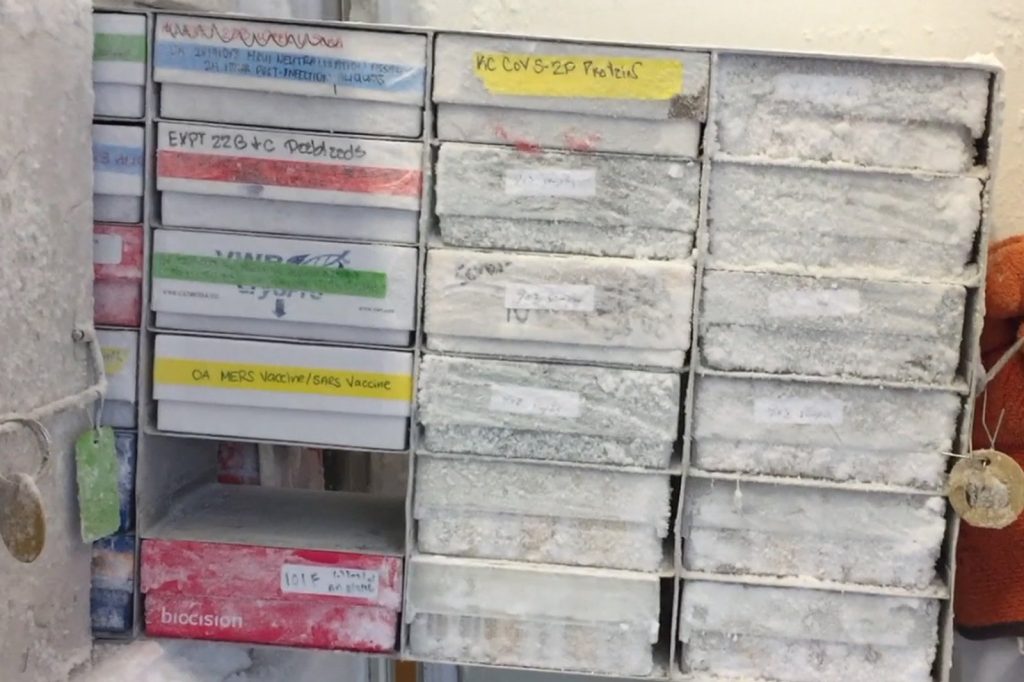
RNA vaccines have not yet been licensed for human use, and the Arcturus vaccine requires storage at -80 °C, which may challenge clinics with limited freezer capacity. While engineers are testing 4 °C lyophilized formulations, stability data is not expected until late summer.
Furthermore, competition is intense; China’s Sinovac and CanSino have entered combined Phase I/II studies, while Oxford and the University of Queensland plan April trials. Dr. Sidney Yee of the Agency for Science, Technology and Research defended Singapore’s “hedge-betting” strategy on 13 March, noting the government is backing several platforms to ensure the nation is not left behind. Global equity remains a concern.
While Arcturus keeps commercial rights for Japan, Europe, and North America, the EDB license mandates “reasonable pricing” in markets with a per-capita GDP below USD 12,000. This comes as Médecins Sans Frontières urged the company on 13 March to commit to at-cost supply for low-income nations.
Meanwhile, the U.S. government has already allocated USD 8.3 billion via a 6 March emergency package for the Strategic National Stockpile, with the potential to use the Defense Production Act to secure priority manufacturing lines if Phase II is successful.




