Bristol Myers Squibb says its CAR T-cell therapy arlocabtagene autoleucel, or arlo-cel, has succeeded in the registrational phase 2 QUINTESSENTIAL trial. The company reports a statistically significant and clinically meaningful improvement in overall response rate after a single infusion. The patients had relapsed or refractory multiple myeloma and had already received at least four lines of therapy, including a BCMA-targeted drug. The company has not yet released the numbers, which are expected at a future cancer congress.
Why a new target matters
Patients in the trial are called quadruple-class exposed, meaning they have already had an immunomodulatory drug, a proteasome inhibitor, an anti-CD38 therapy and a BCMA-targeted therapy. BMS describes QUINTESSENTIAL as thought to be the first major study of a GPRC5D-targeting treatment in people who have used all four classes. Lynelle Hoch, the company’s head of cell therapy, said combination regimens in earlier lines mean more patients become resistant sooner, “creating a critical need for new therapeutic approaches.”
BCMA is the problem. Re-treating with a different BCMA drug can work, particularly with several months between attempts, but in some cases the cancer cells stop producing BCMA altogether. Arlo-cel aims at GPRC5D instead. Johnson & Johnson’s bispecific antibody Talvey (talquetamab) won accelerated FDA approval in 2023 against the same target, as a fourth-line or later treatment, and showed an overall response rate above 70% in its MonumenTAL-1 study.
The two differ in practice. Talvey is an off-the-shelf injection given weekly or every other week. Arlo-cel is built from the patient’s own T-cells, which are collected, engineered and reinfused in one infusion after bridging therapy and lymphodepleting chemotherapy. The QUINTESSENTIAL trial (NCT06297226) also met its key secondary goal of complete response rate in quadruple-class exposed patients after four or more prior lines, and both measures after three or more.
What phase 1 showed
The earlier phase 1 trial gives the best picture so far. It was presented at the 2024 American Society of Hematology meeting and later published in Blood Advances. It treated 84 adults, 79 of whom could be evaluated for response. At a median follow-up of 16.1 months, 87% responded. That included a 53% complete response rate, 23% very good partial responses and 11% partial responses. At the recommended phase 2 dose of 150 million cells, 91% responded, with 48% complete responses.
The encouraging part is how long the benefit lasted. Median progression-free survival was 18.3 months and median duration of response was 18.0 months. Overall survival was 90% at 12 months, 87% at 18 months and 84% at 21 months. Responses held up in people with high-risk cytogenetics (84%), extramedullary disease (86%) and refractoriness to earlier BCMA therapy (81%). Lead author Susan Bal, MD, of the University of Alabama at Birmingham, said outcomes were not affected by exposure to prior therapies.
Safety
Every patient had a treatment-emergent adverse event, and 86% had one of grade 3 or 4, mostly blood-related. Neutropenia was the most common, at 70% grade 3 or 4. Cytokine release syndrome occurred in 82% of patients, but only 4% had grade 3 or 4. One patient at the highest dose level died of grade 5 cytokine release syndrome. Immune effector cell-associated neurotoxicity occurred in 10%, with 2% at grade 3 or 4.
Because GPRC5D is also found in keratinized tissue, patients had skin, nail and oral side effects, all grade 1 or 2. Skin events occurred in 30%, nail events in 19% and oral events in 32%. In 79% they cleared without treatment. Bal reported no cases of Parkinsonism, Guillain-Barré syndrome or cranial nerve palsy. BMS says the phase 2 safety profile matched its expectations.
What comes next
The FDA has granted arlo-cel Regenerative Medicine Advanced Therapy designation, which allows expedited development. A phase 3 study, QUINTESSENTIAL-2 (NCT06615479), has been opened but is not yet recruiting. It will compare arlo-cel with standard regimens in patients whose disease is refractory to lenalidomide and who have had one to three prior lines.
Arlo-cel is not approved. Early findings suggest real promise for people who have run out of options after BCMA therapy, but results vary from person to person. Patients should talk to their hematologist-oncologist about whether a clinical trial is open to them.
Sources
- Arlo-cel Elicits 87% ORR in Heavily Pretreated, Relapsed/Refractory Multiple Myeloma | OncLive
- BMS eyes role for new CAR-T in post-BCMA multiple myeloma
- Arlo-Cel Generates Excitement, Moves Quickly to Phase 3 Studies for Multiple Myeloma | CGTlive®
- Phase I Evaluation of Arlocabtagene Autoleucel in RRMM
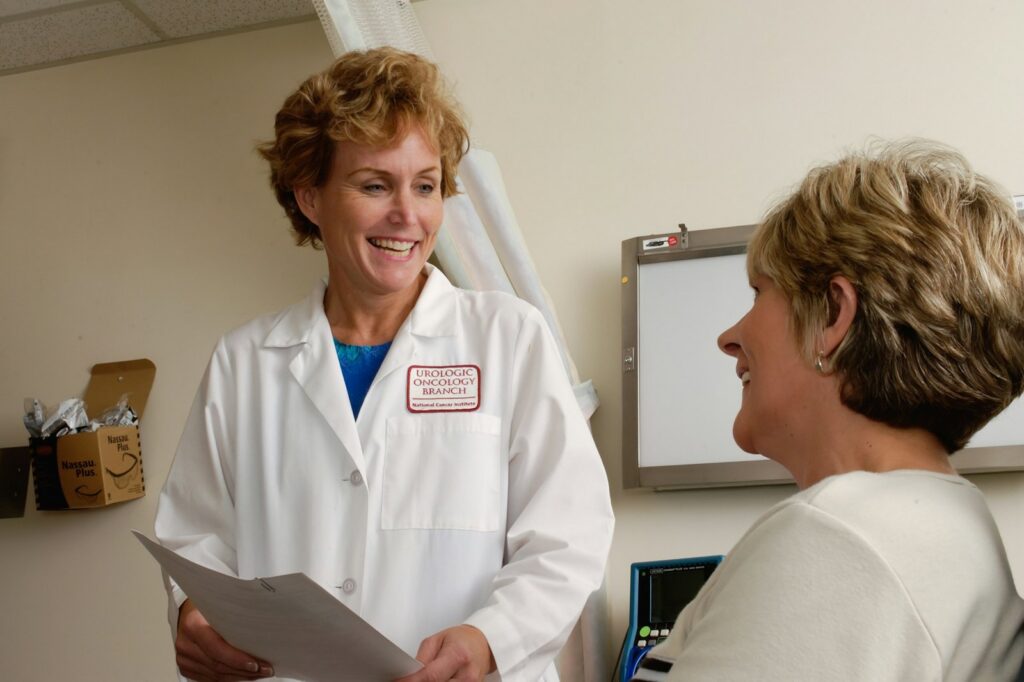
Photo: National Cancer Institute / Unsplash (Unsplash License)