An Instagram reel in October 2026 told viewers that a Boston trial had begun reversing the ageing of human cells. The trial is real. What it has shown so far is far narrower.
What the first data show
On October 8, Life Biosciences released interim results from its phase 1 trial of ER-100, a therapy tied to Harvard Medical School geneticist David Sinclair, who co-founded the company. The data cover three people with open-angle glaucoma.
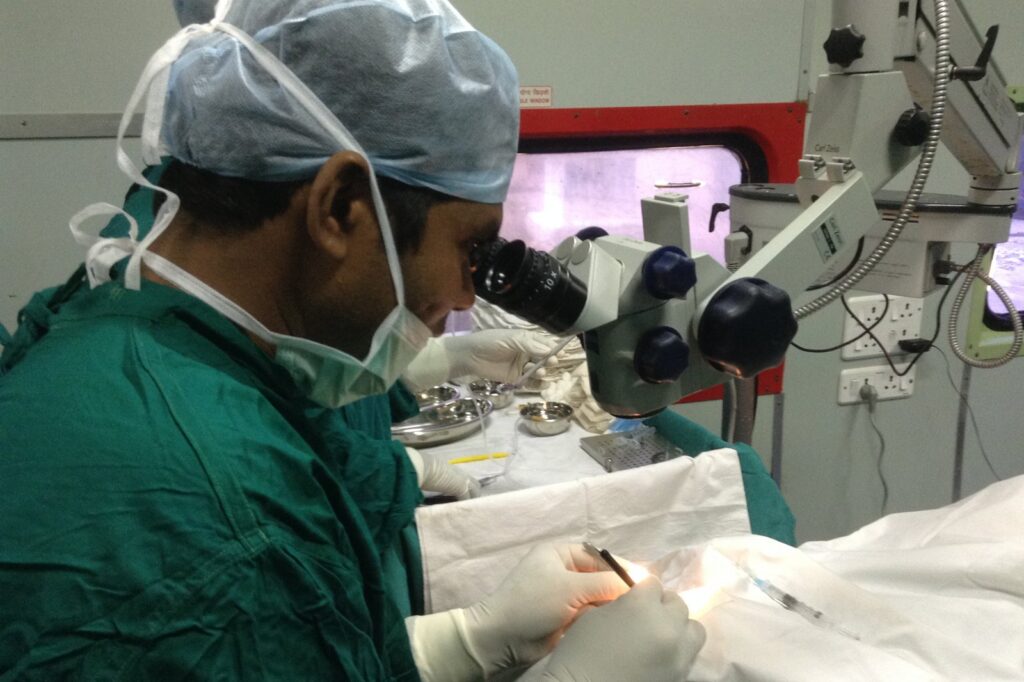
Each got a single injection into the eye, then took the antibiotic doxycycline every day. By Day 56, the company said, all three had tolerated the treatment well. There were no dose-limiting toxicities, no serious adverse events and none of special interest. Every reported adverse event traced to the procedure, the steroid or a pre-existing condition.
Two of the three also improved on Humphrey visual field tests, a standard exam that measures how well a patient detects light across the field of vision. In each, at least 28% of the tested points gained more than 4 decibels. The company was careful here: efficacy, it said, cannot be established from such early findings. An independent Data Safety Monitoring Board recommended moving to a higher dose, Dose Level 2.
“While this Phase 1 study is designed to evaluate safety and tolerability, the preliminary observations of visual field improvements in two participants are encouraging,” said Chief Scientific Officer Sharon Rosenzweig-Lipson.
How the therapy is meant to work
ER-100 delivers three genes, OCT4, SOX2 and KLF4, together known as OSK. They are three of the four Yamanaka factors. Doxycycline switches them on, and the trial gives it for eight weeks. A tapering course of the steroid prednisolone is given to limit inflammation from the viral vector.
The idea is partial epigenetic reprogramming. Retinal ganglion cells, the neurons that link the eye to the brain, do not regenerate, and their loss in glaucoma is permanent. Sinclair’s lab reported in Nature in 2020 that switching on the same three factors in mice with damaged optic nerves promoted regeneration and reversed vision loss. The company later reported confirming results in non-human primates, and the FDA cleared human testing on January 28, 2026.
The trial also includes patients with non-arteritic anterior ischemic optic neuropathy, or NAION, a sudden loss of blood flow to the optic nerve for which no treatment is approved. No data from that group have been released.
What the reel gets wrong
Three patients, one injection each and eight weeks of follow-up cannot show that human ageing can be reversed. The study is an open-label safety trial, and the visual field gains are a preliminary signal in two people. Nothing in the results touches the rest of the body.
Current glaucoma treatments focus on reducing eye pressure and do not directly repair damaged nerve cells, and in many patients the disease progresses anyway. That is why even a modest early signal draws attention. Patients should keep following their prescribed treatment and ask their eye doctor whether a trial suits them. The next step is the higher dose, Dose Level 2, at 6×10^11 vector genomes, up from 2×10^11.
Sources
- Life Biosciences Announces First-in-Human Data from Ongoing Phase 1 Trial Evaluating ER-100 in Optic Neuropathies
- Life Biosciences Announces First-in-Human Data from Ongoing Phase 1 Trial Evaluating ER-100 in Optic Neuropathies – Eyewire+
- Life Bio reaches first clinical milestone for OSK therapy
- ER-100 Enters Optic Neuropathy Trial
- Ageing: cell-rejuvenating therapy administered for the first time
- Timeline of aging research
Photo: Trilochan Netralaya (CC BY-SA 4.0)