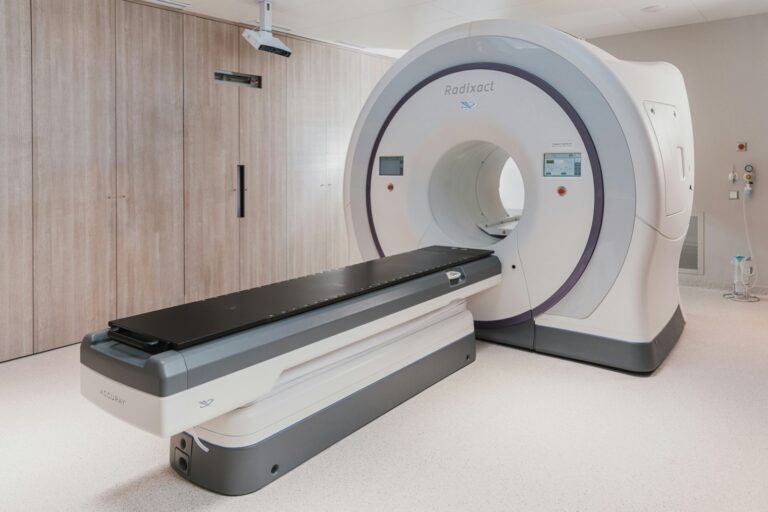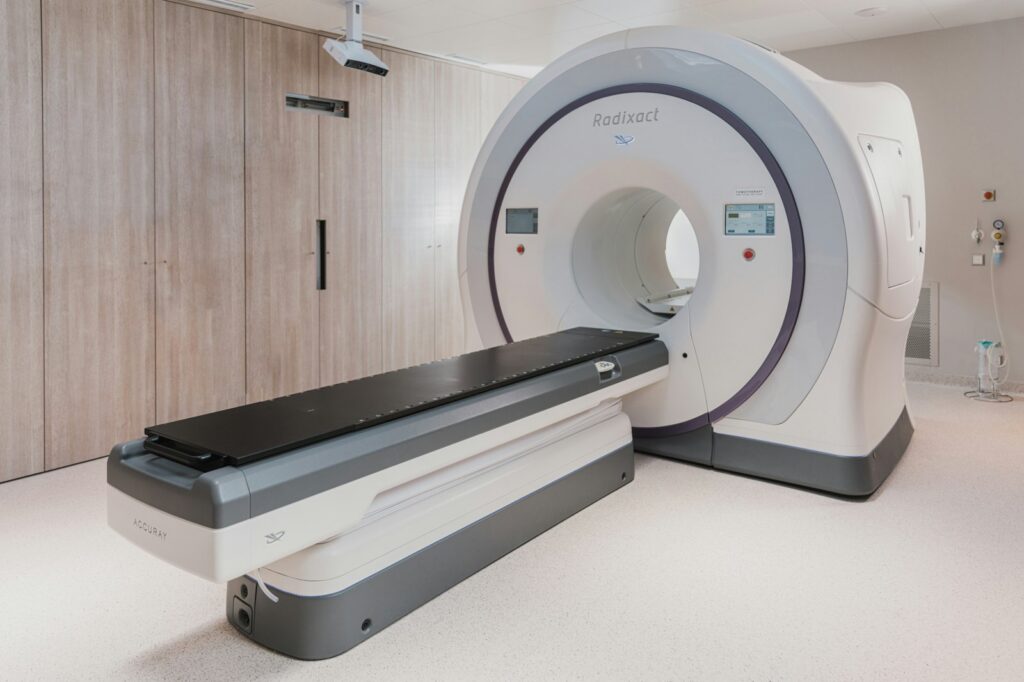
HOUSTON, November 15, 2026 — Israeli company P-Cure and The University of Texas MD Anderson Cancer Center have announced a strategic collaboration to develop a next-generation particle-based cancer treatment system, aiming to make advanced proton and helium-ion therapy more accessible.
A New Frontier in Cancer Treatment
The partnership between P-Cure and MD Anderson is built on a shared vision: to provide cancer patients with more precise and effective radiation treatment options. The collaboration seeks to combine two of the most advanced forms of particle therapy—proton and helium-ion therapy—into a single, compact platform. The goal is to give physicians the flexibility to choose the best type of particle for each patient’s specific tumor, based on its location, characteristics, and treatment goals.
Proton therapy is already considered a leading form of radiation treatment because it allows for highly precise targeting of tumors, minimizing damage to surrounding healthy tissue. Helium-ion therapy, however, is even rarer. It is currently available to patients at only one center worldwide, the Heidelberg Ion-Beam Therapy Center (HIT) in Germany. If the joint development by P-Cure and MD Anderson is successful, it would mark the first helium-particle therapy platform in North America, opening a new avenue for treatment for patients across the continent.
How the Technology Works
The heart of this collaboration is P-Cure’s innovative technology. The Israeli company has already developed a compact proton therapy system that has received clearance from the U.S. Food and Drug Administration (FDA). This system is distinguished by its upright, vertical design, which significantly reduces the space, cost, and infrastructure required compared to traditional particle therapy systems. Existing systems often require massive facilities and substantial financial investment, limiting their availability. P-Cure’s more compact approach aims to lower these barriers.
The initial phase of the partnership will focus on evaluating P-Cure’s existing upright proton therapy system. MD Anderson’s team of experts will assess its clinical value, potential patient benefits, and operational advantages. Following this evaluation, the partners will move on to preclinical and clinical studies to investigate the integration of helium-ion therapy. This research will aim to establish the therapeutic potential of helium ions and generate the evidence needed to support future clinical adoption, regulatory approvals, and insurance reimbursement.
The Human Side of a Major Investment
For patients and their families, the implications of this technology are profound. Particle therapy, with its ability to spare healthy tissue, can lead to fewer side effects and a better quality of life during and after treatment. The ability to potentially use helium ions, which may offer even greater precision and biological effectiveness than protons, could mean better outcomes for certain cancers. The compact nature of the proposed system also suggests a future where these advanced treatments might be available in more locations, reducing the need for patients to travel long distances for care.
This ambitious project is taking place within a larger context of growth at MD Anderson. The cancer center is planning a $3.4 billion expansion of its Texas Medical Center campus, which includes two new facilities: Inspiration Tower and Prism. The Prism building, a 292,000-square-foot hub for radiation oncology and diagnostic imaging, is designed to house 12 MRI machines, four CT scanners, 18 radiation vaults, and seven radiation simulators. Expected to open in 2030, Prism is a clear signal of MD Anderson’s commitment to expanding its capabilities in advanced cancer treatment.
What This Means for Future Cancer Care
The collaboration between P-Cure and MD Anderson represents a significant step forward in the field of oncology. It combines the world-renowned clinical expertise and research prowess of one of the largest cancer centers in the world with the cutting-edge technology of an innovative Israeli firm. The long-term vision is to create a treatment platform that is not only more effective but also more accessible, potentially bringing the benefits of advanced particle therapy to more patients.
The research will examine whether helium ions can deliver improved dose conformity, less lateral radiation scattering, and greater biological effectiveness, translating into better treatment outcomes. As the partners work to develop and validate this next-generation system, the focus remains on the human impact—what this means for patients facing a cancer diagnosis and for the families who support them. The journey from a scientific breakthrough to a standard treatment option is a long one, but this partnership marks a critical milestone along that path. The next scheduled phase of clinical evaluation is expected to begin in the coming years.
Sources
- Israeli P-Cure partners with MD Anderson to develop next-generation cancer treatment system | CTech
- MD Anderson Cancer Center
- Cell changes around early breast cancers provide clues into why some cases become invasive
- UT MD Anderson Shares Latest Research Breakthroughs | Newswise
- The University Of Texas MD Anderson Cancer Center Plans $3.4B Expansion Of Texas Medical Center Campus In Houston – HCD Magazine
- Princess Ghida Talal Honored Professor Nizar Tannir with the Award for Excellence in Cancer Research – KHCC – OncoDaily
Photo: Accuray / Unsplash (Unsplash License)