One participant’s obsessive-compulsive symptom score fell 78 per cent by the end of a five-day treatment week and reached zero six weeks later. The result came from a Singapore study of just four people with severe, treatment-resistant OCD, two of whom withdrew before treatment was completed.
The remaining two received personalised transcranial magnetic stimulation, or pTMS. Both improved substantially, but their different courses show why the early findings need testing in larger studies.
The second participant recorded a 35 per cent symptom reduction after four weeks. Symptoms returned about 12 weeks later, prompting an additional two-day booster treatment and another substantial improvement.
A target drawn from each brain scan
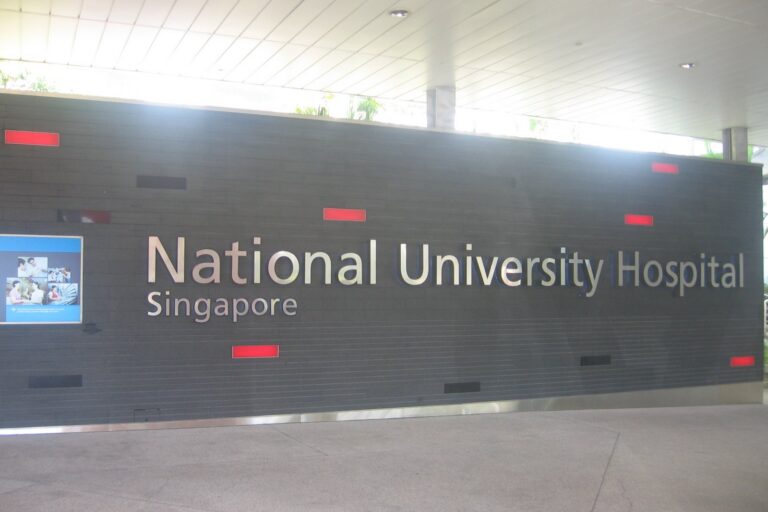
National University Hospital and NUS Medicine used functional magnetic resonance imaging to map each participant’s brain circuitry. An algorithm developed by Associate Professor Thomas Yeo and Dr Ru Kong analysed the scans.
The researchers began with circuits where deep brain stimulation had previously relieved OCD symptoms. They then refined the general treatment region against each participant’s default mode network.
A neuro-navigation robotic arm delivered intermittent theta-burst stimulation to that individual target. Each session lasted about nine minutes, compared with the conventional 37.5 minutes.
Unlike deep brain stimulation, pTMS does not require surgery. Enrollment ran from January through July 2026 and involved four people; the two completers received 40 short sessions over five days.
Adjunct Associate Professor Tor Phern Chern explained the appeal of reaching those circuits without an operation.
“For people with severe OCD who have tried medication and therapy without success, there have been very few genuinely new treatment options in decades,” he said. “Being able to reach the circuits that deep brain stimulation targets, without surgery and in a single week of treatment, is what makes these early results so encouraging.”
Why treatment-resistant OCD needs more options
The only medicines approved for OCD belong to one drug class, serotonin reuptake inhibitors. They fail to produce adequate responses in 40 to 60 per cent of patients.
For people who do not improve with medication and psychotherapy, deep brain stimulation is the most intensive remaining option. US regulators cleared a non-personalised OCD TMS protocol in 2018. About 40 per cent of these patients benefit, but stimulation goes to the same brain region in everyone.
One clinical study of standard TMS reported a 21 per cent response rate. A separate personalised-TMS study found that 70 per cent responded within the month after treatment, with 31 per cent maintaining their response after 12 weeks.
Those figures come from different studies, not a head-to-head comparison. The Singapore team’s own OCD results rest on two completed treatments.
Repeated scans track changes
Participants undergo frequent fMRI scans throughout the research. That monitoring lets investigators examine how circuits change during treatment and whether those changes track symptom improvement.
The approach is now being extended to people with depression who also experience anxiety. That study aims to recruit 30 participants, beginning in October 2026 and running until early 2029.
Instead of using one conventional depression target, it will test two personalised locations associated with depression- and anxiety-related circuits. Over 10 months, participants can spend as much as 48 hours undergoing MRI scans.
The 2025 Quality of Life study from the National Council of Social Service provides context for that work. Mild depressive or anxiety symptoms affected 26 per cent of adults; moderate symptoms affected 19 per cent and severe symptoms 7 per cent.
Patients should discuss experimental options with their mental-health providers rather than treating the two completed OCD cases as evidence of a generally established therapy.
Singapore’s National Research Foundation is funding the depression and anxiety study.
Sources
- ONE OF THE WORLD'S FIRST PERSONALISED BRAIN STIMULATION STUDIES SHOWS PROMISE FOR SEVERE OCD WITH NUH AND NUS MEDICINE EXTENDING THE APPROACH TO DEPRESSION AND ANXIETY – AOL
- Deep brain stimulation
- ONE OF THE WORLD'S FIRST PERSONALISED BRAIN STIMULATION STUDIES SHOWS PROMISE FOR SEVERE OCD WITH NUH AND NUS MEDICINE EXTENDING THE APPROACH TO DEPRESSION AND ANXIETY
Photo: Zhou Guanhuai (CC BY-SA 4.0)