An ABC7 clip seen by hundreds of thousands of people says a personalized cancer vaccine could be FDA-approved within two years. The figure that matters is what stands behind that sentence. Today the answer is a strong trial result, an unfinished survival question and a company executive’s hope. No agency has set a date.
What the phase 3 trial showed
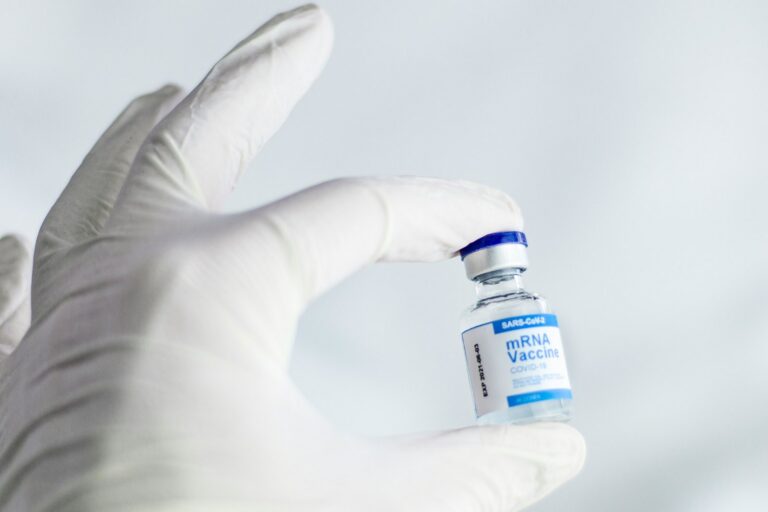
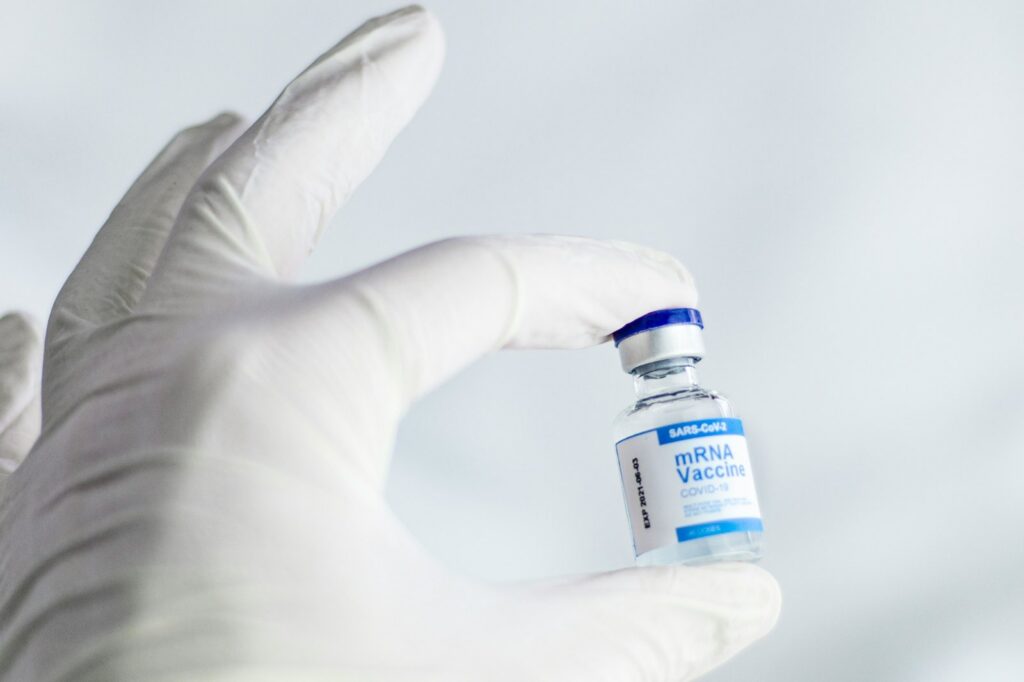
The vaccine is intismeran autogene, made by Moderna and Merck. The test was INTerpath-001, which enrolled 1,137 adults whose high-risk melanoma, stages IIB to IV, had already been cut out by surgery. Everyone got Keytruda (pembrolizumab) for about a year. Two of every three volunteers also got the vaccine; the rest got a placebo alongside the drug.
The main measure was recurrence-free survival, meaning how long patients stayed alive with no sign of the cancer coming back. After a median follow-up of 24.6 months, the vaccine combination cut the risk of recurrence or death by 42% against Keytruda alone. At two years, 82.2% of vaccine patients were alive and recurrence-free. In the Keytruda-only group the share was 70.0%.
Cancer spreading to distant organs, or death, fell by 38%. The first six months looked nearly the same in both groups. After that point, a pre-specified analysis found a 58% lower risk.
Side effects were common but mostly mild. Treatment-related problems hit 95.8% of vaccine recipients and 90.0% of the Keytruda-only group, and severe ones (grade 3 or higher) ran at 14.2% and 13.4%. Fever, injection-site pain and fatigue came up most. The companies reported no new safety signals.
What is not shown yet
Overall survival. That is the number that tells you whether people actually live longer, and it is not mature. A treatment can hold cancer off for a while without extending life, which is why regulators and oncologists watch it so closely. The companies said an early survival trend favored the combination. Follow-up continues.
The results were presented at the European Society for Medical Oncology Congress in Madrid on Oct. 24. The paper has been accepted by The New England Journal of Medicine but had not appeared there when this was written. Dr. Hussein Tawbi of MD Anderson Cancer Center, a trial investigator, told BioPharma Dive: “We were resigned to the fact that this was the best we can do for patients. And now we see we can do better.”
What the sources say about FDA timing
Merck and Moderna said the data will go to regulators. They gave no filing date, and no regulatory decision date has been announced. The vaccine is investigational, approved nowhere, and patients can get it only inside clinical trials.
The “two years” in the clip is a forecast, not a regulatory date. It rests on remarks by Moderna chief executive Stéphane Bancel. He told STAT at the Madrid meeting that he expects the filing for FDA approval in 2027. He told CNBC the company is finishing a regulatory filing and hopes for approval next year. Those are a CEO’s hopes. The FDA decides on its own schedule, after it has seen the application.
Analysts are more guarded about what comes after. RBC Capital Markets told BioSpace: “While approval seems likely, commercial success is far less certain.” Each course is built for one patient, so supply could be tight at first, no price has been set and insurance coverage is unknown.
Who this applies to
Only adults with fully resected stage IIB to IV cutaneous melanoma were studied. The vaccine does not prevent melanoma in healthy people. The American Cancer Society estimates about 112,000 new US cases in 2026 and about 8,510 deaths, and recurrence most often comes within two years of surgery. Moderna is also testing the approach in lung, kidney and bladder cancers, but a win in melanoma does not guarantee one elsewhere.
Patients in follow-up care should not change their treatment plans because of this news, and should keep scheduled skin checks and scans. Melanoma patients should ask their oncologist about trials.
Sources
- Moderna, Merck mRNA Cancer Vaccine Succeeds in Late-Stage Trial | AJMC
- INTerpath-001 Trial of mRNA-Based Individualized Neoantigen Therapy Meets Primary and Key Secondary Endpoints in Patients With High-Risk Resected Melanoma
- The First-Ever Personalized Cancer Vaccine to Pass a Phase 3 Trial Just Beat Keytruda Alone | CURE
- Five biotech updates to read after ESMO this weekend
- Breakfast News: A Conversation With Moderna’s CEO | The Motley Fool
- Personalized mRNA Melanoma Vaccine Cut Recurrence or Death Risk 42% in Phase 3 Trial, but Survival Data Pending
Photo: Spencer Davis / Unsplash (Unsplash License)