
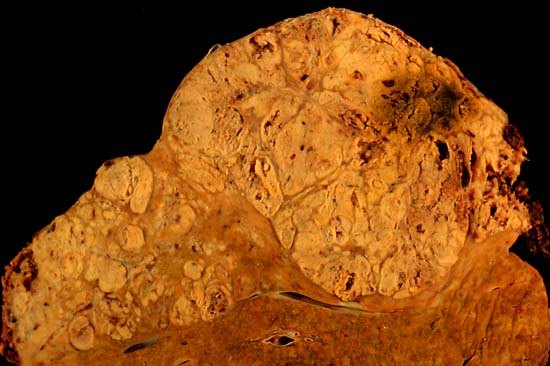
ITHACA, N.Y. — The tumor builds its own cage. Inside fibrolamellar carcinoma, a rare liver cancer that hits children and young adults, the cancer does not just grow. It walls itself off.
Immune cells that should attack the tumor never reach it. They get pulled into fibrous scar tissue instead, trapped there.
That trap may be the reason standard immunotherapy fails against this disease. The cancer accounts for roughly 2% of all liver cancer cases. There is no cure.
By diagnosis, it has often already spread. For years, doctors have watched immune checkpoint inhibitors — a common immunotherapy — fall short against fibrolamellar carcinoma.
Now a study in the journal Gastroenterology explains why. Researchers from Cornell University and the University of Washington mapped out the mechanism. They call it T cell exclusion.
The team used single-nucleus transcriptomics, a technology that reads gene activity in individual cells. That analysis showed that altered liver stellate cells produce the fibrous bands that give the cancer its name. Those same stellate cells release signals.
The signals draw T cells away from the tumor and into the fibrous tissue. The immune cells never get to the cancer.
They sit in the wrong place, doing nothing. Then the researchers tried something else. They tested AMD3100, a drug already approved by the FDA.
Working with slices of tumor tissue taken from patients, they found the drug blocked the signals that trap T cells. Once the signal was cut, the immune cells moved back into the tumors.
When the team combined AMD3100 with immune checkpoint inhibitors, they saw stronger T cell activity. Cancer cell death increased significantly compared with immunotherapy alone. This is not a cure.
It is a lead. The findings suggest that targeting T cell exclusion could improve treatment for this rare disease. Fibrolamellar carcinoma is aggressive.
It kills. Standard approaches have not worked.
The idea that an existing drug, already on the market, might unlock the immune system against this cancer is the kind of news that makes oncologists pay attention. The study does not claim a breakthrough. It offers a mechanism and a candidate drug.
The next step is clinical testing. That will take time.
But for a disease with no cure and few options, a plausible path forward matters. The trap is mapped. The key — an FDA-approved drug — is already in hand.
Whether it works in living patients is the question that comes next. The cancer is rare. Roughly 2% of liver cancers are fibrolamellar.
But it strikes the young. That makes the urgency different.
A child with a rare, aggressive cancer does not have time to wait for a new drug to be developed from scratch. Repurposing an existing one, if it works, could speed treatment by years. That is the logic behind the study.
That is what the researchers are chasing. The tumor tissue slices came from patients.
The drug blocked the signal. The T cells moved. The cancer cells died.
Those are the facts. They are not guarantees. But they are more than anyone had before.
{“@context”: “https://schema.org”, “@type”: “NewsArticle”, “headline”: “Researchers discover how rare liver cancer blocks immune attack with fibrous trap”, “description”: “ITHACA, N.Y. — The tumor builds its own cage. Inside fibrolamellar carcinoma, a rare liver cancer that hits children and young adults, the cancer does…”, “datePublished”: “2026-07-05T04:13:33+00:00T09:30:00+00:00”, “author”: {“@type”: “Person”, “name”: “Isabella Moore”}, “publisher”: {“@type”: “Organization”, “name”: “InfoPulse Today”, “url”: “https://newsfeed.infopulsetoday.com/”}}




