
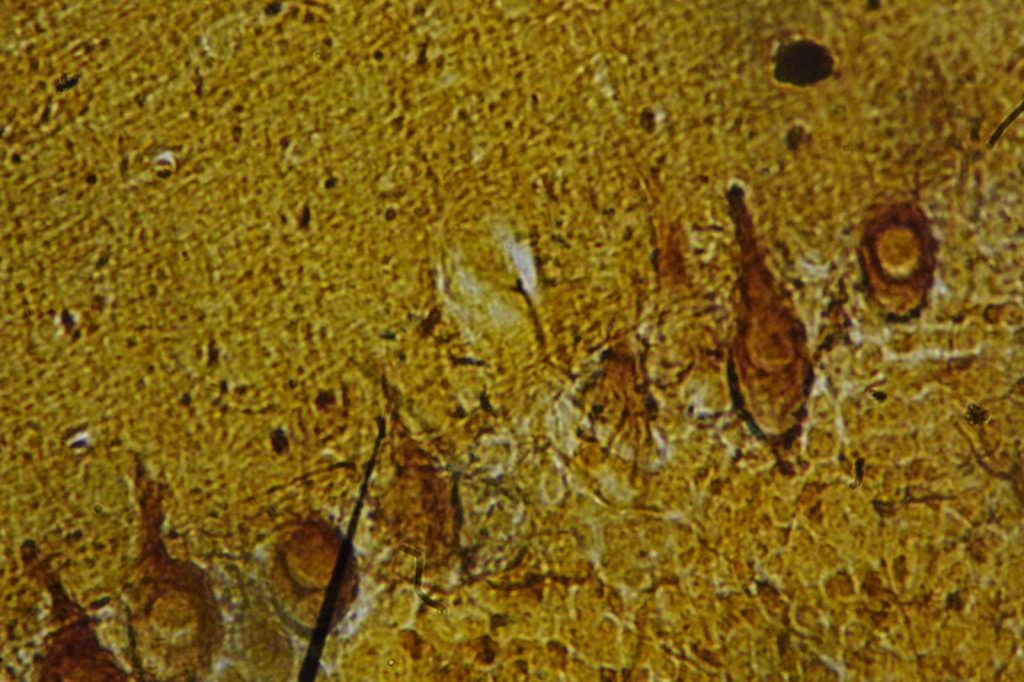
SAN FRANCISCO — A common tire chemical may be quietly contributing to Alzheimer’s disease, according to a 2024 study published in Environmental Health Perspectives by researchers at UCSF and collaborators. The chemical, called 6PPD-Q, is a breakdown product of a compound used to prevent tires from cracking. The study found it can cross the blood-brain barrier in laboratory models.
Once inside the brain, it starts causing trouble. The brain has its own cleanup crew called microglia — immune cells that normally clear away amyloid-beta plaques, the sticky protein clumps first described by Alois Alzheimer in 1906 that build up in Alzheimer’s patients.
The study showed 6PPD-Q interferes with these microglia, essentially gumming up their ability to do their job. But that’s not all the chemical does. The researchers also found 6PPD-Q disrupts a process called autophagy — a cellular process that removes damaged proteins and organelles.
When that system breaks down, junk accumulates. In cell cultures, the chemical increased oxidative stress and inflammation, both linked to neurodegeneration.
Alzheimer’s disease affects 6.7 million Americans as of 2023, according to the Alzheimer’s Association. It’s characterized by progressive memory loss and cognitive decline. Known risk factors include genetics — particularly the APOE4 gene — along with age and lifestyle.
The practical upshot: this study adds environmental toxins like 6PPD-Q to that list of potential contributors. The researchers used human brain cell cultures and mouse models to demonstrate these effects. That dual approach gives the findings more weight — what happens in a dish isn’t always what happens in a living brain, but seeing similar results in both strengthens the case.
What this means for everyday exposure
6PPD-Q comes from tire wear particles. Every time a car drives, tiny bits of rubber wear off and wash into waterways or become airborne. The chemical has already been linked to mass die-offs of salmon in the Pacific Northwest, but this is among the first studies to examine its effects on the human brain.
The study doesn’t prove that 6PPD-Q causes Alzheimer’s in people. It shows a plausible biological mechanism — the chemical can enter the brain, disrupt key cellular processes, and promote the kind of damage seen in Alzheimer’s.
That’s a red flag worth investigating further.
Where the research goes next
The findings open several new questions. How much exposure does it take to cause harm? Do certain populations face higher risk?
Can anything block the chemical’s effects? For now, the study adds to a growing body of evidence that environmental pollutants may play a larger role in neurodegenerative diseases than previously understood.
Alzheimer’s has long been viewed primarily through the lens of genetics and aging. This research suggests the air we breathe and the water we drink may matter too. The study was published in 2024, and as of mid-2026, no follow-up human studies have been announced.
Researchers will likely need to measure 6PPD-Q levels in human brain tissue and correlate them with Alzheimer’s diagnoses to confirm the link. Consult your doctor for medical advice.




