
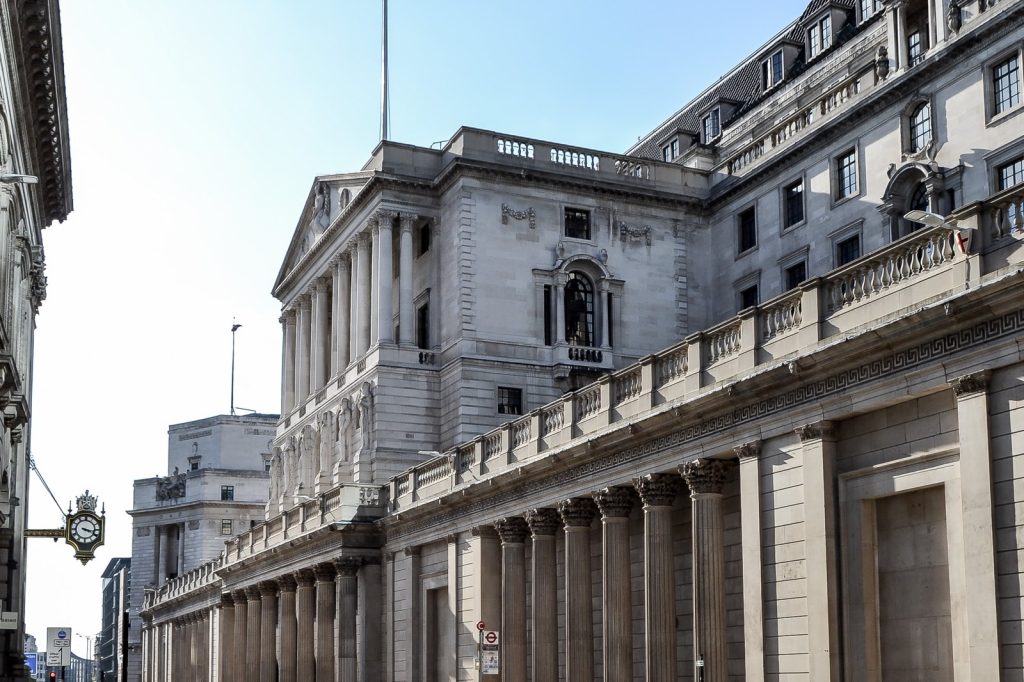
In 1805 the Bank of England put a wind dial in its boardroom, wired to a weathervane on the roof. An easterly wind meant merchant ships could sail up the Thames to the Port of London, trade would pick up, and the Bank would need more banknotes in circulation.
James Talbot told that story at the London School of Economics in February 2026, at an event chaired by Lord Stern, to make a point about the present. Weather has long moved prices and activity, he said, and “over two hundred years later” its effect on the economy is different but arguably just as important.
A late arrival to the subject
Talbot placed central banks well behind scientists, who have studied the problem for about forty years, and economists, who have done so for thirty. Governments have been acting on it for more than twenty-five. The Bank of England began its own climate work about twelve years ago, starting with insurers. It was one of eight founding members of the Network for Greening the Financial System nine years ago. That group now has around 150 member institutions.
“Considering the impact of climate as a central banker is now the norm, not the exception,” Talbot said. He pointed to global temperatures that have averaged more than 1.5 degrees above pre-industrial levels over the past three calendar years, and to heavy rainfall that has grown more frequent and more intense worldwide.
Three committees, one problem
Talbot tied the work to the Bank’s mission of monetary and financial stability. The Monetary Policy Committee is charged with price stability, so it must grasp how climate shocks to energy, food or supply chains move inflation. The Prudential Regulation Committee looks after the safety and soundness of supervised firms and, for insurers, the protection of policyholders. Supervisors of banks and insurers expect those firms to understand climate risks and to plan how they will handle them. The Financial Policy Committee watches the stability of the UK financial system as a whole.
The policies needed to curb climate change are for governments to set, he said. But if they change the economy and the financial sector, central banks have to understand them like any other shock.
His summary of the Bank’s progress was that it began with the risks facing the firms it supervises, insurers first and then banks. Scenario analysis and the impact on the financial system followed. Now, as the economic effects show up over shorter horizons, monetary policy is getting more attention. He called it the most nascent part of the Bank’s climate work. The supervisory expectations for banks and insurers were recently updated, drawing on six years of conversations with firms.
What the numbers show
Talbot cited European Central Bank research finding that the extreme heat of summer 2022 added 0.7 percentage points to annual food price inflation in Europe, and 0.3 points to headline inflation. He said projections under plausible but severe warming scenarios point to larger and more lasting effects within ten years.
A study by De Winne and Peersman (2021), he noted, found that a 10% rise in global agricultural commodity prices caused by weather shocks lowers GDP by 0.5% after six quarters, across a panel of 75 countries.
Policy responses carry costs too. The UK’s Climate Change Committee estimates a net zero path needs average financing of around £37 billion per year between 2025 and 2050. In the Bank’s 2023 Decision Maker Panel survey, climate-related investment was set to climb from 2.5% of capital expenditures in 2020-2023 to 5.5% over 2023-2026.
The Bank’s models treat a higher carbon price in the Emissions Trading Scheme like other supply-side shocks. A 7% rise, Talbot said, would lift energy CPI inflation by 1 percentage point after a year, then raise non-energy CPI inflation by just over 0.1 point four months later. GDP would dip by 0.05% around two years after the initial shock.
Talbot also chairs the NGFS workstream on monetary policy, which has brought together more than sixty central banks over four years. A forthcoming NGFS publication will assess how climate change affects monetary policy strategy.




