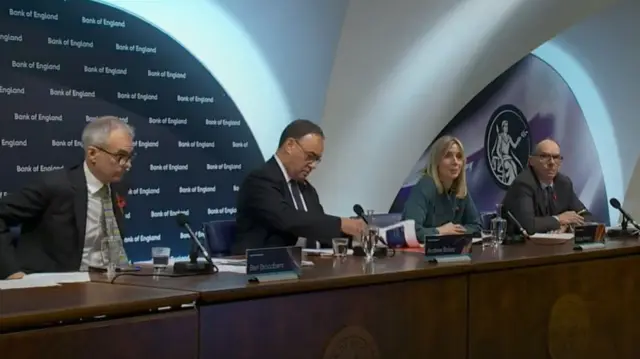
Hedge funds were paying between £2,500 and £5,000 per press conference to hear the Bank of England’s Governor a few seconds before everyone else. The central bank itself said so in December 2019, after The Times asked about it.
In a statement, the Bank said an audio feed of certain press conferences had been “misused by a third-party supplier to the Bank since earlier this year to supply services to other external clients.” The feed existed only as a fallback if the video stream, which normally carries the conferences on the Bank’s website, failed.
Seconds that can be worth millions
Sound can be compressed and transmitted faster than video. Customers of the supplier could therefore have enjoyed a head start of five to eight seconds, according to the newspaper report cited by the Globe and Mail. Briefings by Governor Mark Carney and other officials often move currencies and government bond prices.
Sue Noffke, a UK equities fund manager at Schroders, told BBC Radio 4 what is at stake: “What Mark Carney is talking about is the outlook for interest rates, the outlook for inflation.” Those comments, she said, can determine rates, the value of the pound and a lot of financial instruments.
For high-speed traders, a few seconds is plenty. Their programs can execute large volumes of trades in nanoseconds, so a five-second lead is, as one report put it, an age for sophisticated investors.
The supplier answers
The Bank did not name the supplier. Statisma, a British firm that streams feeds of live events from central banks and government bodies, posted a statement on its website. “We DO NOT carry embargoed information and we DO NOT release information without it first being made available to the public,” it said, adding that it is “impossible to ‘hack’ or ‘eavesdrop’ any live public event or press conference.”
The Bank said it blocked the supplier’s access as soon as The Times told it of the misuse. The supplier had not distributed feeds from the most recent conference and would play no part in future ones. The matter went to the Financial Conduct Authority, which was expected to begin with a scoping exercise that can take months before deciding whether to open an investigation into offences such as market abuse.
Calls to resign, questions for lawyers
Danny Blanchflower, a former member of the Bank’s Monetary Policy Committee, called for chief operating officer Joanna Place to resign over her responsibility for information security. Labour’s Shadow Chancellor John McDonnell said the episode showed an inquiry into regulation of the finance sector was needed. The timing was awkward: the Treasury was preparing to decide who would succeed Carney.
Lawyers were cautious about where blame might fall. Zoe Osborne, a partner at Steptoe in London, said it depended partly on what restrictions the Bank had placed on the supplier, whether it complied, and what traders knew about the time advantage. Rohan Massey of Ropes & Gray said legal culpability could stretch from traders who misused the feed up to the Bank itself.
Other banks took note. The Bank of Canada said its own feed is secure and exclusive to it, and the US Federal Reserve said it would review its arrangements. The European Central Bank had added a public audio feed to its website in September, after concern that outside vendors were selling an unauthorized one.
The FCA closed its enquiry in September 2020. “We do not believe the audio feed contained any inside information, nor have we found any activity of concern or misconduct,” the regulator said.
Sources
- Bank of England admits hedge funds gained access to audio livefeed of briefings
- FCA closes investigation into Bank of England audio hack by hedge funds
- Leaked Bank of England audio feeds give some traders head start on rivals