
Emerging and developing economies carried debt equal to almost 170 percent of their GDP in 2018. That is a rise of 54 percentage points since 2010, and the World Bank says it is the largest, fastest and most broad-based increase of its kind.
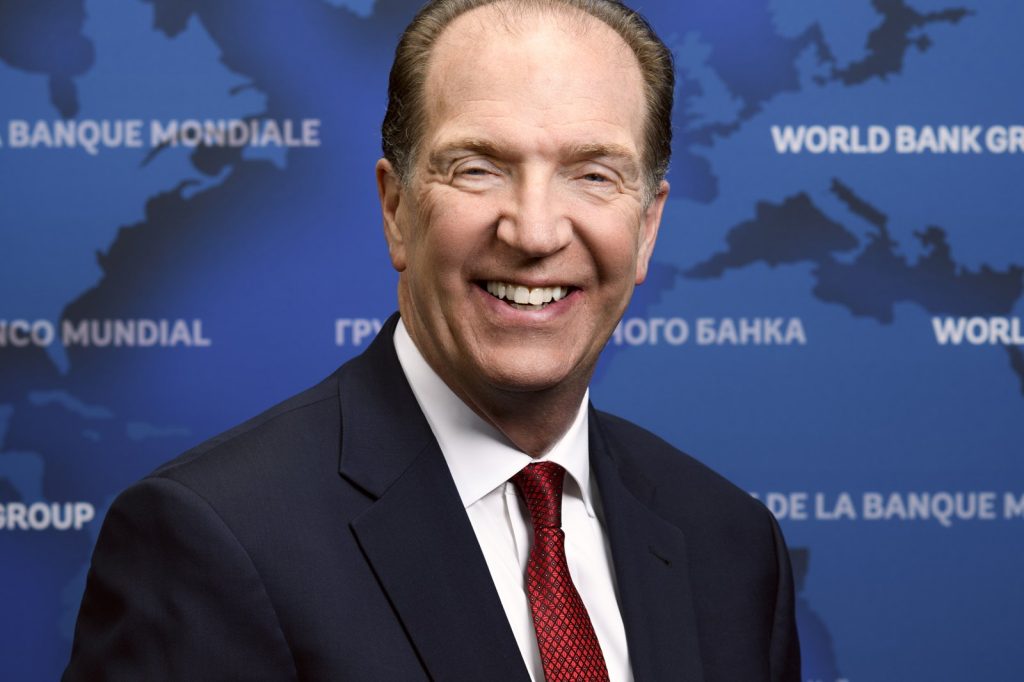
The figures come from “Global Waves of Debt,” a World Bank study launched on December 19, 2019. At the launch, World Bank Group President David Malpass talked with Harvard’s Kenneth Rogoff. A panel followed, moderated by Ceyla Pazarbasioglu, a World Bank Group vice president. Jahangir Aziz of J.P. Morgan, Valentina Bruno of American University, Anna Gelpern of Georgetown University and Steve Kamin of the Federal Reserve Board sat on it.
Four waves since 1970
The study counts four waves of debt buildup over the past fifty years. The first three ended in financial crises in many emerging and developing economies. A separate World Bank report dates those earlier waves to 1970-1989, 1990-2001 and 2002-2009. The fourth began in 2010 and is still running.
Global debt as a whole reached a record of about 230% of GDP in 2018, the World Bank said in that report. The bank sees the fourth wave as resembling the earlier ones in several ways: a shifting global financial picture, mounting vulnerabilities and worries that borrowed money is not being used efficiently.
Low rates, thin protection
Interest rates are low now, and the bank grants that this eases some of the risk. Emerging and developing economies still face weak growth prospects and elevated global risks, it noted.
“Low global interest rates provide only a precarious protection against financial crises,” said Ayhan Kose, director of the bank’s Prospects Group. “The history of past waves of debt accumulation shows that these waves tend to have unhappy endings. In a fragile global environment, policy improvements are critical to minimize the risks associated with the current debt wave.”
The bank says a menu of policy options exists to make a crisis less likely and to soften the blow if one comes.
What outside economists said
Several economists who reviewed the book were wary. Maurice Obstfeld of the University of California, Berkeley, said its review of history and theory “cautions against complacency and argues for proactive policies to buttress macroeconomic and financial stability.”
José De Gregorio of the University of Chile wrote that “sudden and large changes in risk appetite or global interest rates could nonetheless have severe negative repercussions in many economies.”
Another reviewer said the book “has done a signal service by reminding us that this time may be no different.” That reviewer wrote that debt has grown larger, faster and more broadly since the Great Financial Crisis than in the three earlier waves, and called it a possible leading indicator of crises ahead.
The 2008 crisis is the last of the three earlier episodes the study compares against. It began in the United States as a subprime mortgage crisis in early 2007 and peaked with the bankruptcy of Lehman Brothers in September 2008, setting off a stock market crash and bank runs in several countries.
Sources
- Global Waves of Debt: Causes and Consequences
- World Bank warns of global debt crisis
- 2008 financial crisis




