
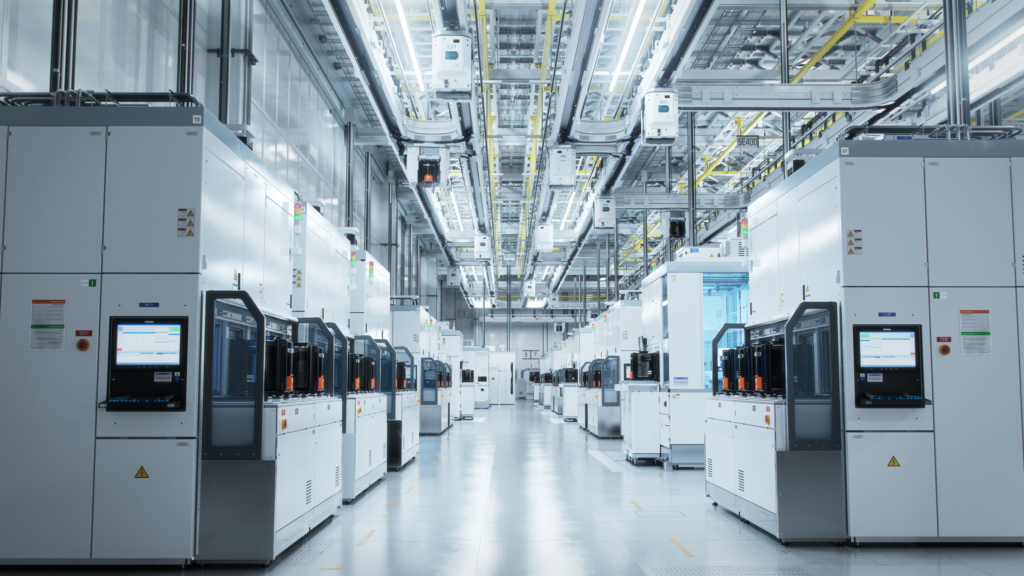
Over $640 billion in announced US chip investment rests on a single tax credit, and as of late August 2026 Congress had not extended it. The credit, called the Advanced Manufacturing Investment Credit, expires on December 31. Companies weighing a new semiconductor fab have until then to start building.
That is a lot of weight for something most of us only meet once a year on a tax return. So here’s what it means in plain terms.
A coupon for your tax bill
The IRS describes a tax credit as a dollar-for-dollar amount, claimed on a return, that cuts the income tax a person owes. Think of it like a coupon applied at checkout, except the checkout is your tax bill. A deduction only trims the income you are taxed on. A credit comes straight off what you owe.
The difference that matters is whether the credit is refundable. If the credit is larger than your bill and it is refundable, you get the difference back. If it is nonrefundable, the credit stops working once your liability reaches zero, and any leftover amount is lost. The Earned Income Tax Credit is a refundable one for moderate- and low-income workers, and the IRS says four in five workers claim it. The Child Tax Credit, by contrast, cannot be refunded. The American Opportunity Tax Credit sits in between: it is partially refundable, so when it brings tax to zero, a taxpayer can get back 40% of what remains, up to $1,000.
Why governments use them on big projects
Credits are not only for households. They are also a way to steer private money. The fab credit shows how that works in practice: a company that commits to building a plant gets to cut its tax bill, which changes the math on a project that costs a huge amount up front. TechTimes reported that the credit anchored the $640 billion figure, and that the construction window is closing.
The deadline arrives at an awkward moment. Politico reported, citing eight sources, that the Trump administration was weighing a broad second phase of semiconductor tariffs. Phase 1, set by Proclamation 11002 on January 14, 2026, set a 25% duty on a small group of advanced AI accelerators, naming Nvidia’s H200 and AMD’s MI325X. Phase 2 would extend duties to the laptops, consoles and AI data-center servers made with them.
The result is that two questions are open at the same time. Importing chips may get more expensive, while it is less clear that building them at home will pay off. Neither answer had come from the administration or Congress by the end of August.
Sources
- Tax credits for individuals: What they mean and how they can help refunds | Internal Revenue Service
- Chip Tariff Phase 2 Lands as Fab Tax Credit Deadline Leaves Industry Frozen




