
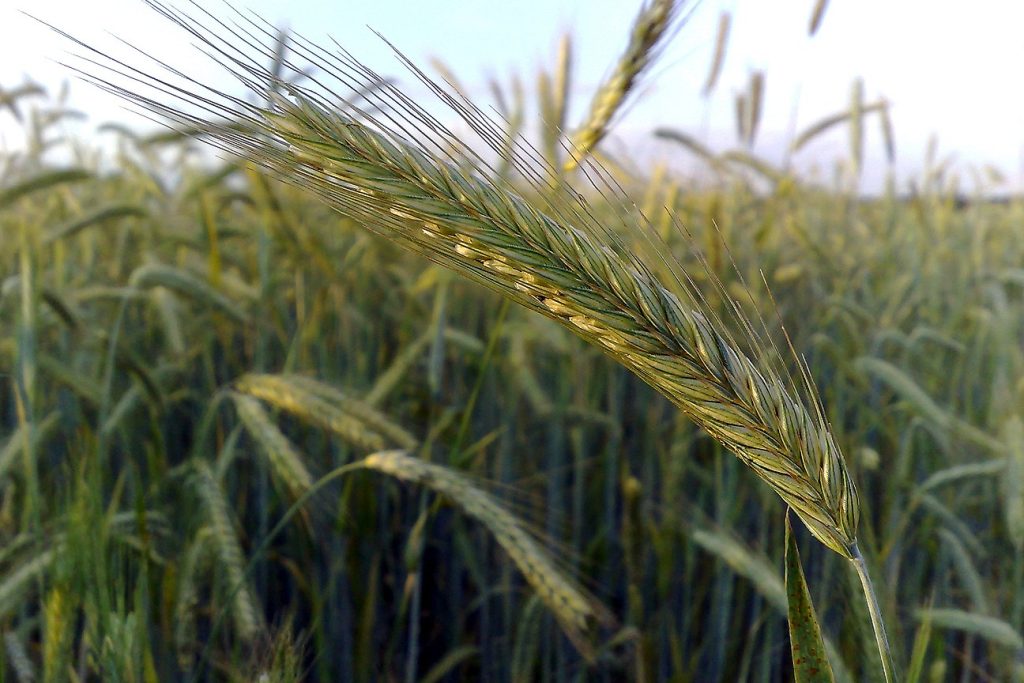
Two molecules in rye pollen have kept their exact shape secret for nearly 30 years. Chemists at Northwestern University say they have now pinned it down.
The molecules, secalosides A and B, caught attention in the 1990s when other researchers found they appeared to slow tumor growth in animals. Then the work stalled. Nobody could say how the atoms were arranged in three dimensions.
The Northwestern team built both molecules from scratch in the lab, a method called total synthesis, and confirmed the structures for the first time. Their findings appeared in the Journal of the American Chemical Society.
Two models, one mirror image
For decades, scientists argued over two candidate structures. Both had the same atoms joined the same way and the same overall shape. In one critical region, though, each model was the mirror image of the other. Advanced nuclear magnetic resonance spectroscopy could not settle it.
The difference matters because a mirror-image change can alter how a molecule interacts with biological targets. Karl A. Scheidt, the Northwestern chemistry professor who led the study, used his hands as an example. “They are mirror images of each other, but you need a different glove for each,” he said.
The synthesis was hard. Both molecules contain a rare, highly strained 10-membered ring at their core, which is notoriously difficult to assemble. The team first made a larger, more flexible ring, then set off a reaction that squeezed it into the smaller one in a single step. They made both proposed versions and compared each with natural samples taken from rye pollen. Only one matched.
What comes next
“In preliminary studies, other researchers found that rye pollen could help different animal models clear tumors through some unknown, non-toxic mechanism,” Scheidt said. “Now that we confirmed the structure of these molecules, we can find the active ingredient.”
Rye pollen extract is already sold as a dietary supplement that many people take for prostate health. Scientists have not turned it into a pharmaceutical treatment, and the missing structure was a major obstacle.
Scheidt is careful about what the result is. “Natural products aren’t necessarily effective drugs on their own, but they are great leads,” he said, adding that chemistry can then produce better versions that can be taken orally and survive metabolism. His group is now looking for immunology collaborators who could help move the work toward a clinical endpoint.
The work was supported by the National Institute of General Medical Science, the Chemistry of Life Processes Institute Lambert Fellowship and the National Science Foundation. Consult your doctor for medical advice.




