
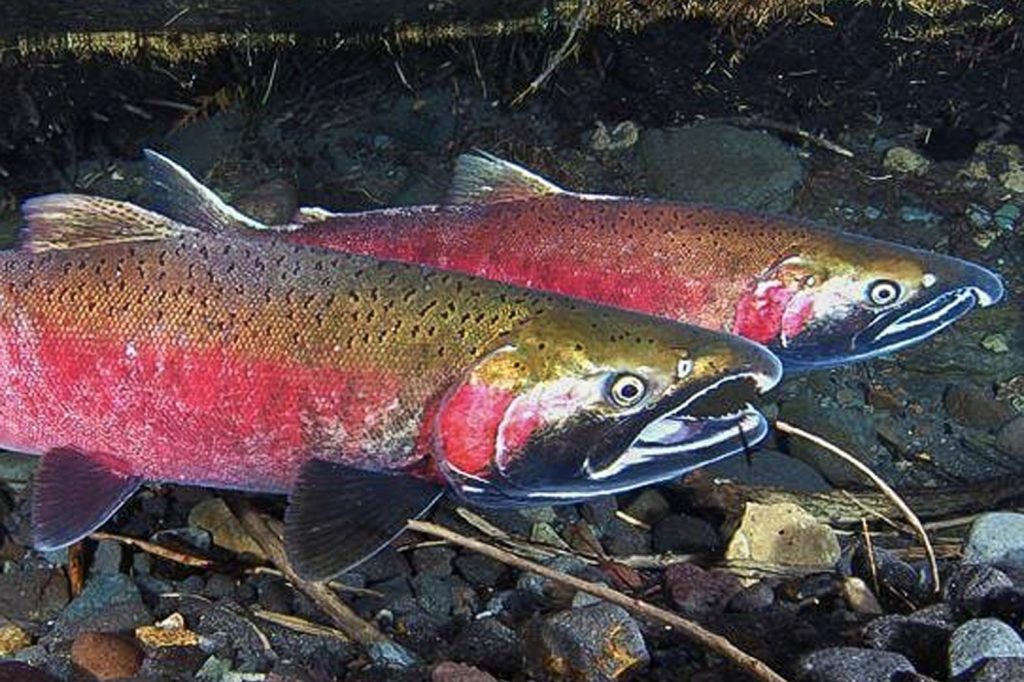
For years, coho salmon returning to streams near Seattle died after autumn rains and nobody knew why. A 2021 study traced the deaths to a compound that forms when tire rubber meets ozone. That compound, 6PPD-quinone, is now the subject of a new paper asking what it might do inside the human brain.
The paper appeared in Open Medicine, from authors Chun Zhang and Jingqi Zhang. They worked entirely on computers, using existing databases rather than any new experiment. It is the first to examine the link systematically with these methods.
How the chemical gets around
Tire makers add 6PPD to keep rubber from cracking. As tires wear on the road, they shed microscopic particles, and when those meet ozone the preservative turns into the more toxic quinone. It has been found in road dust, soil, water and human urine. In mice, it crosses the blood-brain barrier within half an hour of exposure.
The computer results
The authors compared the proteins the chemical is predicted to touch with genes already tied to Alzheimer’s. They found 92 in common and 23 core targets, which concentrated in the cerebral cortex and basal ganglia.
A machine-learning model then picked five genes that best separated Alzheimer’s brains from healthy ones: PTGS2, KIT, PIK3CA, NFE2L2 and NFKB1. In docking simulations, the chemical bound strongly to PTGS2, GSK3B and NFE2L2. A statistical test called Mendelian randomization supported a causal association between NFKB1 activity in the brain and Alzheimer’s risk.
The authors say the chemical may act through oxidative stress, inflammation and disrupted signaling between brain cells. In their words, the work “provides the first systematic characterization of the molecular mechanisms by which 6PPD-Q may contribute to Alzheimer’s disease pathogenesis.”
What it does not show
The evidence is thin in places. One brain dataset held only a dozen Alzheimer’s cases, and every binding result exists so far only in simulation. The study cannot say that traffic pollution causes dementia, or how much everyday exposure raises anyone’s risk.
The authors call for lab work on cells and human tissue, animal studies, and epidemiological research. Anyone worried about their own risk should talk to a doctor.
Sources
- Invisible Tire Dust Hijacks Alzheimer's Predictor Genes – Neuroscience News
- Pollution from car tires may contribute to Alzheimer’s disease




