
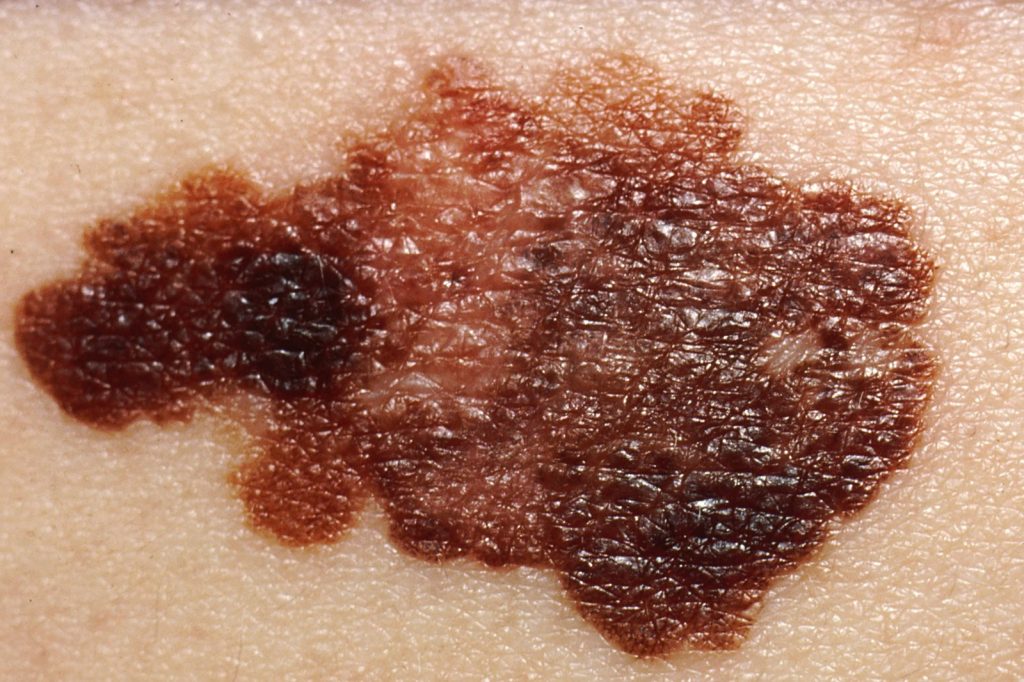
Melanoma is the fifth most common cancer in the UK. It accounts for five percent of all new cancer cases. And it kills — two percent of all UK cancer deaths come from this skin cancer.
The NHS wants that number lower. So this week, it posted a checklist on social media platform X.
The message: use the alphabet to spot trouble early. The response from doctors has been blunt. “This is basic, effective advice,” one London GP told InfoPulse Today.
“We see patients who waited. They thought a mole was nothing.
By the time they came in, the melanoma had spread.” The GP, who asked not to be named, said the ABCDE method works because it gives people a concrete thing to look for. Not just a vague warning to “watch your skin.” Ultraviolet light causes most melanomas. That means the sun.
And sunbeds. The NHS alert comes as summer hits Britain. More people are outdoors.
More skin is exposed. Cancer Research UK figures show melanoma is also the 19th most common cause of cancer death in the country.
Older people get it more often. But younger people are not immune. The checklist is simple.
A stands for asymmetrical. Is your mole an uneven shape?
B is for border. Is the edge ragged? C is for colours.
Does the mole have different shades? D is for diameter. Is it bigger than six millimetres?
E is for evolving. Has it changed size, shape or colour?
Those five letters cover the basics. There are other signs too. A mole that is swollen.
One that is tender. Bleeding.
Itching. Crustiness. Any of those warrants a call to a GP.
The NHS says if you spot changes that could be cancer, contact your doctor. The sooner you identify the signs, the sooner treatment can start. Dermatologists have long pushed for public awareness campaigns like this.
One consultant, speaking on condition of anonymity, said the ABCDE method is not new. “It has been around for years.
But people forget. They need reminding. Especially in summer, when UV exposure spikes.” He noted that many patients still arrive with advanced melanomas.
“They saw a mole change. They thought it would go away.
It didn’t.” The NHS post on X was direct. “Use the ABCDE list to help check existing or new moles and spot the warning signs of skin cancer,” the health service wrote. No hedging.
No qualifiers. Just a clear instruction. The post ended with the standard advice: if you think it could be cancer, see your GP.
Melanoma can spread to other parts of the body. That is what makes it dangerous.
It is not just a skin problem. It is a systemic disease once it moves. Early detection stops that spread.
The ABCDE checklist is a tool for catching it before it travels. One patient advocate, who lost a relative to melanoma, said the NHS alert was overdue.
“My brother ignored a mole for two years. By the time he went to the doctor, it was stage four. He died six months later.
If he had known the ABCDE list, maybe he would have gone sooner. Maybe he would still be here.” She paused. “It is that simple.
A checklist can save your life.” The NHS advises consulting a GP if a mole has changed size, shape or colour. Or if it is painful.
Medical advice remains the same: do not diagnose yourself. Use the checklist as a guide. Then let a professional decide.




