
The United States lost its measles elimination status on November 17, 2026, after an expert commission convened by the Pan American Health Organization determined that endemic transmission had been re-established for the first time since 2000. The Centers for Disease Control and Prevention had recorded 5,800 cases nationwide as of November 19, a figure that surpasses the total from the previous 24 years combined.
How Elimination Was Lost
The U.S. achieved measles elimination in 2000 through sustained vaccination programs, robust surveillance, and rapid outbreak response. Between 2000 and 2018, the country averaged fewer than 150 cases per year, and the national measles, mumps, and rubella (MMR) vaccination rate among school-age children exceeded the 95% threshold required for herd immunity. That progress unraveled after a near-miss in 2019, when 1,274 cases were reported. Since then, vaccination rates have declined steadily. In the 2025-2026 school year, the national MMR rate fell to 92.4%, with 39 states reporting coverage below the 95% target.
The Role of Falling Vaccination Rates
Measles is among the most contagious diseases known. It infects up to 90% of unvaccinated people exposed to it, and the virus can linger in the air and on surfaces for up to two hours. The MMR vaccine is 97% effective with two doses, but herd immunity requires more than 95% of a community to be vaccinated. As national rates dipped below that threshold, pockets of low immunization allowed the virus to spread uninterrupted for more than 12 months, meeting the technical definition for re-established endemic transmission. By November 13, 2026, the CDC had confirmed 5,412 cases across 46 states and Washington, D.C., with 43 distinct outbreaks recorded.
Health Risks and Complications
The resurgence has carried a human toll. Ten measles deaths were reported by states in 2026, the highest annual total in more than 30 years. Pennsylvania recorded seven deaths, Wisconsin two, and New York one, following three deaths in 2025. Measles can cause severe complications including pneumonia, encephalitis, and a phenomenon known as immune amnesia, where the virus erases the immune system’s memory of past infections, leaving survivors vulnerable to other diseases for up to two years. In rare cases, a fatal neurological condition called subacute sclerosing panencephalitis can develop seven to ten years after infection. Dr. Patrick Luedtke, senior public health officer for Lane County, Oregon, noted that 20% to 30% of measles patients require hospitalization, often with fevers reaching 103 or 104 degrees Fahrenheit.
Regional Context and Next Steps
The loss of U.S. status mirrors setbacks in Bolivia and Mexico, which also lost elimination certification in November 2026. The Region of the Americas, the first in the world to eliminate measles, had regained regional status in 2024 only to lose it again in 2025 after sustained transmission in Canada. As of November 13, the Americas reported 58,213 confirmed cases and 82 deaths, compared with 12,806 cases during the same period in 2025. PAHO Director Dr. Jarbas Barbosa emphasized that the reversal is not irreversible, urging countries to close vaccination gaps, strengthen surveillance, and improve outbreak response. Nevada, which has not reported a resident case in 2026, remains surrounded by states with active transmission, a reminder that the virus does not recognize state boundaries.
The encouraging part is that the tools to stop measles are well understood and highly effective. Patients should verify their vaccination status and talk to their doctor if they are unsure whether they have received both doses of the MMR vaccine.
Sources
- Nevada health officials warn of waning vaccination rate as measles becomes endemic in U.S.
- Measles
- Measles: What Parents Need to Know
- The U.S. Lost Its Measles Elimination Status, Marking A Step Back for Public Health
- PAHO urges countries to step up efforts to stop measles outbreaks and move towards elimination in the Americas
- Measles is a concern as vaccination rates drop in Lane County
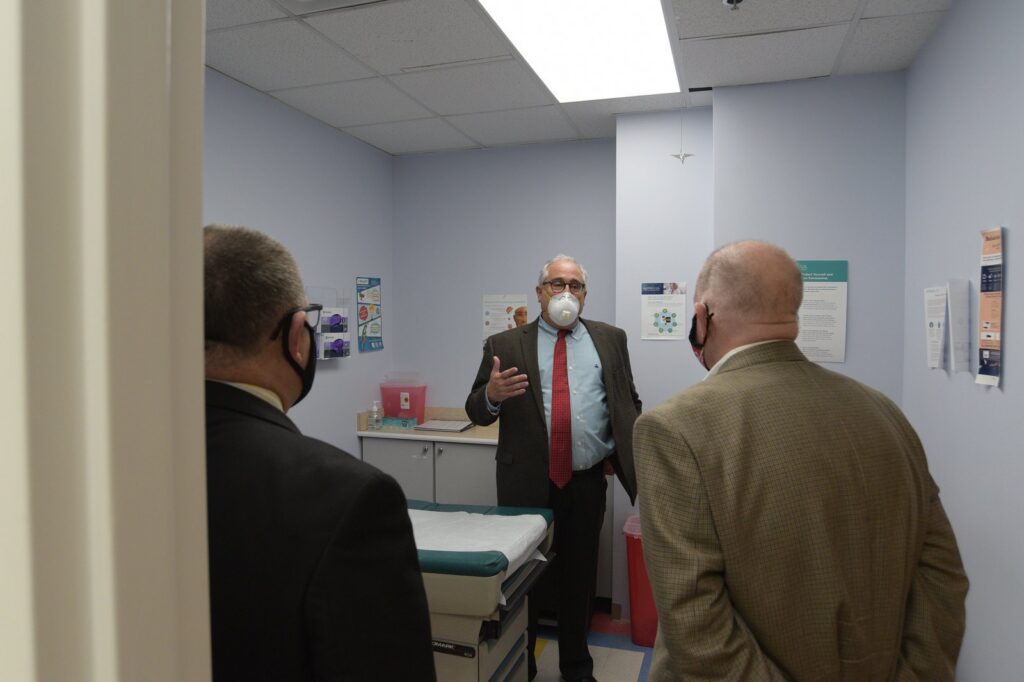
Photo: MDGovpics (CC BY 2.0)