
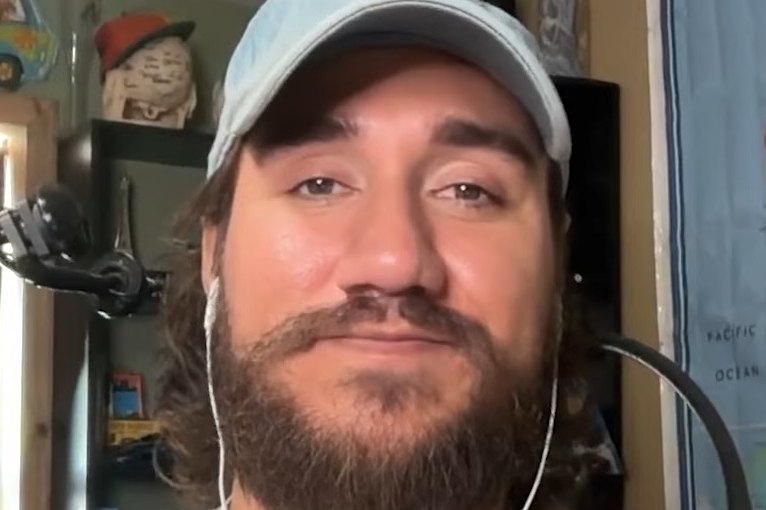
“I am typing this with my brain. It is my primary communication.” Brad Smith, an Arizona husband and father, wrote that in a post on X on Sunday. Musk shared it too.
Smith has ALS and was diagnosed in 2020. He is the third person to receive a Neuralink implant, the brain device made by Elon Musk’s company. He is also the first ALS patient to get one, and the first non-verbal recipient, he said.
He is completely paralyzed and relies on a ventilator to breathe. Using the brain-computer interface, he steers the mouse on his MacBook Pro. He used it to make a video, which he called “the first video edited with [Neuralink], and maybe the first edited with a BCI.” The narration is in his “old voice,” which was cloned by artificial intelligence from recordings made before he lost the use of his voice.
How the implant works
The device sits in Smith’s motor cortex, the part of the brain that controls body movement. It picks up neuron firings and passes a raw signal to the computer. “AI processes this data on a connected MacBook Pro to decode my intended movements in real time to move the cursor on my screen,” Smith said.
He thanked Musk in the post and described what the implant has done for him. “Neuralink has given me freedom, hope and faster communication,” he said. “It has improved my life so much. I am so happy to be involved in something big that will help many people.”
Smith also spoke about his faith. “I have not always understood why God afflicted me with ALS, but with time, I am learning to trust His plan for me,” he said. And about his work with the “brilliant people” at Neuralink: “Don’t get me wrong, ALS still really sucks, but I am talking about the big picture. The big picture is, I am happy.”
What doctors said
ALS, or amyotrophic lateral sclerosis, is also called Lou Gehrig’s disease. According to The ALS Association, it is a progressive neurodegenerative disease that affects nerve cells in the brain and spinal cord. Muscle control fails over time until the patient is paralyzed. The disease is ultimately fatal, with an average life expectancy of three years, though 10% of patients survive 10 years and 5% live 20 years or longer.
Dr. Mary Ann Picone, medical director of the MS Center at Holy Name Medical Center in Teaneck, New Jersey, called it “an amazing development.” She was not involved in Smith’s care. She told Fox News Digital the potential is to let patients with quadriplegia control computers and mobile devices with their thoughts. Picone also noted risks from the implant: surgical infection, bleeding and damage to the brain tissue underneath.
Dr. Peter Konrad, chairman of neurosurgery at the WVU Rockefeller Neuroscience Institute in West Virginia, also not involved in the care, praised the result as a “remarkable demonstration of the power of AI-driven technology.” He saw encouraging progress, with neural devices reaching clinical trials over the past five to 10 years. Still, he said, “we are still awaiting development of a BCI device that does not require a team of engineers and experts to customize each and every severely disabled patient with this technology.”
“For every Brad Smith out there, there are hundreds of thousands of other disabled patients awaiting access to this technology,” Konrad said.




