
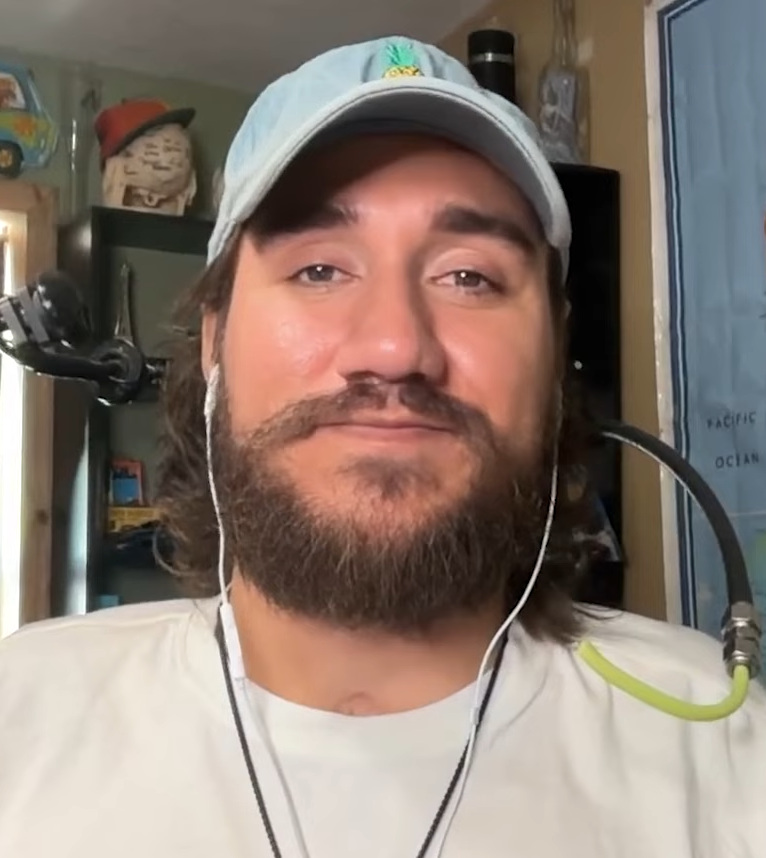
Noland Arbaugh was 22 and working at a kids’ summer camp in upstate New York when he went swimming in a lake in June 2016. He woke face down in the water, unable to move or breathe. “You never know what you’re going to do in those high-stress situations,” he told The Guardian. “I found out that day that it’s hard to shake me.”
The injury left him paralyzed below the shoulders. Nearly eight years later, in January 2024, he became the first person to receive Neuralink’s investigational brain-computer interface, the device built by Elon Musk’s company.
Before the implant
Arbaugh, born in 1993 or 1994, grew up in Yuma, Arizona, and studied international studies at Texas A&M University, where he joined the Corps of Cadets. After the accident, which was a cervical spinal cord injury, he went through rehabilitation at Helen Hayes Hospital in New York and Craig Hospital in Colorado, then went home to Yuma to live with his family. His mother, Mia, and other caregivers handled much of his daily care.
For years he operated an iPad with a mouth stick, voice control and similar methods. It was slow and limited. Texting privately was hard, he said, and dictating a message felt “like yelling out to the world what I’m saying.”
Selection and surgery
In September 2023, a friend from military school told him Neuralink was recruiting for human trials. Arbaugh applied. Screening through the Barrow Neurological Institute began the next day, and about three months later he learned he had been picked as the first participant.
Surgery took place at Barrow in Phoenix, Arizona, in late January 2024. Musk announced on January 29 that the first human patient had received the device and was recovering well. Reuters later identified the patient as Arbaugh. He said the operation was straightforward and that he went home the following day with no cognitive impairment.
The implant is called N1. It uses 64 flexible threads carrying 1,024 electrodes to record activity in the motor cortex and turn intended movement into computer control. Arbaugh said he learned the system through both attempted and imagined movement.
What he can do now
On March 20, 2024, Neuralink released a livestream of Arbaugh moving a cursor and playing online chess. He has also gone back to Civilization VI and other video games. In interviews with Bloomberg, WIRED and ABC News, he said the device gave him back a measure of independence, since he can use a computer without physical help.
Reuters quoted neural engineering expert Kip Ludwig, who called the demonstration promising but not a breakthrough and said the technology was still at an early stage. Arbaugh was the first recipient of a Neuralink implant, but not the first person with an implanted brain-computer interface. A 2025 systematic review estimated that about 80 people worldwide had received one.
Threads pull back
About a month after surgery, some of the implant’s threads retracted from his brain. Fewer electrodes meant worse performance. Neuralink told him only about 15% of the threads remained in place. The US Food and Drug Administration had earlier raised safety concerns about the threads, and Reuters reported that Neuralink had met similar retraction risks in animal testing.
Arbaugh said the prospect of losing the device’s benefits was emotionally difficult, and that he feared it might have to be removed. Neuralink said software changes improved performance. By July 2024 the threads had become stable, and the company had altered surgical techniques for later implants.
By August 2025, Fortune reported, Arbaugh was using the device about 10 hours a day. He had signed up for prerequisite classes at a community college in Arizona toward a neuroscience degree and was building a business around paid speaking engagements.
Sources
- Noland Arbaugh – Wikipedia
- Elon Musk put a chip in this paralysed man’s brain. Now he can move things with his mind. Should we be amazed – or terrified?




