
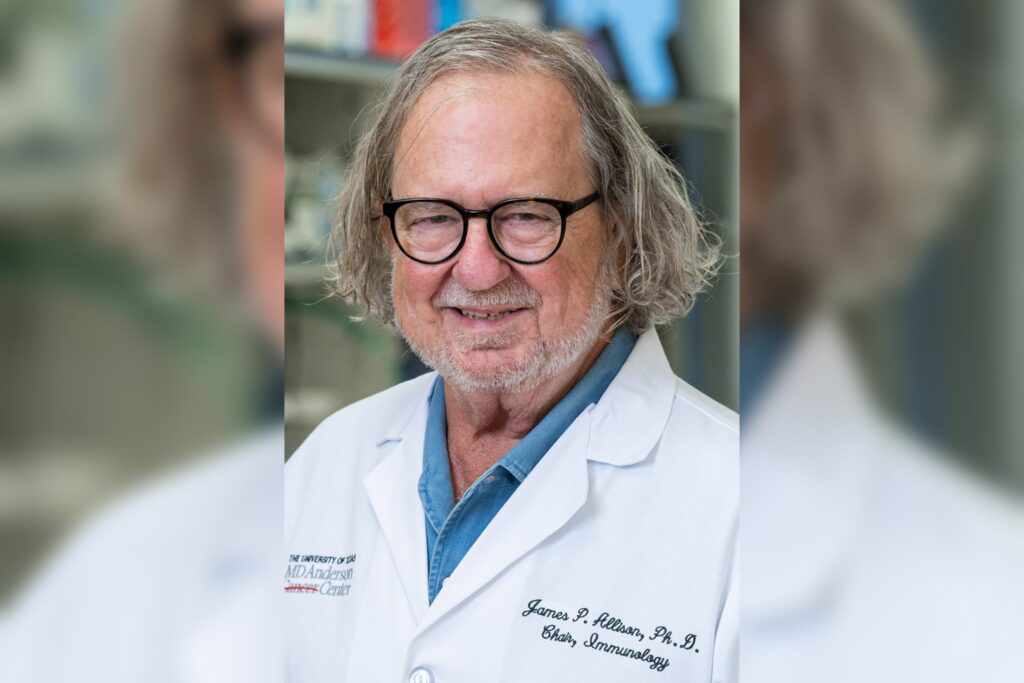
In the last days of 1994, James Allison’s lab ran an experiment, got a result it could hardly believe, and repeated it straight away over the Christmas break. The mice had cancer. After treatment with an antibody that blocks a protein called CTLA-4, they were cured.
Allison, who studied the protein in the 1990s at the University of California, Berkeley, was not the first to notice that CTLA-4 acts as a brake on T cells. Other research teams were already aiming at it to treat autoimmune disease. His idea ran the other way. Release the brake, he reasoned, and the immune system would be free to attack tumors. He already had an antibody that could bind CTLA-4 and block it.
The pharmaceutical industry showed little interest. He kept going anyway. In 1996 his group published a paper showing that an antibody against CTLA-4 triggered antitumor immunity and made mice reject tumors.
From mice to melanoma
Human data came less than a decade later, in patients with advanced melanoma and ovarian cancer who had previously received a cancer vaccine. Larger trials followed and showed clear survival benefits. A clinical study in 2010 found signs of remaining cancer disappearing in several patients with advanced melanoma, a result the Nobel committee said had never been seen in that group.
In 2011 the FDA approved ipilimumab, sold as Yervoy, for metastatic melanoma. It was the first immune checkpoint inhibitor to reach patients, and it later won approval for adjuvant use in high-risk melanoma.
Allison earned his PhD at the University of Texas at Austin in 1973 and did postdoctoral work at the Scripps Clinic and Research Foundation. He moved from Berkeley to Memorial Sloan-Kettering in 2004, and since 2012 he has been a professor at the University of Texas MD Anderson Cancer Center in Houston, where he is affiliated with the Parker Institute for Cancer Immunotherapy. In 2018 he shared the Nobel Prize in Physiology or Medicine with Tasuku Honjo, who found a second brake on T cells, PD-1, at Kyoto University.
What it does and does not do
Checkpoint drugs have limits. A Johns Hopkins review in the Journal of Clinical Investigation noted that only about 20 percent of patients get a durable response, while about 80 percent eventually relapse. More than 70 percent of aggressive cancers, pancreatic cancer and glioblastoma among them, do not respond at all.
Combining the two brakes helps some patients. Blocking both PD-1 and CTLA-4 produced 3-year overall survival of 58 percent, against 52 percent for PD-1 blockade alone, though with more immune-related side effects. The Nobel committee warned that side effects from an overactive immune response can be serious and even life-threatening, but are usually manageable.
Patients should talk to their doctor about whether checkpoint therapy fits their cancer.




