
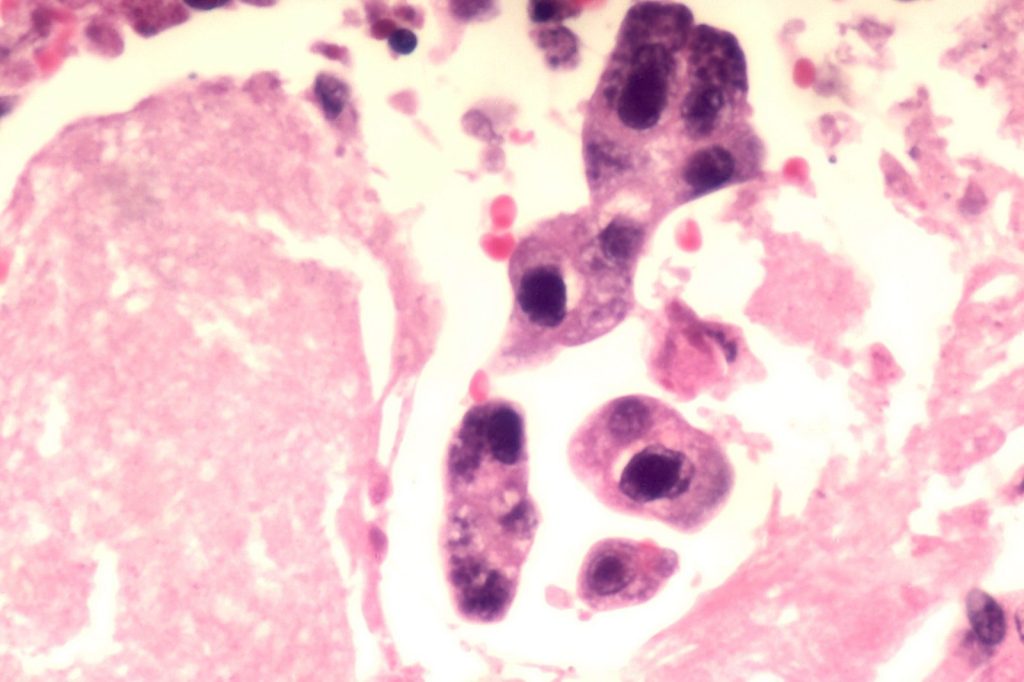
Up to 80% of tuberculosis patients in some countries are also HIV-positive. That single overlap shows why doctors take coinfection seriously: two pathogens sharing one body can make each other worse.
Coinfection means a host is infected by more than one pathogen species at once. Think of it like a crowded apartment where the roommates keep affecting each other. Nobody knows how common it is in people worldwide, but it is thought to be commonplace, and sometimes more common than a single infection. Coinfection with helminths alone affects around 800 million people.
When pathogens interact
In virology, the term also covers two or more virus particles infecting one cell. Liver cells infected with both hepatitis B and hepatitis D are an example.
The net effect on human health is thought to be negative, since pathogens interact inside the host. Sometimes one helps another along. That is called syndemism: transmission or progression gets a boost. Other times they get in each other’s way. Pseudomonas aeruginosa, for one, suppresses colony formation by the pathogenic Staphylococcus aureus. The order of exposure matters, and so does how the host responds to the first infection.
Scientists still don’t know the general patterns of how parasite species interact, even among common coinfections such as those between sexually transmitted infections. One network analysis of a coinfection food web in humans suggests parasites are more likely to interact through shared food sources than through the immune system.
Examples
HIV and TB are the textbook case. HIV enhances TB transmission and lethality. Most sexually transmitted diseases also enhance HIV transmission. AIDS itself is a form of coinfection, since end-stage HIV brings opportunistic parasites. Lyme disease often involves other infections at the same time.
Some coinfections work like a fight over the body’s resources. Children infected with rhinovirus plus respiratory syncytial virus, metapneumovirus or parainfluenza virus had lower nasal viral loads than children with rhinovirus alone. Dengue plus HIV appears to suppress HIV. Some COVID-19 patients have also carried seasonal flu, a common-cold virus, or bronchitis or pneumonia from another microbe. Some already had tuberculosis or active AIDS, which left them very vulnerable.
Poliovirus teams up
Poliovirus, a positive single-stranded RNA virus, shows coinfection helping the virus. Drake found that when UV-irradiated polioviruses infected cells several times over, viable offspring could still form at UV doses that killed the virus in single infections. This is called multiplicity reactivation. Poliovirus also recombines genetically when at least two genomes share a cell. Kirkegaard and Baltimore presented evidence that the RNA-dependent RNA polymerase drives this by a copy choice mechanism, switching between templates while it builds the negative strand.
Consult your doctor for medical advice.




