
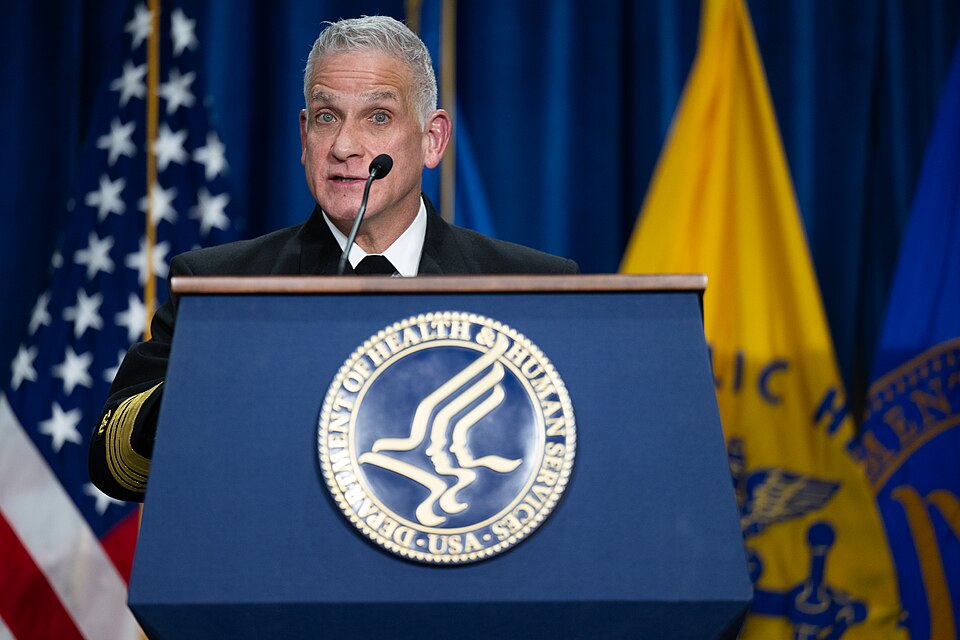
WASHINGTON, July 25 — The Surgeon General of the United States commands a uniformed health force and serves as the nation’s top federal spokesperson on public health. The office holds limited direct authority to set policy. The Surgeon General is the operational head of the United States Public Health Service Commissioned Corps (PHSCC), a uniformed service deployable during public health emergencies.
The office, housed within the Office of the Assistant Secretary for Health, reports to that assistant secretary. The surgeon general holds the rank of vice admiral and serves a four-year term, nominated by the president and confirmed by the Senate.
A 1798 Origin and a 1966 Warning
The office traces its roots to 1798, when Congress created the Marine Hospital Fund to care for sick seamen. That fund was reorganized along military lines in 1870 as the Marine Hospital Service, led by a supervising surgeon — later called surgeon general. The service moved from the Treasury Department to the Federal Security Agency in 1939, then to the Department of Health, Education, and Welfare in 1953, and finally to the Department of Health and Human Services (HHS).
The moment that defined the office: January 11, 1964, when Surgeon General Luther Terry issued a landmark report stating that smoking may be hazardous to health. By 1966, the Surgeon General’s warning label appeared on all American tobacco cigarette packages.
A similar health warning has been required on alcoholic beverage labels since 1988. Those warnings have enduring commercial and regulatory weight, but they remain advisory. The surgeon general has limited statutory impact on direct policy.
Yet past occupants of the office have often been vocal advocates for precedent-setting or unconventional health policies.
A Uniformed Force and a Medallion
The surgeon general is the overall head of the commissioned corps, a uniformed health force that can be deployed during public health emergencies. The office also awards public health decorations, including the Surgeon General’s Medallion. Investors will note that the office’s narrow formal powers mean its public statements can move markets or shift consumer behavior, especially on health warnings.
But those statements are not regulatory mandates. The 1966 tobacco warning and the 1988 alcohol warning represent the two most consequential federal health labels in American history — both originating from this office.
What to watch next: The current surgeon general’s public statements on emerging health threats will be the primary lever for influencing behavior. The nominal power is small. The bully pulpit, as history shows, can be large. Consult your doctor for medical advice.




