
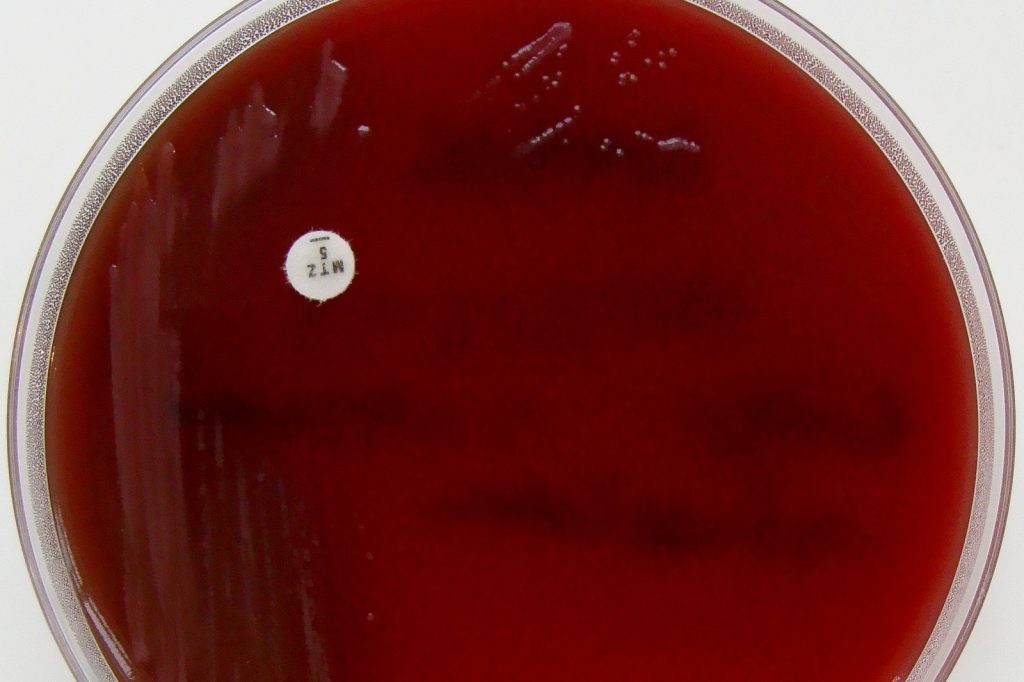
Take out one gene from a colon cell and a bacterial toxin that normally wrecks the gut lining can no longer get a grip. That was the result that ended a search of more than 15 years, and researchers led by Johns Hopkins published it in Nature.
The toxin is called BFT. Certain strains of the gut bacterium Bacteroides fragilis make it. The bacterium itself is common, found in up to 20% of healthy people, but some strains set off inflammation in the colon and push tumors along. The team found that BFT has to attach to a protein on the cell surface, claudin-4, before it can injure colon cells.
Why the receptor was hard to find
Earlier work from the lab of senior author Cynthia Sears, M.D., showed that BFT drives chronic inflammation by cutting E-cadherin, a protein that helps hold the colon’s protective barrier together. A previous Nature Medicine study tied the toxin’s activity to tumor formation. But BFT did not seem to bind E-cadherin directly, so something else had to be letting it in.
Maxwell White, an M.D./Ph.D. candidate in Sears’ lab, led a genomewide CRISPR screen with the lab of Matthew Waldor at Harvard Medical School. The team switched off genes one at a time in colon epithelial cells and watched which losses stopped the toxin. Claudin-4 stood out. Without it, BFT could not attach, and E-cadherin stayed intact.
“It took a while to get the assay working and validate the approach, but once we were able to do the screen, claudin-4 was a clear, resounding top hit,” White said.
It was not the answer many expected. Sears said researchers had guessed the receptor would be a signaling protein, such as a G-coupled protein receptor. Claudin-4 is not one. The team also found no other toxin that works this way, since most protease toxins bind their targets directly.
Checking it in the lab and in mice
To confirm the link, the Hopkins group worked with structural biologists F. Xavier Gomis-Rüth and Ulrich Eckhard at the Molecular Biology Institute of Barcelona. Their biophysical tests showed BFT and claudin-4 locking into a tight one-to-one complex, the first direct physical evidence of the contact. Work with Min Dong’s lab at Harvard Medical School then tested the toxin in mice.
The researchers built a soluble form of claudin-4 to act as a decoy. BFT latched onto the decoy instead of colon cells, and the mice were protected from toxin-related damage.
“This approach could be iterated upon with small molecules or other biologics that have better pharmacological properties,” White said. The team is now weighing which kinds of therapy would block the toxin best.
“We’ve made several attempts over time to identify the receptor, so this is an exciting moment,” Sears said. “Understanding how bacterial toxins work can open doors to new approaches for detection and therapy for associated diseases, including diarrhea, colorectal cancer and bloodstream infections.”
What is still missing
All of the protective results so far come from animals, and treatments built on the finding would have to be tested in people. The researchers also have not captured an experimental structure showing how BFT and claudin-4 fit together. AI modeling tools, AlphaFold among them, could not fully resolve the interaction.
The National Institutes of Health, the Bloomberg~Kimmel Institute for Cancer Immunotherapy, Janssen Research and Development, Cancer Research UK and the Howard Hughes Medical Institute helped fund the study. Consult your doctor for medical advice.
Sources
- Scientists finally solved how a common gut bacterium triggers colon cancer
- Researchers Solve 15-Year Mystery Behind Cancer-Causing Gut Toxin
- Scientists Finally Solve the 15-Year Mystery Behind a Dangerous Gut Toxin




