
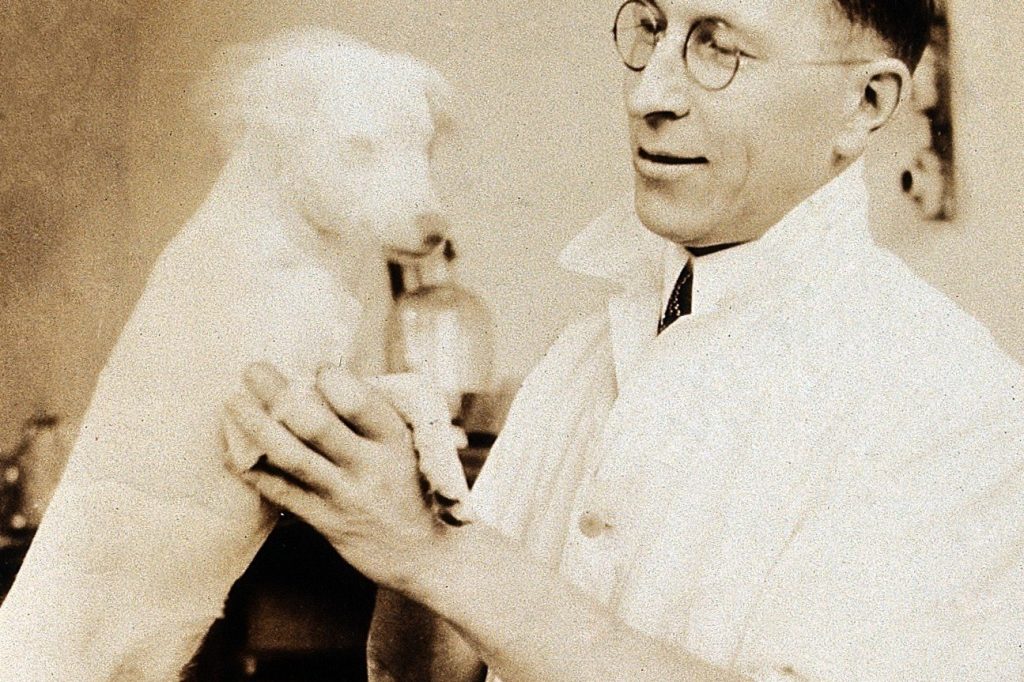
On January 11, 1922, a 14-year-old named Leonard Thompson was given the first injection of insulin ever tried on a patient. It happened at Toronto General Hospital. The idea behind it had come to Frederick Banting, a surgeon whose country practice was going nowhere, barely more than a year before.
A shy farm boy who failed English twice
Banting was born on November 14, 1891, in the family farmhouse outside Alliston, Ontario, the youngest of five children. He was shy and got bullied at school. Spelling was a particular torment. “I simply could not spell,” he later said. He failed his matriculation English twice and flunked his first year at Victoria College, then switched to medicine in 1912.
War interrupted. Poor eyesight got him turned away twice in 1914, but he joined the Royal Canadian Army Medical Corps in 1915, graduated on December 9, 1916 and sailed for Britain in March 1917. At the Battle of Amiens in August 1918 he spent days dressing the wounded at the front. At Cambrai, a patient, an amputee sergeant, shot a German soldier who walked into Banting’s aid post. Not long after, shrapnel from a shell ended his time on the line. He was awarded the Military Cross for “exceptional bravery while attending the wounded under fire.”
An article on the pancreas
Back in Canada he finished his surgical training and spent 1919 to 1920 as a resident surgeon at the Hospital for Sick Children. No staff job followed, so he opened a practice in London, Ontario. It failed.
On November 1, 1920, he had to give a class at the University of Western Ontario a talk on the pancreas, and he read up. Earlier researchers had concluded that diabetes came from a shortage of a hormone made in the islets of Langerhans, which Sharpey-Schafer had named insulin. Nobody could pull it out of ground-up pancreas, probably because the organ’s own enzymes destroyed it first. A 1920 article by Moses Barron on tying off the pancreatic duct gave Banting a way round the problem: the ligature killed the cells that produce the destructive enzyme and left the islets intact.
He took the plan to John Macleod, professor of physiology at the University of Toronto, who gave him lab space and a student, Charles Best. The biochemist James Collip joined later.
Dogs could not supply enough. In November 1921 Banting tried fetal calf pancreases from a William Davies slaughterhouse and found the extract just as potent. By December he had also got insulin from adult pancreas. Pork and beef stayed the main commercial sources until genetically engineered bacteria replaced them late in the 20th century.
In spring 1922 he opened a private practice in Toronto to treat diabetic patients. His first American patient was Elizabeth Hughes Gossett, daughter of U.S. Secretary of State Charles Evans Hughes.
The prize
The 1923 Nobel Prize in Physiology or Medicine went jointly to Banting and Macleod “for the discovery of insulin.” Banting split his half of the money with Best; Macleod split his with Collip. At 32, Banting remains the youngest laureate in the category. That same year the Canadian government gave him a lifetime annuity so he could keep working.
He died on February 21, 1941.




