
Think of a security guard handed a wanted poster. Before, he waved everyone through. Now he knows exactly which face to stop. That is the idea behind CAR-T therapy, and its first sketch came from an Israeli lab in 1989.
The 1989 blueprint
That year Dr. Zelig Eshhar’s group at Israel’s Weizmann Institute reported a way to redirect T cells so they could recognize antigens without depending on the usual MHC system. A Japanese immunologist, Dr. Yoshikazu Kurosawa, had reported a chimeric receptor two years earlier. Eshhar’s group then went a step further. They built a single-chain receptor that fused an antibody fragment to a signaling domain inside the T cell, which is the first-generation CAR. In plain terms, it let one molecule do the spotting and the alarm-ringing.
From a lab idea to patients
At the University of Pennsylvania, the first adult given CAR T cells was William Paul Ludwig, who had refractory chronic lymphocytic leukemia. He was treated in 2010 and remained in complete remission for over a decade. COVID-19 pneumonia took his life in early 2021.
In April 2012, Emily Whitehead became the first child with B-ALL leukemia to get CD19-directed CAR T cells. Her body reacted with severe cytokine release syndrome. Dr. Carl June’s team used tocilizumab, a drug first approved for rheumatoid arthritis, to bring the reaction under control. Eleven years after her treatment she was still cancer-free.
The FDA approved the first CAR T cell therapy, Novartis’s tisagenlecleucel (Kymriah), on August 30, 2017. Yescarta, Tecartus and Breyanzi followed, and two BCMA-targeted products for multiple myeloma, Abecma and Carvykti, were cleared in April 2021 and February 2022.
Where CRISPR Therapeutics fits
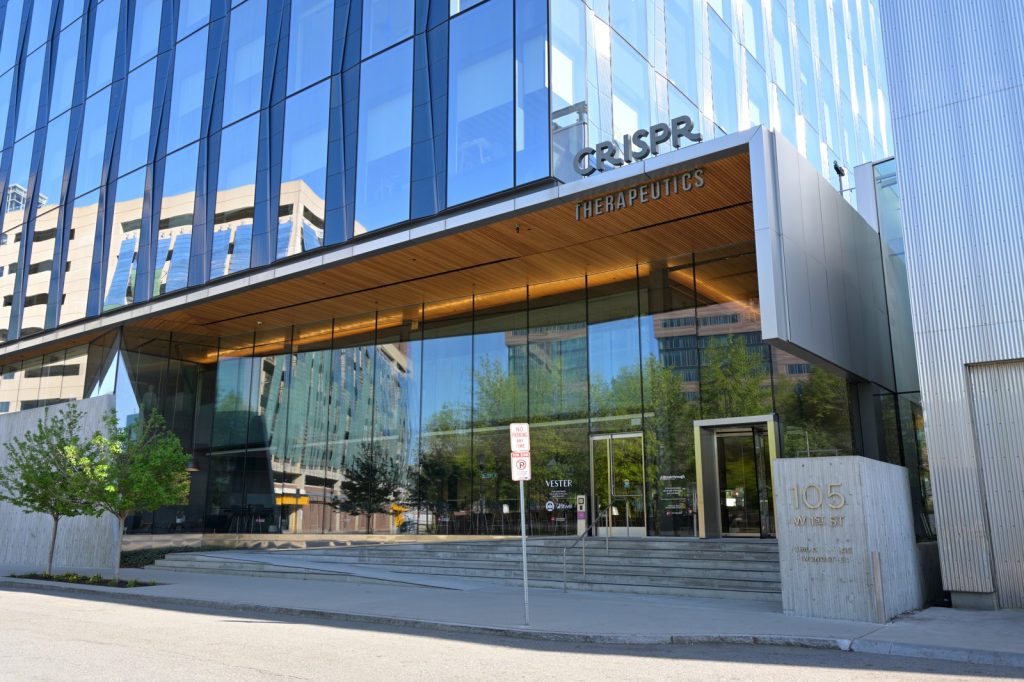
CRISPR Therapeutics won the first FDA approval for a gene-editing drug, Casgevy for sickle cell disease, in late 2023. It is also working on CAR-T that skips the patient’s own cells. Its candidate zugocabtagene geleucel, formerly CTX112 and called zugo-cel, is an off-the-shelf product. Any healthy donor can supply the T cells, and the company uses CRISPR Cas9 to edit them. That avoids the months a patient-specific treatment can take, and it lowers the cost.
The numbers so far are early but notable. A December 2025 update from the company said 39 patients had been treated across four dose levels, and the 600 million cell dose was picked for the next phase in large B-cell lymphoma. Among 10 patients with relapsed or refractory large B-cell lymphoma at that dose, 9 responded (a 90% overall response rate) and 7 had a complete response (70%). Of three patients followed for a year, 2 remained in complete response.
Lilly signed on to test zugo-cel alongside its drug pirtobrutinib in aggressive B-cell lymphomas. The company expects more data in the second half of 2026. These are small groups, and the trial is still running.
Sources
- From bench to bedside: the history and progress of CAR T cell therapy (Frontiers in Immunology)
- From bench to bedside: the history and progress of CAR T cell therapy (Frontiers in Immunology), milestones
- Cathie Wood's $362 Million CRISPR Therapeutics Bet (Motley Fool)
- CRISPR Therapeutics Provides Broad Update on Zugocaptagene Geleucel (Zugo-cel; formerly CTX112) (company release)
- CRISPR Therapeutics release, headline results




