
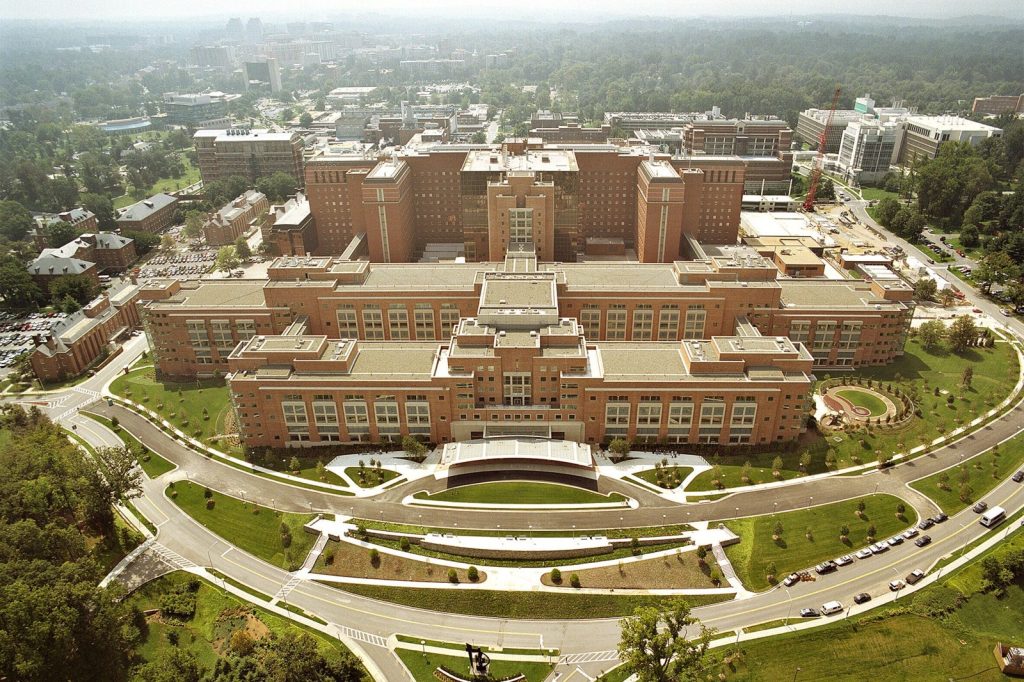
535,000 whole genomes. Close to 482,000 electronic health records. On June 30, 2026 the National Institutes of Health said its All of Us program had linked the two on that scale, which it described as a world first. The accompanying data release covered over 747,000 enrolled participants.
The bottom line for New York: Mount Sinai has been in the middle of this since 2024.
The scale of the database
By the numbers, the collection holds upward of 1.3 billion genetic variants. Beyond DNA, it carries clinicians’ notes, diagnoses and lab results, health surveys, readings from wearables like Fitbits, and air-quality figures for where people live. The goal is a million volunteers, drawn from all 50 states.
The figure that matters is who they are. Over 86 per cent belong to communities that medicine has historically under-studied: minority groups, seniors, women, people with disabilities, rural residents. The UK Biobank, the previous leader, covers roughly 500,000 people, nearly all of them of white European descent. Results built on one narrow population often do not transfer to the rest. All of Us has already turned up variants that protect people of African ancestry from kidney disease, a finding a narrower database would likely have missed.
“One of the most exciting components is its sheer diversity,” said Broad Institute geneticist Alicia Martin, who uses the data for risk-prediction tools.
Mount Sinai’s part
In November 2024 the NIH gave the Mount Sinai Health System almost $7 million to build and run a New York coalition for All of Us. NYU Langone and Weill Cornell Medicine joined it, along with the city public hospital system, New York City Health + Hospitals, and a clinic network called the Institute for Family Health. Year one called for signing up over 7,000 recruits around the tri-state area, plus 3,300 people with opioid use disorder.
Principal investigator Monica Kraft said the effort would fill a gap “in an area of the country with rich diversity”. The release itself describes New York as among the planet’s most ethnically and culturally varied places.
Output so far, and the money
Investors in public science will note the return. Researchers numbering about 23,000 have used the data, producing above 1,400 peer-reviewed papers. Participants have received over 733,000 personalised DNA results. Approved researchers get access free.
Funding is the soft spot. Since 2023 the programme’s budget has shrunk by 72 per cent, and a major source of support, the 21st Century Cures Act, lapses when this fiscal year ends. More than 50 medical organisations told Congress that a good deal of the work could disappear. Jay Bhattacharya, who directs the NIH, described the database as “a national treasure”.
Sources
- NIH unveils the world's largest genomics-and-health database – The Next Web
- Mount Sinai Awarded Nearly 7 Million From NIH to Create New York Coalition (press release)
- A new NIH database could shape the future of medicine – Marketplace
- A genetic window on 'All of Us' – Harvard Gazette




