
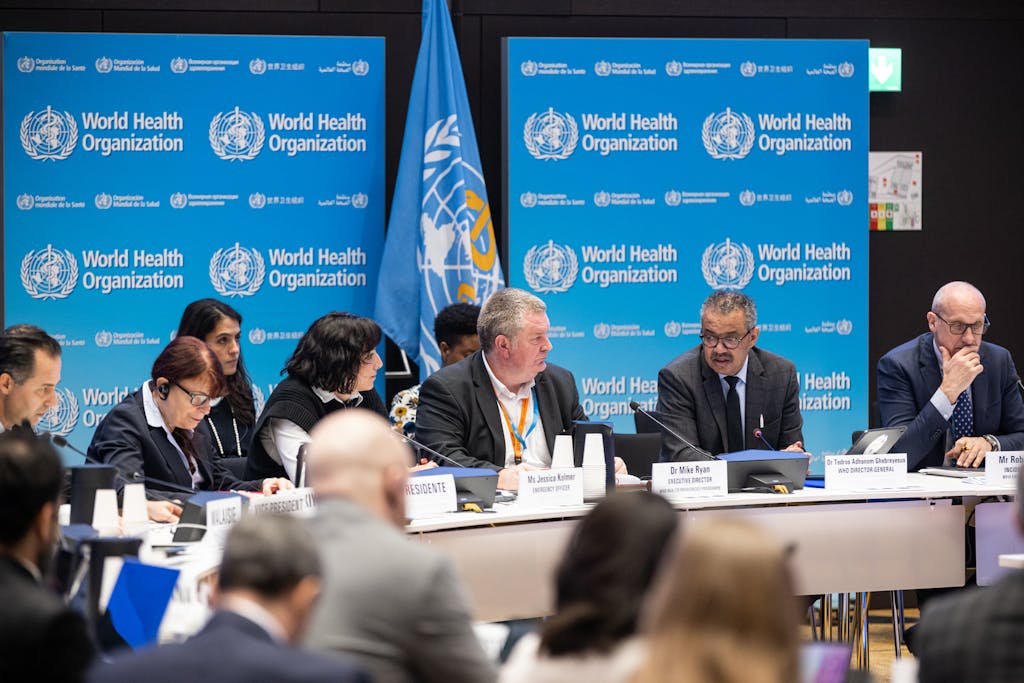
One hundred ninety-six countries are bound by the International Health Regulations. That makes the IHR the only international legal treaty that empowers the World Health Organization to act as the main global disease surveillance system. The regulations were first adopted by the World Health Assembly in 1969 and were last revised in 2024.
Their stated aim is to “prevent, protect against, control, and provide a public health response to the international spread of disease in ways that are commensurate with and restricted to public health risks and that avoid unnecessary interference with international traffic and trade.”
From 1851 to 1969
The roots go back to Paris in 1851, when the first of the international sanitary conferences met. Twelve nations came, 11 of them European, and three signed the resulting convention. The delegates were debating how to stop plague, yellow fever, smallpox and cholera crossing borders without choking trade. Ten such conferences were held in the 19th century. The WHO Constitution followed in 1948.
In 1951 the WHO issued its first rules, the International Sanitary Regulations, covering six quarantinable diseases: cholera, plague, relapsing fever, smallpox, typhoid and yellow fever. They were revised and renamed the International Health Regulations in 1969. The 26th World Health Assembly amended the cholera provisions in 1973. In 1981 the 34th Assembly dropped smallpox from the list of notifiable diseases because it had been eradicated worldwide.
The 2005 rewrite
By 1995 the 1969 rules looked stretched. The 48th World Health Assembly agreed they needed revising. The list of notifiable diseases was narrow: cholera, plague and yellow fever. The system depended on official notification by countries, and no formal international mechanism existed to coordinate efforts to stop a disease spreading. Meanwhile, Ebola hemorrhagic fever had surfaced in Zaire, and cholera and plague had returned in South America and India.
The rewrite came in 2005, after the 2002 to 2004 SARS outbreak, and took force in June 2007. It created the Public Health Emergency of International Concern, or PHEIC, for incidents that pose a significant global threat, including some that go beyond disease. The first full use was the response to the 2009 swine flu pandemic. A values statement published the same year commits the rules to respect for the dignity, human rights and fundamental freedoms of persons, guided by the UN Charter and the WHO Constitution.
Declaring a PHEIC is the director-general’s call. Before doing so, the director-general must weigh the risk to human health, the likelihood of international spread and the advice of an ad hoc IHR Emergency Committee. Its recommendations are temporary and reviewed every three months. Until 2011 the names of committee members were kept private; now they are published.
Compliance gaps
Ebola exposed the weak spots. The WHO’s response to the West African epidemic was seen as slow and inadequate, and by 2015 some 127 of the 196 countries could not meet the eight core public health capacities and report events as required. A review of seven major reports named inadequate compliance as a main reason the response dragged. Those reports also said countries’ own self-assessments of their capacity were not good enough.
In 2024, WHO members adopted further amendments at the 77th World Health Assembly in Geneva, citing shortfalls in the COVID-19 response. The changes added a higher alert level, the “pandemic emergency,” and created National IHR Authorities in each country to coordinate implementation. They also include provisions on access to medical products and on financing. The amendments entered into force in September 2025.
Consult your doctor for medical advice.




