
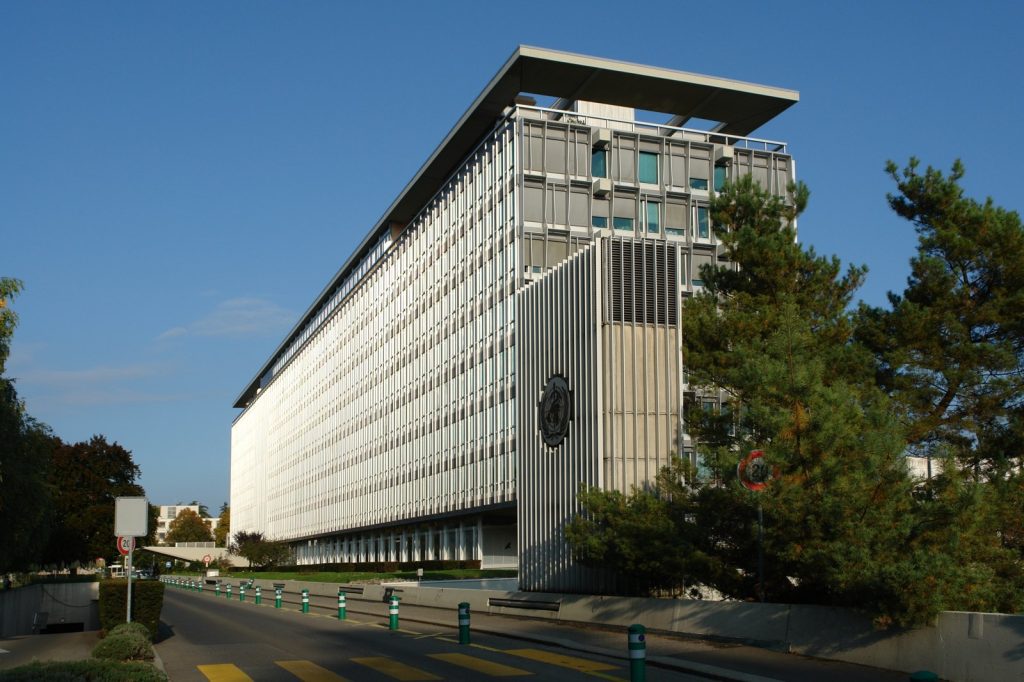
“It’s clear that a coordinated international response is essential to stop these outbreaks and save lives,” WHO director general Dr. Tedros Adhanom Ghebreyesus told reporters on Wednesday, August 14, 2024. Minutes earlier the World Health Organization had named mpox a public health emergency of international concern for the second time.
The declaration followed a continental emergency called two days before by Africa’s own health officials. On August 12, the Africa Centres for Disease Control and Prevention (Africa CDC) said the growing outbreaks had become a public health emergency and asked the international community for help.
A grimmer picture than 2022
Mpox causes painful, pus-filled lesions and, in some patients, severe illness or death. It first spread across the world in the summer of 2022 through sexual networks, which led to the WHO’s first emergency declaration. That one lasted 10 months, until mid-2023.
This year looks worse in several ways, CBC News reported. Thousands of infections have been recorded across 18 African nations. A highly transmissible form of the virus has crossed out of the Democratic Republic of Congo (DRC). Aid groups say newborns are falling ill in the country’s overcrowded hospitals.
More than 15,000 cases and nearly 500 deaths have been identified on the continent so far this year, a 160 per cent increase over the same period in 2023. By August 16, the DRC alone had reported 16,839 cases and 501 deaths, according to figures cited by Africa CDC, and more than 96% of all cases and deaths were there.
The new strain
Health officials worry most about clade Ib, a newer strain circulating in the DRC. It appears to cause more severe disease. It has now turned up for the first time in Rwanda, Uganda, Kenya and Burundi. The 2022 outbreak, by contrast, was clade II, which is still circulating in many countries, among them Canada, the U.S. and several in Africa.
Early research from a joint Canadian-DRC team suggests clade Ib also began spreading through sexual contact. It may be more virulent, though, and able to pass through close household contact to infants and children. WHO data suggests seven in 10 cases in the DRC are among children under 15, who have higher death rates than adults.
“Children are the worst impacted,” said Dr. Dimie Ogoina, who chairs the WHO emergency committee. He is a physician-scientist and professor of medicine at the Niger Delta University. Ogoina also warned that without broader efforts to contain the virus in Africa, it could again jump “beyond Africa to other regions of the world”.
Africa CDC puts the overall death rate at 3 to 4 per cent, against under 1% in the 2022 to 2023 outbreak. Officials stressed the figure is murky, because official counts are merely “the tip of the iceberg”.
Dr. Maria Van Kerkhove, who leads the WHO’s department of epidemic and pandemic preparedness and prevention, said more study is needed. “We need standardized data collection on the patients that are infected with mpox to understand the disease course, the severity of this,” she said. That will be hard in rural and remote regions.
Vaccines are short
Africa CDC officials said on Tuesday that 10 million vaccine doses are needed. The continent has so far procured 200,000 through manufacturer Bavarian Nordic. The U.S. pledged to donate 50,000 doses earlier this year, and the European Commission said it had coordinated the procurement and donation of 215,000 doses from Bavarian Nordic to support Africa CDC.
Tedros said he had triggered the process for emergency use listing of mpox vaccines the week before. The listing should speed access for lower-income countries that have not issued their own national approvals, and it lets Gavi and UNICEF buy vaccines for distribution.
Canadian officials told CBC News that Canada has enough doses for domestic needs and has received no donation request from Gavi, the WHO or any other country. Global Affairs Canada said it is working with Gavi on options, including a possible donation. Dr. Darrell Tan, an infectious diseases physician at St. Michael’s Hospital in Toronto, said: “I think it is a grave concern that we are treating other parts of the world as though they are less important.”
The virus had already reached Europe by the time the week was out. Sweden’s Public Health Agency reported the first case outside Africa on August 15, in a person who had caught clade I mpox while staying in an affected area. The European Centre for Disease Prevention and Control raised its risk level for the general European population from “very low” to “low” on August 16, while calling the risk of sustained transmission there minimal.
Sources
- WHO names mpox a global health emergency for 2nd time as virus surges in Africa | CBC News
- 2023–2026 mpox epidemic – Wikipedia




