
PITTSBURGH, October 18, 2026 — Viatris announced that the U.S. Food and Drug Administration approved RYZUMVI to treat presbyopia in adults, offering a new pharmaceutical option for an aging eye condition while the company seeks a domestic commercial partner.
Understanding Presbyopia and the Aging Eye
According to Viatris, presbyopia is the gradual loss of near focusing ability due to aging that typically becomes noticeable in the early to mid-40s. Background data from Wikipedia notes that this physiological insufficiency of optical accommodation results in a progressively worsening ability to focus clearly on close objects. It is a nearly universal condition that, when uncorrected, contributes significantly to vision-related disability. The condition leads to symptoms like eye strain and blurred near vision, impacting daily tasks and productivity. Other common signs include difficulty in reading small print, which results in having to hold reading material farther away, alongside associated headaches.
How RYZUMVI Works and Competes
According to clinical reports, RYZUMVI is an alpha-adrenergic antagonist that constricts the pupil. This approval rests on data from the Phase 3 VEGA-2 and VEGA-3 trials. The presbyopia market already features at least one competitor in Allergan’s Vuity, which received FDA approval in March 2023. While Vuity uses a cholinergic agonist mechanism, RYZUMVI relies on phentolamine ophthalmic solution 0.75% to achieve pupil constriction through a different pathway.
Clinical Trial Safety and Side Effects
Clinical trial data show common ocular adverse reactions reported in more than 5% of subjects. These include conjunctival hyperemia and instillation site irritation. Further trial data reported instillation site discomfort including pain, stinging, and burning alongside conjunctival hyperemia, while the only non-ocular adverse reaction reported in more than 5% of subjects was dysgeusia. According to Viatris, the majority of the adverse reactions reported in the trials were mild, transient, and self-resolving.
Commercial Plans and Next Steps
Viatris holds U.S. commercialization rights through a global licensing agreement with Opus Genetics. However, the company currently has no U.S. commercialization plan in place. Viatris states that it is exploring the potential for a partner in the United States to commercialize RYZUMVI for the treatment of presbyopia. Early findings suggest that having an approved product without an active sales force leaves questions about how quickly it will reach presbyopic adults. Patients managing near-vision changes should talk to your doctor about available vision correction options and whether new pharmacological treatments fit their personal health needs.
Mechanism of Action Compared to Vuity
RYZUMVI works as an alpha-adrenergic antagonist that constricts the pupil through a different mechanism than Vuity, which uses pilocarpine, a cholinergic agonist. This distinction in pharmacological pathways means RYZUMVI targets adrenergic receptors to achieve miosis, while Vuity stimulates muscarinic receptors to induce pupil constriction. The differing mechanisms may influence how each drug affects ocular physiology and patient experience.
According to clinical trial data, phentolamine in RYZUMVI achieves pupil constriction via alpha-adrenergic blockade, whereas Vuity’s active ingredient, pilocarpine HCl ophthalmic solution 1.25%, acts as a direct agonist at cholinergic receptors. This fundamental difference in how the two drugs engage the eye’s neuromuscular system represents a key point of differentiation in the presbyopia treatment landscape.
Trial Adverse Reactions and Frequencies
Clinical trial findings detail specific incidence rates for adverse events occurring in more than 5% of subjects. Among ocular reactions, conjunctival hyperemia was reported in 21% of presbyopia subjects, while instillation site irritation occurred in 16%. Additional trial records note instillation site discomfort affecting 16% of subjects, which encompasses symptoms like pain, stinging, and burning, alongside a 12% incidence rate for conjunctival hyperemia.
Beyond local eye effects, the trials identified one non-ocular adverse reaction reported in more than 5% of subjects. Specifically, dysgeusia occurred in 6% of trial participants.
Sources
- Viatris Receives U.S. FDA Approval for RYZUMVI® for the Treatment of Presbyopia
- FDA Approves RYZUMVI for Presbyopia; Viatris Seeks Commercial Partner
- Viatris Receives U.S. FDA Approval for RYZUMVI® for the Treatment of Presbyopia
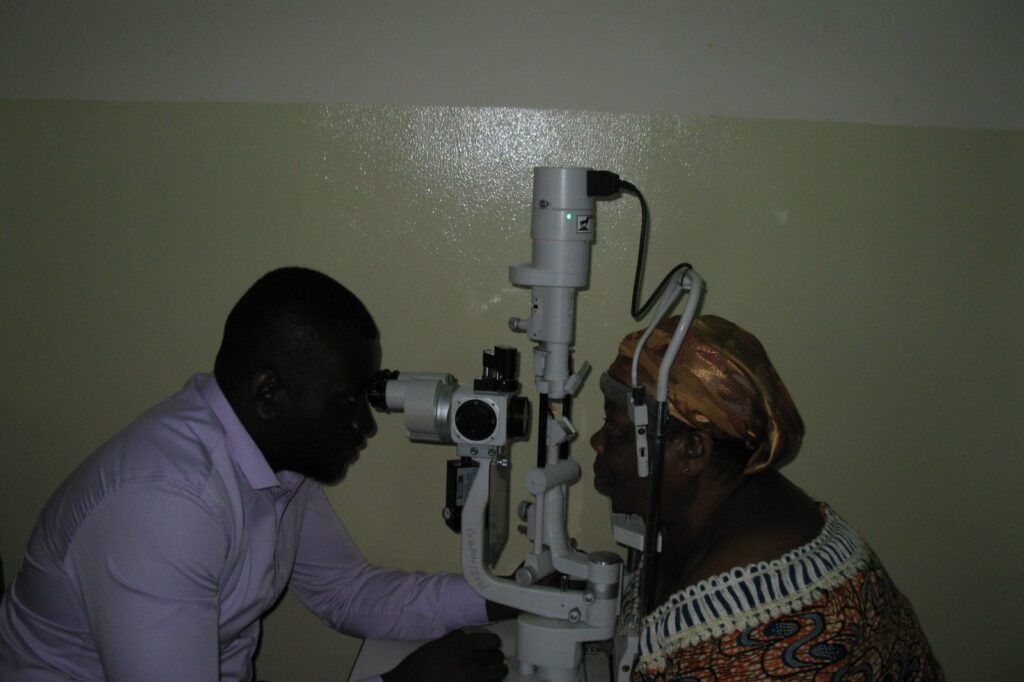
Photo: Gkbediako (CC BY-SA 4.0)




