
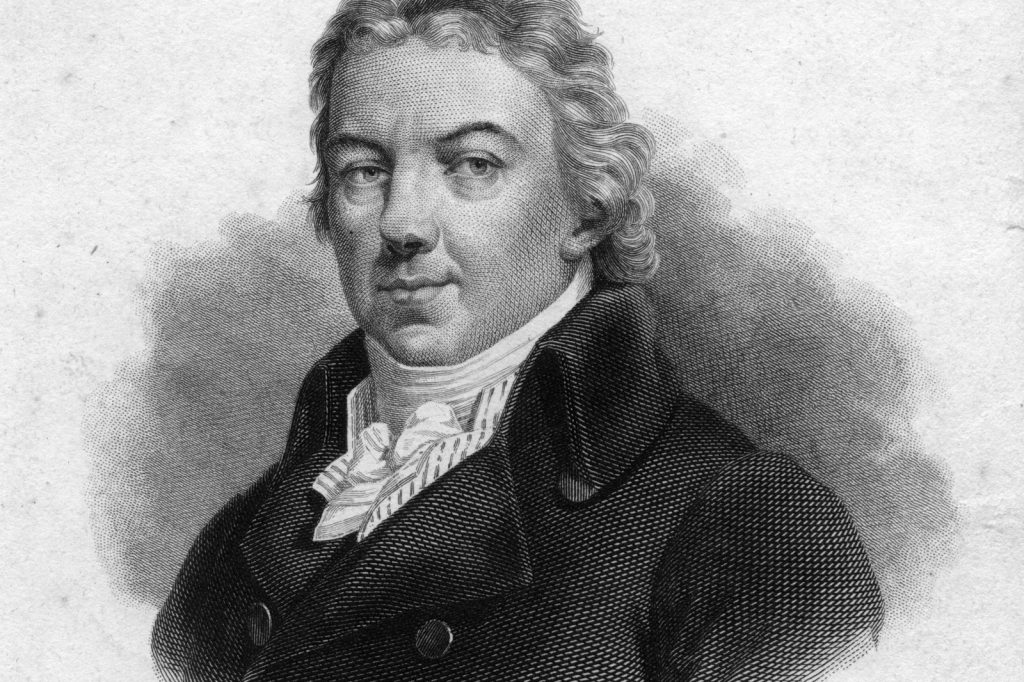
Smallpox hit Boston in the winter of 1764, and John Adams queued up for inoculation. Edward Jenner’s famous experiment was still more than thirty years away. Adams had the older method, variolation, which meant using pus from a mild smallpox case to give the body a rehearsal. It was cruder than vaccination, and as ever, the detail that matters is how many people had already worked out that it worked.
An old idea, many origins
Long before Europe took notice, people in Africa, the Ottoman world, China and India were already doing it. Chinese writing mentions inoculation by 1549, though the practice may be a few hundred years older. The technique itself was unglamorous: smallpox material rubbed into a shallow cut on the arm, or ground up and blown into the nose through a long pipe.
It travelled west by way of Constantinople. In Boston in 1721, Cotton Mather learned of it from Onesimus, an enslaved man, and persuaded his friend Zabdiel Boylston to try it during the city’s sixth large smallpox outbreak. In England, Lady Mary Wortley Montagu, who learned of the practice at the Ottoman court, arranged the same for her daughter.
The reaction was ugly. Boylston inoculated hundreds, was accused by critics of murder, and was attacked in the street. His data won the argument: smallpox mortality fell to 1 or 2% from about 15%. Even William Douglass, the loudest opponent, conceded the benefits in print by 1749.
Jenner, and a tidier story than the truth
Jenner’s step came in 1796. Milkmaids and others who had caught cowpox appeared immune to smallpox, and cowpox produced only local lesions in a disease that was mild and not considered deadly. A vaccine built on cowpox was a far safer proposition than variolation. For almost eighty years it stayed the only vaccine in use anywhere.
The folk tale of the beautiful milkmaid and the lone genius is, according to McGill University’s Office for Science and Society, made up. Variolation predated Jenner by centuries, and Jenner built on it.
Eradication
In 1967 the World Health Organization stepped up its drive to wipe the disease out. Smallpox was fatal in up to 30% of cases. The last known natural case was recorded in Somalia in 1977, and in 1980 the WHO declared the disease eradicated, the only infectious disease to reach that mark. In 1996 the World Health Assembly decided the remaining live virus stocks should be destroyed in June 1999, with small samples kept for research in two secure laboratories, one in the United States and one in the Russian Federation.
Under the hood of the newest vaccines
The 2020 coronavirus race showed how far the technology had moved. China announced the Sinovac vaccine in June 2020, using killed virus. Russia followed in August 2020 with Sputnik V, a “hollowed out” adenovirus carrying the coronavirus’s messenger RNA. Pfizer and Moderna used lipid nanoparticles instead of a viral vector, and by December 2020 the FDA approved both mRNA vaccines for emergency use in the United States. Inside the cell, the messenger RNA tells the protein machinery to make proteins resembling those on the virus’s surface, and T cells and B cells do the rest.
Consult your doctor about which vaccines are right for you.
Sources
- Vaccine Timeline | History of Vaccines
- Smallpox
- Variolation vs. Vaccination: 18th Century Developments in Smallpox Inoculation | Beehive
- The White Lie at the Heart of Vaccine History | Office for Science and Society – McGill University




