
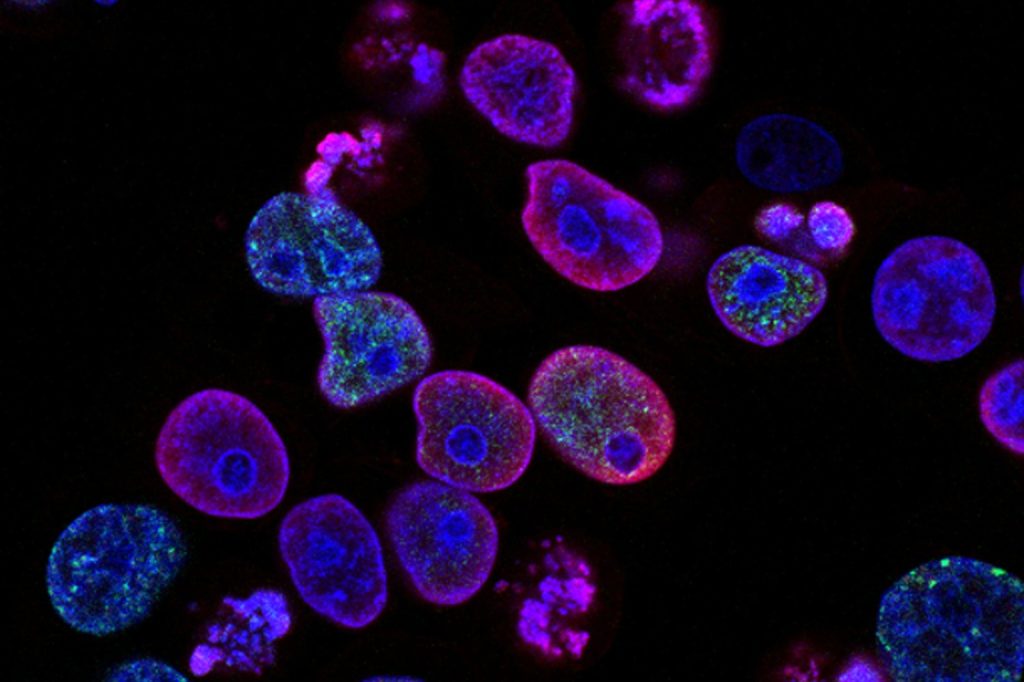
Macrophages look made for fighting tumours. They push into them, swallow cancer cells and help organise the immune response. The trouble is turning them into a treatment, and a team at USC Stem Cell now says it may have found a way around that by starting one step earlier in the cell’s development.
Their paper in the journal Cell describes a method for growing a renewable, expandable supply of granulocyte-monocyte progenitors, or GMPs. These are the precursor cells that produce macrophages and several other immune cells. The work was done in the lab and in mice. No patient has been treated.
Why not use macrophages directly
Mature macrophages are hard to grow in large numbers outside the body and hard to genetically engineer. Freezing and storage can damage them. After infusion they tend to collect in organs such as the lungs and liver instead of spreading through the body. T-cell therapies have had major success against blood cancers, but macrophage-based therapies may have advantages against solid tumours.
First author Shi Yue, MD, and colleagues in the lab of Qi-Long Ying, MD, PhD, a professor at the Keck School of Medicine of USC, worked with GMPs instead. A defined chemical cocktail kept the cells from maturing into other immune cell types, which let the team maintain and expand them for long periods. After all that growth, the cells still looked and behaved the same and still produced working macrophages and other immune cells.
That runs against a common view. “The prevailing view has been that long-term self-renewal in the blood system is primarily a property of the hematopoietic stem cells that can generate any type of blood or immune cell,” Ying said. “We found that, under the right conditions, GMPs can also self-renew, dividing extensively while keeping their identity and ability to produce functional immune cells.”
A group led by Ravi Majeti, MD, PhD, at Stanford University reproduced the long-term maintenance and genetic engineering of GMPs on its own. Majeti, who directs Stanford’s Institute for Stem Cell Biology and Regenerative Medicine, said the method “opens the door to numerous translational applications, much like T cell expansion and engineering.”
What happened in mice
The researchers gave GMPs a chimeric antigen receptor, or CAR, so they could recognise a specific marker on cancer cells. Some also received a second signal meant to activate nearby immune cells that help stimulate tumour-fighting T cells. That signal kept working even when donor and recipient cells were immunologically mismatched. This raises the possibility of therapies made in advance from donor cells for many patients, not custom-built for each one.
Mouse and human GMPs were expanded and engineered, then given to mice. The cells settled in the bone marrow and other blood-forming tissues and kept producing engineered macrophages and other immune cells. That steady supply avoided the rapid loss that has limited mature macrophage therapies, including some tested in recent clinical trials.
In mice with blood cancers and solid tumours, CAR-engineered GMPs slowed disease progression. Cells carrying both the CAR and the extra signal did better. In mice with chronic granulomatous disease, an inherited immune disorder, the treatment restored the animals’ ability to fight bacterial infections.
“Our study suggests that the future of immunotherapy may depend not only on designing better CAR receptors, but also on choosing the right developmental stage of the cell,” Ying said.
The paper is titled “Expansion and CAR engineering of granulocyte-monocyte progenitors for cellular immunotherapy.” Ying, Yue, Majeti and several co-authors are co-inventors on related patents licensed to Myelogene Inc., and Ying, Yue, Majeti and Chao Zhang are co-founders of that company.
These are early findings in animals, and treatments for people would need much more testing. The encouraging part is a possible new foundation for cell therapies. Anyone with questions about cancer treatment options should talk to their doctor.
Sources
- USC scientists just unlocked an endless supply of cancer-fighting immune cells
- Endless Supply of Cancer-Fighting Immune Cells Unlocked by USC Scientists




