
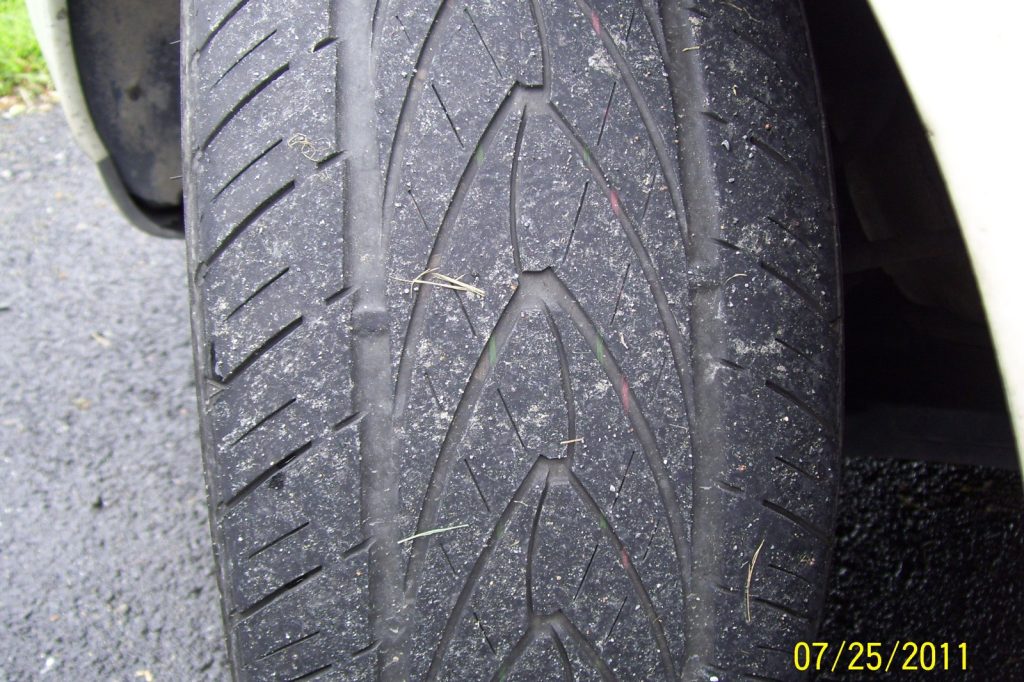
A computer model says a chemical shed by car tires can latch onto three proteins tied to Alzheimer’s disease. Nobody has yet shown it does so in a living brain.
The chemical is 6PPD-quinone, or 6PPD-Q. It forms when tire particles meet ozone in the air. The parent compound, 6PPD, is an additive that keeps rubber from cracking. Around 2020, scientists identified the quinone as the cause of sudden salmon die-offs after storms in the Pacific Northwest. Rain washes it off roads and into streams.
Since then it has turned up in road dust, rivers, and human urine, blood and spinal fluid. In mice, it crosses the blood-brain barrier within half an hour. What it does once it gets there is largely unknown, and a new paper in the journal Open Medicine tries to sketch an answer.
Working only with data
Lead authors Chun Zhang, of Chongqing Three Gorges Medical College, and Jingqi Zhang, of Chengdu University of Traditional Chinese Medicine, did no lab work and dosed no animals. They ran computational methods, including machine learning, and checked the results against datasets other labs had published.
First they mapped which human proteins the chemical is likely to interact with, then compared that list with genes known to matter in Alzheimer’s. The overlap came to 92 shared targets. The team narrowed these to 23 core proteins. Three stood out: NFKB1, GSK3B and PIK3CA. Where those proteins are most active in the body pointed to brain regions involved in the disease.
Next, they pulled gene-activity data from postmortem brains. One set covered 12 Alzheimer’s patients plus 10 older and 8 younger comparison brains. Another compared 44 patients with 46 controls. Several flagged proteins behaved differently in diseased tissue. A genetics-based test using data from nearly 490,000 people also supported a possible causal link between NFKB1 and Alzheimer’s risk.
Finally, the researchers simulated whether 6PPD-Q physically fits into these proteins. Several fits looked snug, especially with PTGS2, a marker of inflammation. The picture they draw is a chemical that could stir up oxidative stress and inflammation and disrupt signaling between brain cells.
Why experts urge caution
The paper says it is the first to explore the link systematically with data-driven methods. Laura Bojarskaite, a neuroscientist and sleep researcher at the University of Oslo who was not part of the study, called it “intriguing” and said the proposed mechanisms “are not obscure.” Oxidative stress, inflammation and breakdowns in cell communication are central features of many neurodegenerative disorders, she told Newsweek.
She also warned against reading too much into it. Until human cell and animal studies confirm these interactions, the work describes theoretical pathways, she said, “a far cry” from proof that exposure raises anyone’s dementia risk.
The authors list limitations of their own. The brain tissue came from late-stage patients and was never measured for tire-chemical exposure. The smallest dataset held only 12 patients. One result even cuts against the story: NFKB1, the protein with the strongest genetic link, may protect healthy neurons rather than harm them. The authors say experimental validation is needed, and they call for animal studies with long-term, low-dose exposure and for epidemiological work on how much everyday exposure raises risk.
Bojarskaite placed the study in a wider trend. “Air pollution, for example, is now increasingly recognized as a potential contributor to cognitive decline and dementia,” she said. “This new study adds tire-derived chemicals to the growing list of environmental exposures that deserve closer attention.”
The authors report no competing interests and no external funding. People worried about dementia risk should speak with their doctor.
Sources
- Common tire chemical may raise Alzheimer’s risk, study finds
- Emerging evidence links tire pollution to Alzheimer’s risk
- Roadway to the Brain? Alzheimer’s Linked to Notorious Tire Chemical




