
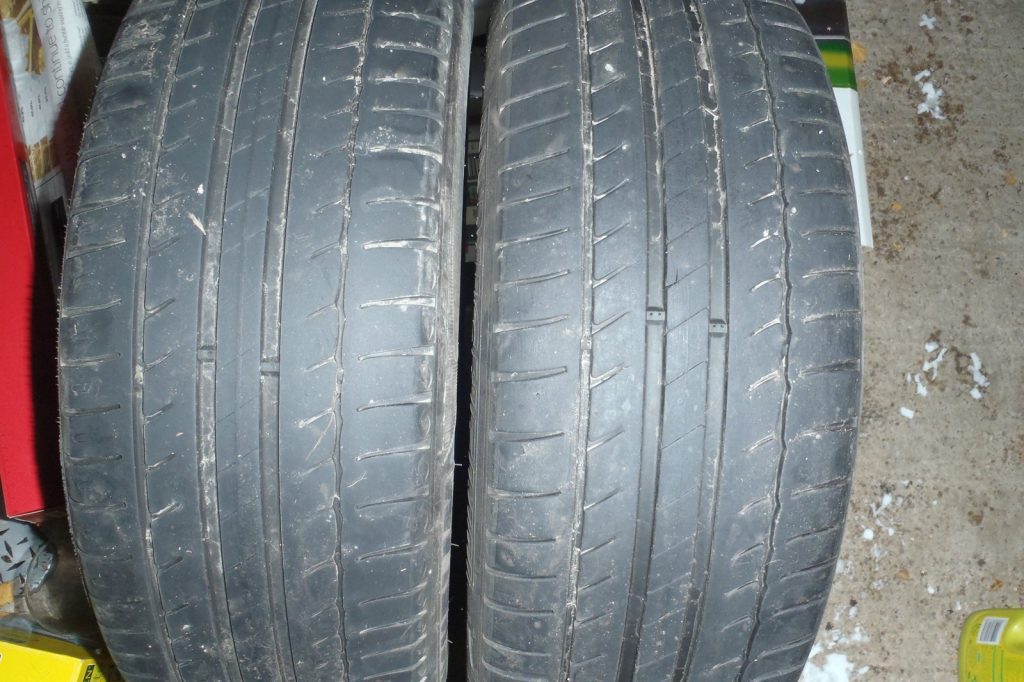
Every mile a car drives grinds off a little tire rubber. When a chemical added to that rubber meets ozone, it turns into 6PPD-quinone, and a new computer-based study says the substance may have ties to Alzheimer’s disease.
The paper, published in Open Medicine, is the first to test that connection systematically with a broad computational approach. The authors combined network pharmacology, transcriptomics, machine learning, Mendelian randomization and molecular docking to trace how the compound might interact with genes and proteins involved in the disease.
Exposure does not look rare. 6PPD-quinone has turned up in water, soil, road dust and human biological samples. It is already notorious for killing coho salmon at environmentally relevant concentrations, and earlier work showed it can cross the blood-brain barrier in mice within half an hour of exposure.
What the models found
The team first looked for overlap between the compound’s predicted targets and genes tied to Alzheimer’s. They found 92 shared targets and narrowed those to 23 core genes. Those core genes clustered in brain regions including the cortex, amygdala, hypothalamus, basal ganglia and frontal cortex.
NFKB1, GSK3B and PIK3CA ranked as the top hub genes in the protein interaction network. NFKB1 stood out most, and the Mendelian randomization analysis supported a possible causal link between NFKB1 expression in brain tissue and Alzheimer’s risk.
A machine learning classifier then picked five genes with the highest predictive value for telling Alzheimer’s samples from controls: PTGS2, KIT, PIK3CA, NFE2L2 and NFKB1. Docking simulations suggested the chemical binds several of these proteins, with relatively strong affinities reported for PTGS2, NFE2L2, GSK3B, KIT and PIK3CA. NFKB1 showed more moderate binding.
The strongest signals pointed to inflammation, oxidative stress, cell death and damage at the synapse, where neurons communicate.
The caveats
This was mainly a computational study. It did not expose people or animals to the chemical. The brain data came from postmortem tissue and say nothing about any individual’s exposure, and one dataset held only 12 Alzheimer’s cases. The docking results are modeled interactions, not proof of what happens in living tissue.
Laura Bojarskaite, a neuroscientist at the University of Oslo who was not part of the work, called the proposed mechanism plausible. She told Newsweek the researchers have found theoretical pathways, “a far cry” from showing that exposure raises a person’s dementia risk. She wants laboratory studies in human cells and animal models first. “The disease likely arises from a complex interaction between genes, lifestyle, vascular health, sleep, and environmental exposures accumulated across the life span,” she said.
The authors say their work “provides the first systematic characterization of the molecular mechanisms by which 6PPD-Q may contribute to Altzheimer’s disease pathogenesis.” Cell studies, animal studies, human tissue work and epidemiological research all come next. Anyone worried about memory or dementia risk should talk to their doctor.
Sources
- Common tire chemical may raise Alzheimer’s risk, study finds
- Vehicle tire wear pollution linked to Alzheimer’s risk – impacting over 30 million people globally




