
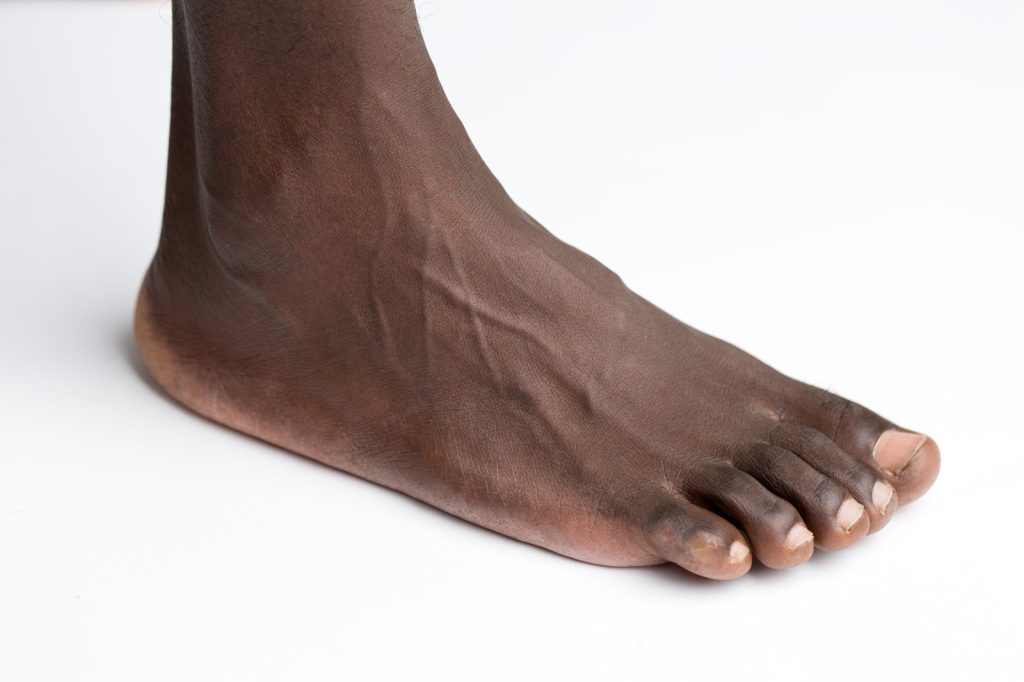
BOSTON — Runners might notice something odd about their feet long before a blister forms: the hair on their toes starts thinning out. Dr. Michael Richardson, a family medicine doctor in Boston, points to friction from shoes as a common culprit. “Runners,” he said, where the constant rubbing against footwear can literally wear away the hair follicles over time.
This is not an emergency. Dr. Richardson said toe hair is not going to be the first sign if something is going wrong.
But it is a signal. A visible one. And it tells a story about blood flow, genetics, and the sheer mechanical abuse feet endure.
Dr. Natasha Bhuyan, vice president of in-office care and national medical director at Amazon One Medical, said having hair on your toes is perfectly normal. It depends on genetics and hormones.
Factors you cannot control. Your ethnic background plays a role too. What looks normal for one person looks completely different for someone else.
The real question is change. If you have always had hairy toes and suddenly they are smooth, that is worth a conversation with a doctor. Loss of toe hair can signal underlying health issues.
Blood flow problems are one possibility. When circulation to the extremities declines, hair follicles — which need oxygen and nutrients — can shut down.
The same mechanism causes hair loss on the legs in people with peripheral artery disease. But context matters. A runner who logs high mileage may just be experiencing mechanical hair loss.
The friction against the shoe top is persistent. It rubs.
The hair falls out. That is not a medical crisis. It is physics.
Dr. Richardson emphasized that everyone’s normal is different. Having hair on your toes does not mean it is abnormal. The human body varies wildly.
Some people have dense tufts on their second toe. Others have none.
Both are fine, as long as it has always been that way. The tricky part is noticing the change. Toe hair is not something most people inspect daily.
Sandal season forces the issue. People look at their feet.
They see hair, or they see none. They wonder. Dr. Bhuyan said the amount of hair on your toes really just indicates your genetics and hormones.
Factors you often cannot influence. So a sudden shift — hair disappearing from one foot but not the other, or from both feet in a short time — is the detail to flag. This is not about vanity.
It is about pattern recognition. The body sends signals constantly.
Most are noise. Some are data. Toe hair loss, in rare cases, is data.
It points to circulation, to nerve health, to the simple wear and tear of daily activity. Doctors caution against panic.
Dr. Richardson noted that toe hair is not going to be the first sign if something is going wrong. By the time hair loss appears from poor circulation, other symptoms — numbness, coldness, pain while walking — are usually already present. But if you notice that your toe hair is less than normal for you, it could be a sign of something damaging that area.
Damage from friction against shoes is common. Dr. Richardson cited runners as an example. The constant friction can lead to hair loss on the toes.
That is mechanical, not medical. The hair may grow back if the friction stops.
Or it may not. Feet adapt. What this signals is a growing recognition of the complex interplay between our physical attributes and health.
A tuft of hair on a toe is not a diagnosis. But it is a clue.
The body does not do random things. Every hair follicle has a reason for being there or being gone. Genetics, hormones, blood flow, friction.
One of those is usually the answer. Consult your doctor for medical advice. That is the standard line.
But the takeaway is simpler: look at your feet. Notice what is normal for you.
If it changes, ask why. That question alone is worth more than any internet search.
{“@context”: “https://schema.org”, “@type”: “NewsArticle”, “headline”: “Runners’ Toe Hair Thinning Linked to Shoe Friction, Doctor Says”, “description”: “BOSTON — Runners might notice something odd about their feet long before a blister forms: the hair on their toes starts thinning out. Dr. Michael…”, “datePublished”: “2026-06-18T08:30:00+00:00T09:30:00+00:00”, “author”: {“@type”: “Person”, “name”: “Ava Anderson”}, “publisher”: {“@type”: “Organization”, “name”: “InfoPulse Today”, “url”: “https://newsfeed.infopulsetoday.com/”}}




