
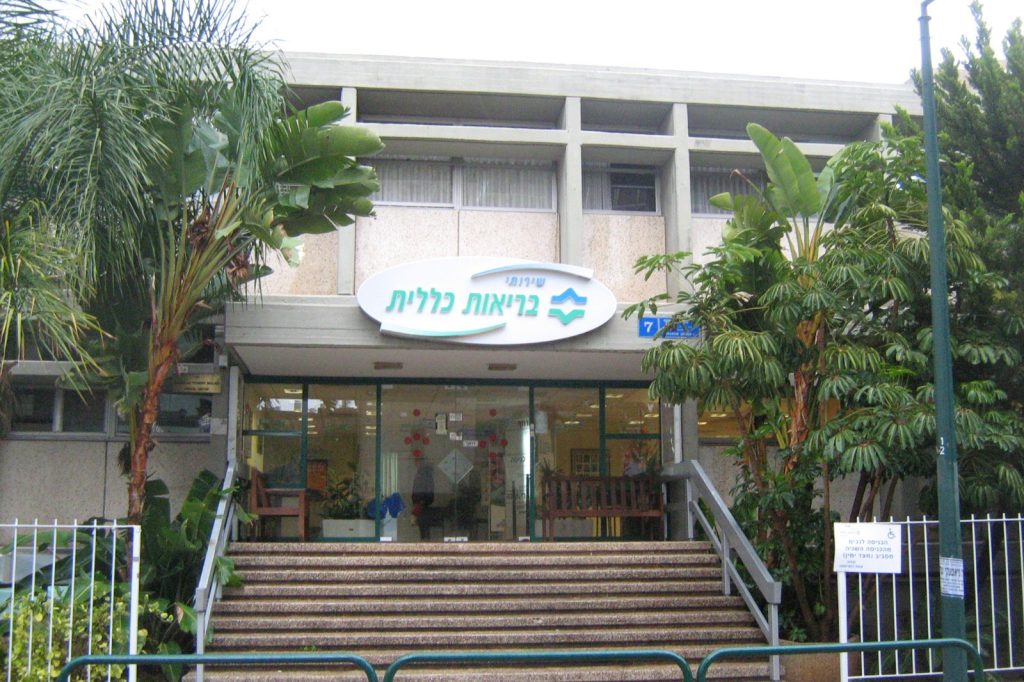
“I didn’t even know how to make an appointment,” Yael Lakin says of her first months as a new immigrant in Israel.
Lakin moved from California at 18 for a gap-year seminary program and decided to stay. The confusion hit hardest when she was pregnant with her first child. “It was very difficult for me at first,” she said. “It was hard to understand what to do, which doctors to see.” Then she moved to Clalit. “I came to Clalit, and from there it was very smooth.”
She is now raising two children in the country, and she credits part of that ease to her family doctor. “The doctor here knows me. He knows my kids. He recognizes them,” Lakin said. “There’s a lot of trust that he knows what he’s doing and that he’s familiar with how my children usually behave.”
A clinic that speaks English
Her clinic is Clalit’s Givat Shapira branch in Jerusalem, where a multilingual team of doctors, nurses, pharmacists and administrative staff works under one roof. Dr. Benji Goldstein, a family physician there, was born in Canada and raised in Israel. After his military service he went back to Canada to study psychology and medicine, then specialized in family medicine.
He says new patients often walk in overwhelmed by an unfamiliar structure and unsure where to begin. “Understanding how it works can be a little bit confusing,” Goldstein said. “They’re often very relieved after they get over that initial feeling of being overwhelmed.”
Speaking to a doctor in your own language makes it easier to describe pain and ask questions you might otherwise hold back. Goldstein puts it simply: “I’d like to say, first and foremost, I’m a person, and then I’m a doctor. I’m not treating a laceration. I’m treating a person with a laceration.”
The family doctor as first stop
Goldstein, now regional director of family medicine for Clalit’s Jerusalem District, took part in a ynet Global panel with Dr. Danna Ekmaty Azria, a pediatrician and regional director for Clalit’s Central District. They were explaining why community medicine sits at the core of Israeli health care.
“The family doctor is your first line for care, your first line for everything basically,” Goldstein said. Patients regularly go back to that doctor after a specialist visit to make sure tests, referrals and follow-up care are handled inside the system.
Ekmaty Azria described the clinic as “a full clinic with secretaries, administrative staff, nurses, doctors and often additional services like dietitians, nutritionists and social workers. It’s a whole envelope and a whole team who are there to take care of you.” For newcomers, she said, that matters because “a lot of people have no clue about the bureaucracy.”
The panel followed an earlier ynet Global feature on immigrants who pick a health fund before they understand how the system works. Many, that article found, choose on recommendations or a familiar brand name, without comparing how easy a clinic is to reach, where it is, or whether staff speak their language.
Goldstein, himself an immigrant, said the adjustment can be hard for people from countries with different models. Access can surprise them, though. “In Canada, a non-urgent orthopedic appointment can take six months to a year and a half,” he said. “In Israel, sometimes it’s three days.” Unified records help too: physicians across the country can see a patient’s consultations, imaging, lab tests and hospital reports through the same public system.
Both doctors urged newcomers to look for a family doctor they trust. “You don’t necessarily need the best doctor,” Ekmaty Azria said. “You need someone you feel you can count on.”
Sources
- Clalit helps olim access health care in their own language
- Why family doctors are key to navigating Israel’s healthcare system for new immigrants




