
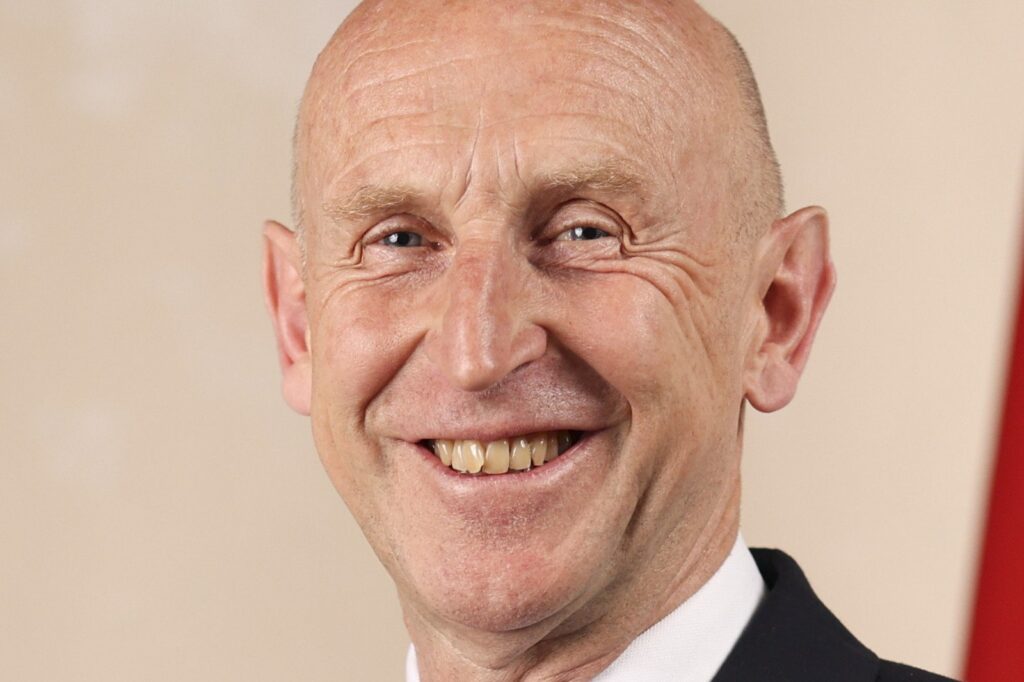
A new petition calling for the UK income tax threshold to be raised to £18,000 has been launched ahead of Chancellor John Healey’s first Budget on October 28.
The petition, set up by Mike Haynes, follows his previous effort which closed on September 30 with 86,538 signatures, falling short of the 100,000 needed to trigger a parliamentary debate.
Current Tax Allowance and Fiscal Drag
The personal allowance has been frozen at £12,570 since 2021, with former Chancellor Rachel Reeves confirming it would remain at that level until 2031.
Experts warn this freeze is causing “fiscal drag”, pulling more workers into higher tax bands as wages rise.
Had thresholds not been frozen in 2021 they today could be around £16,400 a year.
Projected Savings and Government Cost
The Government has previously said that raising the allowance to £18,000 would cost over £40 billion a year — equivalent to cutting roughly a fifth of the NHS budget in England.
Political Context and Next Steps
Prime Minister Andy Burnham previously hinted the threshold could be reviewed at this year’s Budget, saying: “There is no commitment at this point to change, but we will look at that at the budget.”
If the new petition reaches 100,000 signatures, it will trigger a parliamentary debate on the proposal.
Impact on Lower-Income Households and Economic Inequality
The freeze in the personal tax allowance has disproportionately affected lower-income households, exacerbating economic inequality. According to Mike Haynes, the petitioner, “millions of people are hurting financially” due to the freeze, which has effectively resulted in a 10-year pay freeze for many workers. Had the thresholds not been frozen in 2021, they could have risen to around £16,400 by now, providing much-needed relief to those on lower incomes.
The current situation has widened the gap between higher and lower earners, as fiscal drag pulls more workers into higher tax bands while their real incomes remain stagnant. This has led to increased financial strain for households already struggling with rising living costs. The proposed increase to £18,000 would not only alleviate this burden but also help address the growing disparity in income distribution by ensuring that lower earners retain a larger portion of their income.
Details of the New Petition and Its Supporter
The new campaign, which aims to secure an increase in the UK income tax threshold to £18,000, is being led by Mike Haynes. This initiative follows his previous petition, titled “Raise the personal tax allowance to £18,000,” which concluded on September 30. That earlier effort garnered 86,538 signatures, ultimately falling short of the 100,000-signature requirement necessary to trigger a formal parliamentary debate.
In the text of his latest petition, Mr. Haynes highlights the ongoing strain on the public, warning that millions of individuals are “hurting financially.” He argues that the decision to freeze tax thresholds since 2021 is effectively forcing citizens to endure a “10-year pay freeze,” a situation he explicitly states is “not acceptable.” According to Mr. Haynes, if the thresholds had not been frozen in 2021, they could have reached approximately £16,400 per year by now.
Financial Implications of the Proposed Threshold
The proposal to adjust the personal tax allowance to £18,000 carries significant fiscal consequences for the national budget. According to government assessments, implementing this increase would result in an annual cost exceeding £40 billion. To put this figure into perspective, the government has noted that such an expenditure would be equivalent to cutting approximately one-fifth of the entire NHS budget in England.
For individual taxpayers, the potential shift represents a direct change in take-home pay.
Budget Speculation and Financial Planning
As the October 28 Budget approaches, the personal tax allowance petition exists within a broader climate of fiscal uncertainty. While Chancellor John Healey’s first Budget is the focus of intense scrutiny, financial experts advise that much of the current discourse remains speculative. According to analysts at Rothschild & Co, taxpayers should exercise caution when reacting to rumors, as historical pre-Budget speculation often proves unfounded or fails to account for potential reliefs and rebasing provisions that may mitigate tax changes.
Beyond the personal tax threshold, other significant fiscal rumors are circulating, including potential adjustments to capital gains tax (CGT). Some commentators suggest that the maximum CGT rate could rise to 28%, while others speculate on the possibility of abolishing the tax-free uplift on death or introducing an “export charge” to prevent individuals from moving offshore to avoid tax liabilities. Furthermore, upcoming changes to the tax landscape, such as the introduction of an inheritance tax charge on pensions scheduled for April 2027, are also influencing long-term wealth planning strategies. In this environment, experts emphasize that acting solely on speculation is rarely a sound decision, as individual circumstances and long-term investment goals should remain the primary drivers of financial planning.
The Mechanics of Fiscal Drag
The personal tax allowance has remained stagnant at £12,570 since 2021. According to experts, this prolonged freeze is actively causing “fiscal drag,” a phenomenon where rising wages push an increasing number of workers into higher tax brackets. Because the threshold does not adjust in line with earnings, the real value of the tax-free allowance diminishes over time, effectively increasing the tax burden on the workforce.
The impact of this policy is significant for individual taxpayers, whose payslips have not seen a change regarding this specific allowance for years. Mr. Haynes, the petitioner, argues that this creates a situation where the government is effectively expecting citizens to endure what he describes as a “10-year pay freeze.” He maintains that this trajectory is “not acceptable,” noting that if the thresholds had not been frozen in 2021, they could have reached approximately £16,400 per year by now, providing relief that is currently absent for millions of people who are “hurting financially.”
Sources
- Key details of new £18k personal tax allowance update ahead of Budget
- What to do ahead of the 2026 Budget | Rothschild & Co
- Key details of new £18k personal tax allowance update ahead of Budget
Photo: Lauren Hurley / No 10 Downing Street (OGL 3)




