
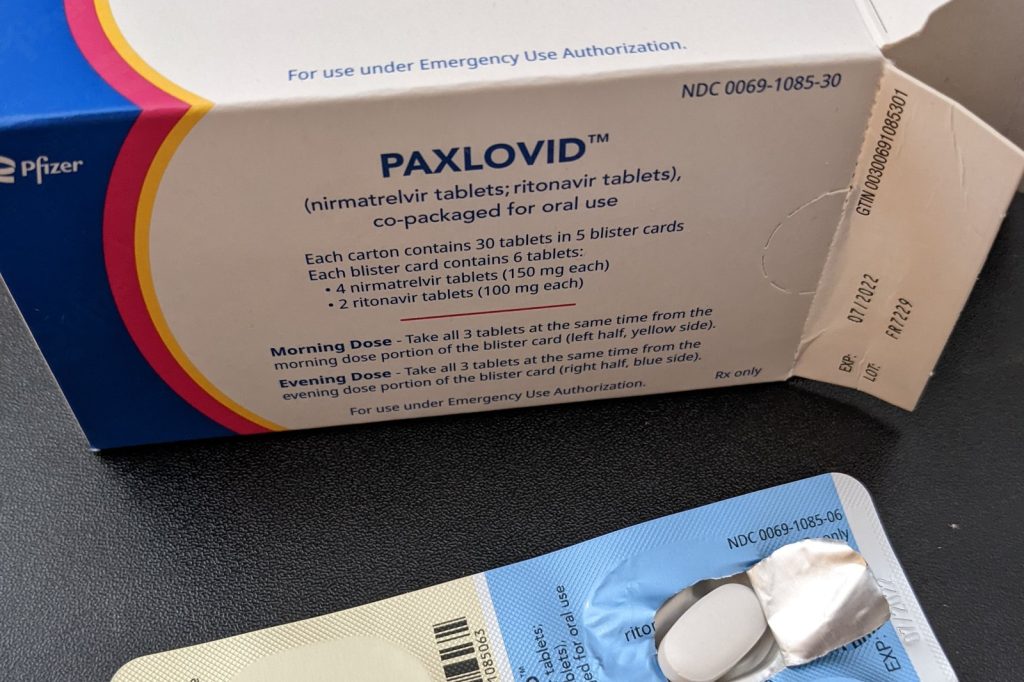
Five hospitalizations and no deaths. That was the tally among 697 high-risk adults who took Pfizer’s antiviral pill Paxlovid within three days of their first symptoms. In the 682 who got a placebo, 44 ended up in hospital, and 9 died. Pfizer put the reduction in hospitalization or death at 89 percent. Stretch the window to five days and the company’s figure was 88 percent.
All the adults in that trial were unvaccinated, and the data were collected over a month of follow-up.
Two drugs in one pack
Paxlovid combines nirmatrelvir with an older drug, ritonavir. Yale Medicine’s infectious disease specialists explain the division of labor. Nirmatrelvir blocks an enzyme the virus needs to build working particles. Ritonavir, once an HIV medicine, is there for a different job: it slows the liver’s breakdown of nirmatrelvir, so the active drug stays in the body longer. A standard course is three pills twice a day for five days, 30 pills in all.
Timing decides most of the value. Yale’s Jeffrey Topal says that after a week of illness, the damage from a severe case cannot be undone by an antiviral. Scott Roberts, a colleague, called it “our first efficacious oral antiviral pill for this virus,” a pill that, in his words, shows clear benefit for people at high risk.
What else Pfizer reported
The trial also recorded about a 10-fold fall in viral load by day 5 compared with placebo. Pfizer said it expected the drug to keep working against variants such as Omicron, because it targets an enzyme involved in replication and not the spike protein, where mutations pile up. Pfizer CEO Albert Bourla said the treatment could be “a critical tool to help quell the pandemic.” Pfizer had passed the figures to US regulators, the FDA, for its pending emergency-use application.
A second, separate study, in adults not at high risk, was less clear-cut. It counted 10 hospitalizations among those on placebo and three among those on Paxlovid, with nearly 430 people in each group, and no deaths. But the study’s main target, shortening symptoms over four straight days, was not met.
Outside the trial
Real-world numbers are softer. A CDC report from November 2022 looked at adults given Paxlovid in the first five days after diagnosis. Over the following 30 days their hospitalization rate was 51 percent lower than for adults who went without. Vaccinated and previously infected people were in the sample, and the CDC took that to mean eligible patients should get the drug regardless of vaccination.
That trial figure was high enough that the National Institutes of Health ranked Paxlovid first among COVID treatments.
Sources
- Final data on pills to treat Covid-19 holds strong against hospitalization and death, Pfizer says – WRAL
- 13 Things To Know About Paxlovid, the COVID-19 Pill – Yale Medicine
- 13 Things To Know About Paxlovid (efficacy)




