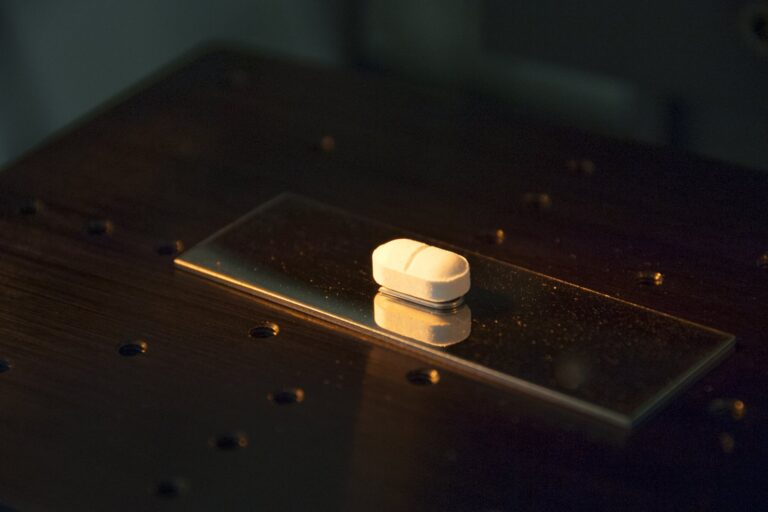
A 2-milligram dose of fentanyl, about a dozen grains of salt, can kill. That is the Drug Enforcement Administration’s figure, and it frames the pitch behind a vaccine now headed to human trials: stop the drug before it ever reaches the brain.
The shot was developed with U.S. Department of Defense funding and licensed to the startup ARMR Sciences. Colin Gage, ARMR’s co-founder and CEO, told Live Science it would be “the first-ever treatment that does not work on the [opioid] receptor.” Naloxone, sold as Narcan, reverses an overdose after it starts. This vaccine works earlier, in the bloodstream.
How the shot works
The immune system does not react to fentanyl on its own. It is a tiny molecule, not a virus. So Colin Haile of the University of Houston, an ARMR co-founder and scientific adviser, and his colleagues tied a synthetic piece of fentanyl to CRM197, a deactivated diphtheria toxin already used in vaccines on the market. They added dmLT, a compound derived from E. coli toxins, to boost the response. The fentanyl fragment cannot cause a high or relieve pain.
Once vaccinated, the body makes antibodies that grab real fentanyl. “They would feel no effects if they ingest fentanyl, absolutely none. And they would not overdose,” Haile told Fox News Digital. The antibodies keep the drug from crossing the blood-brain barrier, and it is eventually cleared from the body.
In rat studies the vaccine kept fentanyl out of the brain and stopped it from depressing breathing. Rodents were followed for about six months, and the blockade was complete at that point, Haile said. Fox reported no adverse side effects in the animals, even in a toxicology study using 20 times the dose a human would get.
The first human test
ARMR planned to start enrolling for a Phase I trial in the Netherlands in January or February 2026. About 40 people will take part, and the goal is to catch safety problems and confirm that their blood shows anti-fentanyl antibodies. If that goes well, Phase II will measure how well the vaccine blocks the drug, with some participants given safe, supervised doses of fentanyl.
Everything so far has been done in rodents. How well it works in people is unknown.
Who might use it
The main target is people with opioid use disorder who want to quit. Haile said that for a vaccinated person fentanyl would have “no euphoric effects,” so there would be little reason to try. First responders worried about accidental exposure are another market, as are parents of at-risk teens, since fentanyl turns up mixed into other drugs.
Painkillers are the obvious worry, because fentanyl is also used in cancer care and anesthesia. Haile said the antibodies do not bind morphine, oxycodone or methadone, so other pain options remain. Dr. Marc Siegel, Fox News senior medical analyst, called the work a “very exciting advance with a huge upside” but cautioned that it should be limited to people truly at risk of overdose and addiction.
Gage has a personal reason for the work. “I had two close childhood friends who passed away from fentanyl overdose,” he said. “Neither of them were seeking it out.”
Sources
- Experimental vaccine could save thousands of lives per year, scientist claims
- A fentanyl vaccine enters human trials in 2026 — here's how it works
- Scientists Create a Vaccine Against Fentanyl