
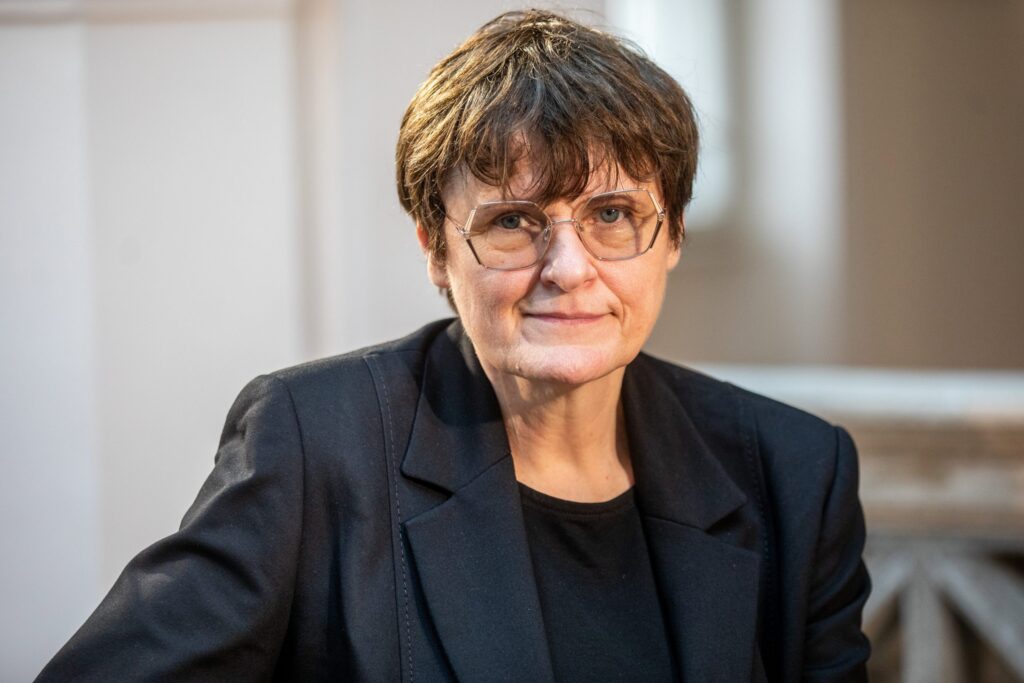
“This can’t be real.” That was Drew Weissman’s first reaction when the phone rang on Monday, and Katalin Karikó had the same thought. Both suspected a prank, possibly from an anti-vaccine crowd. Then the announcement started in Stockholm, and it was real: the 2023 Nobel Prize in Physiology or Medicine was theirs.
Thomas Perlmann, secretary general of the Nobel Assembly, made the announcement and said he had spoken to both laureates. STAT reported that he described them as grateful and surprised. Weissman, who said the committee did not have his number, heard the news from Karikó herself. “We weren’t sure if somebody was playing a prank on us,” he told Swedish Radio.
The fix that unlocked mRNA
The prize recognises work on how messenger RNA interacts with the immune system. The problem they solved is simple to state. Since the 1980s researchers had been able to make mRNA in the lab, but the synthetic version triggered inflammation, broke down quickly and produced less protein than the natural kind.
Karikó, a biochemist, and Weissman, an immunologist, found that mRNA built with chemically modified bases did not set off those inflammatory reactions. They published the finding in 2005. Later they showed that altered bases also raised protein production considerably. In the Nobel committee’s framing, Karikó brought the RNA expertise and Weissman the knowledge of immune responses to vaccines.
Barney Graham, a professor at the Morehouse School of Medicine in Atlanta, told DW that their work on nucleotide chemistry was a key factor in commercialising mRNA. “Without that, scale up and delivery of the COVID-19 vaccines would not have been possible,” he said. Moderna and the Pfizer-BioNTech partnership both built on it, and billions of doses have since been given.
Years of rejection
It was not a smooth road. Karikó met rejection after rejection on grant applications in the 1990s and was demoted at the University of Pennsylvania. “I thought of going somewhere else, or doing something else,” she told STAT in 2020. She also said she wondered whether she was good enough. The 2005 paper did not draw wide notice at first, though it did catch the eye of scientists who went on to found Moderna and BioNTech.
She told Swedish Radio her mother used to listen to every Nobel announcement. “She listened when I was not even a professor, like 10 years ago,” Karikó said. “I was just laughing because I never [got] a grant and never had a team.” Her mother has since died.
Karikó, 68, later worked at BioNTech and is now a professor at Szeged University in her native Hungary, as well as an adjunct professor at Penn’s Perelman School of Medicine. Weissman, 64, remains a professor in vaccine research at Penn. The pair had already collected awards including the Lasker-DeBakey Clinical Medical Research Award, the Breakthrough Prize and the Tang Prize in Biopharmaceutical Science.
The prize money is 11 million Swedish kronor, just over $1 million, shared between them. Karikó is only the 13th woman to win the medicine prize in its history.
What comes next
“We are not working for any kind of award,” Karikó said at a Penn press briefing. “The importance was to have a product which is helpful.” Weissman said the prize “has just given RNA the recognition.”
For now the only authorized mRNA products are the Covid-19 shots. Academic labs and companies are testing the platform against cancer, flu, mpox and HIV. In spring 2023, US researchers reported a personalised mRNA vaccine trial in 16 pancreatic cancer patients whose tumors had been removed; half had not relapsed by the end of the 18-month trial. Early results like these give hope, but they are not treatments yet, so talk to your doctor about any medical decision.
Sources
- Katalin Kariko and Drew Weissman win Nobel Prize in Medicine
- Katalin Karikó – Science Friday
- 2023 Nobel Prize in Medicine goes to Karikó and Weissman




