
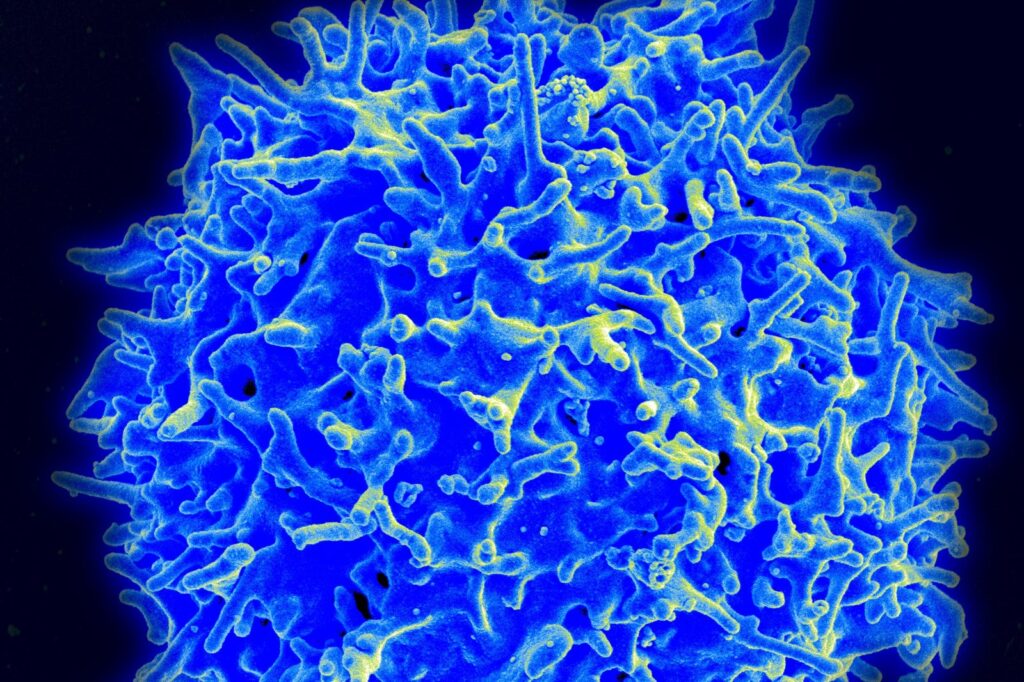
USC scientists have discovered how to create a never-ending supply of cancer-fighting cells, addressing a major bottleneck in CAR-T therapy production. This advance could make personalized immunotherapy more accessible to patients who currently face long waits and high costs.
The Challenge of Current Cell-Based Therapies
Adoptive cell therapies, such as CAR-T, involve modifying a patient’s own immune cells to recognize specific cancer antigens. These therapies have demonstrated particular effectiveness in treating certain types of blood cancers. However, the process is complex and time-consuming because each treatment must be manufactured individually from the patient’s blood. This creates a supply bottleneck that limits how many patients can receive the therapy, especially in hospitals without specialized cell-processing facilities.
How the USC Breakthrough Creates a Sustainable Supply
Researchers at the University of Southern California have developed a method to grow immune cells in the lab that can be used repeatedly to fight cancer. Unlike traditional CAR-T, which relies on extracting and re-engineering a patient’s T cells, the USC approach uses lab-grown cells that do not come from the patient. These cells are designed to recognize tumor antigens on the surface of cancer cells, which serve as targets for antibody proteins or T-cell receptors. By producing these cells in large, consistent batches, the method aims to eliminate the need for individualized manufacturing.
Comparing Lab-Grown Cells to Traditional CAR-T
Traditional CAR-T requires apheresis to collect a patient’s white blood cells, followed by genetic modification and expansion in a laboratory—a process that can take weeks. During this time, some patients’ conditions may worsen. The USC lab-grown cells are produced in advance and stored, allowing for immediate use when needed. Both approaches stimulate the immune system to improve its natural ability to fight cancer cells, but the lab-grown version avoids the variability that can come from differences in a patient’s starting cell quality. Natural killer (NK) cell therapies and CAR-NK cell approaches are also being explored for their innate ability to target tumors, and the USC method may be adapted to work with such cells in the future.
Implications for Patient Accessibility and Clinical Scalability
If proven safe and effective, off-the-shelf lab-grown cells could reduce the cost and logistical burden of CAR-T therapy. Hospitals would no longer need to send patient samples to centralized manufacturing sites or wait for custom batches. This could expand access to patients in rural or underserved areas. The encouraging part is that such a system could allow more people to receive treatment quickly, especially those with aggressive cancers who cannot afford delays. However, patients should talk to their doctor about whether any investigational therapy is appropriate for their specific condition.
The Future of Off-the-Shelf Immunotherapy
The USC research represents a step toward making immunotherapy more like a standard drug that can be stored and administered on demand. While the approach is still in early stages, it builds on the broader field of cancer immunotherapy, which includes immune checkpoint inhibitors like those blocking PD-1/PD-L1, used for melanoma and lung cancer. Success in this area could one day allow labs to produce cancer-fighting cells at scale, much like vaccines or insulin. As with all medical advances, early findings suggest promise, but further testing is needed to confirm long-term safety and effectiveness in diverse patient groups.
Talk to your doctor about the latest treatment options and whether clinical trials might be right for you.
Historical Foundations of Cancer Immunotherapy
The field of cancer immunotherapy has evolved significantly from its early, often rudimentary origins. During the 17th and 18th centuries, various forms of immunotherapy became widespread, and practitioners in the 18th and 19th centuries even utilized septic dressings enclosing ulcerative tumors to treat cancer. These surgical wounds were intentionally left open to facilitate the development of infection, creating purulent sores in an attempt to combat the disease.
A more formal scientific approach emerged in 1891, when American surgeon William Coley reported the effects of microorganisms on cancer. Coley inoculated patients who had inoperable tumors with Streptococcus pyogenes. This early work laid a foundation for the modern understanding of how the immune system can be harnessed to fight malignancy. Decades later, the field gained further recognition at the highest levels of scientific achievement. In 2018, the Nobel Prize in Physiology or Medicine was awarded to American immunologist James P. Allison and Japanese immunologist Tasuku Honjo. They were honored for their groundbreaking discovery of cancer therapy achieved through the inhibition of negative immune regulation, a milestone that continues to influence the development of contemporary treatments like the CAR-T therapies currently being refined by researchers at USC.
Historical Roots of Immunotherapy Innovation
Cancer immunotherapy traces its origins to the 17th and 18th centuries, when various forms of the treatment became widespread. In the 18th and 19th centuries, practitioners used septic dressings on ulcerative tumors, deliberately leaving surgical wounds open to promote infection and purulent sores as a therapeutic strategy. A pivotal moment came in 1891 when American surgeon William Coley reported on the effects of inoculating patients with inoperable tumors using Streptococcus pyogenes, laying early groundwork for harnessing the immune system against cancer. This historical progression culminated in 2018, when James P. Allison and Tasuku Honjo were awarded the Nobel Prize in Physiology or Medicine for their discovery of cancer therapy through inhibition of negative immune regulation, a breakthrough that continues to inform modern approaches such as CAR-T and the USC lab-grown cell method.
Sources
- Cancer immunotherapy
- Bowel cancer âmelted awayâ after immunotherapy, then stayed away
- Moderna Tumbles 10% as Profit Taking Hits Cancer Vaccine Rally; BioNTech Eases, Pfizer Stays Put
Photo: NIAID/NIH (Public domain)




