Social Security’s 3.6% Raise Meets a Tax Wall Frozen Since 1983
Social Security’s 3.6% cost-of-living adjustment for 2027 will lift the average monthly benefit by $72, but for many retirees, a larger share of that raise will vanish into federal taxes because the income thresholds that determine how much of the benefit is taxable have not changed since 1983.
The bottom line: by the numbers, a $2,000 monthly benefit grows to $2,072, adding $864 annually. Half of that, or $432, counts toward provisional income, which is the figure that matters when the IRS decides how much of the benefit is taxable. The thresholds that trigger that calculation — $25,000 and $34,000 for single filers, $32,000 and $44,000 for married couples filing jointly — remain fixed at their 1983 and 1993 levels, never adjusted for inflation.
How Provisional Income Pulls Benefits Into the Tax Net
The IRS uses provisional income to determine how much of a retiree’s Social Security benefits count as taxable income. That figure combines adjusted gross income, tax-exempt interest, and 50% of Social Security benefits. Section 86 of the tax code, written in 1983 and expanded in 1993, sets the thresholds that gate how much of the benefit becomes taxable.
Below the first threshold, none of the benefits are taxable. Between the two thresholds, up to 50% of benefits can be counted as taxable income. Above the second threshold, up to 85% of benefits can be counted as taxable income. That 85% cap limits the share of the benefit that counts as taxable income, not the tax rate applied to it. Once a retiree reaches that ceiling, 85 cents of every additional dollar in benefits counts as taxable income.
For Linda, a hypothetical single retiree with a $2,000 monthly benefit, the $72 raise translates into $432 more in provisional income. If her other income keeps her below $25,000, she keeps the full raise. If she sits between the two thresholds, the raise draws a portion of her benefit into taxable income. If she is already above $34,000, the raise pushes more of her benefit into the tax net.
Three Retiree Scenarios Show the Real Impact
Retirees fall into three groups based on where their provisional income lands relative to the thresholds. Those well below the first threshold see no change — their benefits remain untaxed and the full raise is theirs to spend. Those just under or between the thresholds feel the squeeze. Each dollar of raise draws 50 cents of benefits into taxable income that was not there before.
Those above the higher threshold face the steepest drag. More of their benefits become taxable as income rises, until 85% of their Social Security is included. Even modest pensions or regular IRA withdrawals can push retirees into this zone, making the tax hit sharper than the raise itself.
Why This Squeeze Returns Every January
Social Security’s cost-of-living adjustment is recalculated each year to match inflation, but the tax thresholds that govern how much of those benefits are taxable are not. This mismatch means that every raise, no matter how large, pushes a growing share of retirees closer to or further into the taxable zone. The squeeze compounds over time as benefits grow while the thresholds stay frozen.
Investors will note that this dynamic affects not just individual budgets but the broader economy. GDP — slows. The effect is subtle but persistent, eroding the real value of each year’s COLA.
Retirees Can Act Before January to Limit the Damage
Retirees cannot change the thresholds, but they can manage their provisional income before the new year begins. By controlling IRA withdrawals and timing Roth conversions, they can keep their income below the first threshold or at least delay crossing into the higher tax zone. These moves must happen before January, when the new benefit amount takes effect and the tax calculation resets.
The strategy is straightforward: if a retiree expects to be near or above a threshold, shifting income into a Roth IRA before the raise takes effect can reduce provisional income in the year the COLA lands. Similarly, timing large withdrawals or capital gains in prior years can smooth income across the threshold boundary. These steps do not eliminate the tax burden, but they can preserve more of the raise for its intended purpose — maintaining purchasing power in retirement.
The Long-Term Impact of Frozen Thresholds on Retiree Budgets
The static tax thresholds for Social Security benefits have a compounding effect over time, gradually eroding the purchasing power of retirees. Since 1983, the $25,000 and $34,000 thresholds for single filers, and the $32,000 and $44,000 thresholds for married couples, have remained unchanged. During this period, inflation has significantly reduced the real value of these thresholds, pulling more retirees into taxable income brackets with each COLA increase.
For example, a retiree who was just below the $25,000 threshold in 1983 might now find themselves well above it due to annual COLAs, even if their other income sources have remained constant. This shift means a larger portion of their Social Security benefits is subject to taxation, effectively reducing the net gain from each COLA. Over decades, this mechanism has silently diminished the intended benefit of cost-of-living adjustments, leaving retirees with less disposable income than Congress originally intended when Section 86 of the tax code was enacted.
Sources
- Social Security Checks Are Rising 3.6% in 2027. The Tax Threshold That Could Swallow Part of the Raise Hasn't Moved in Decades
- Social Security announces major records cleanup: Here’s what it means for you
- Social Security Checks Are Rising 3.6% in 2027. The Tax Threshold That Could Swallow Part of the Raise Hasn't Moved in Decades
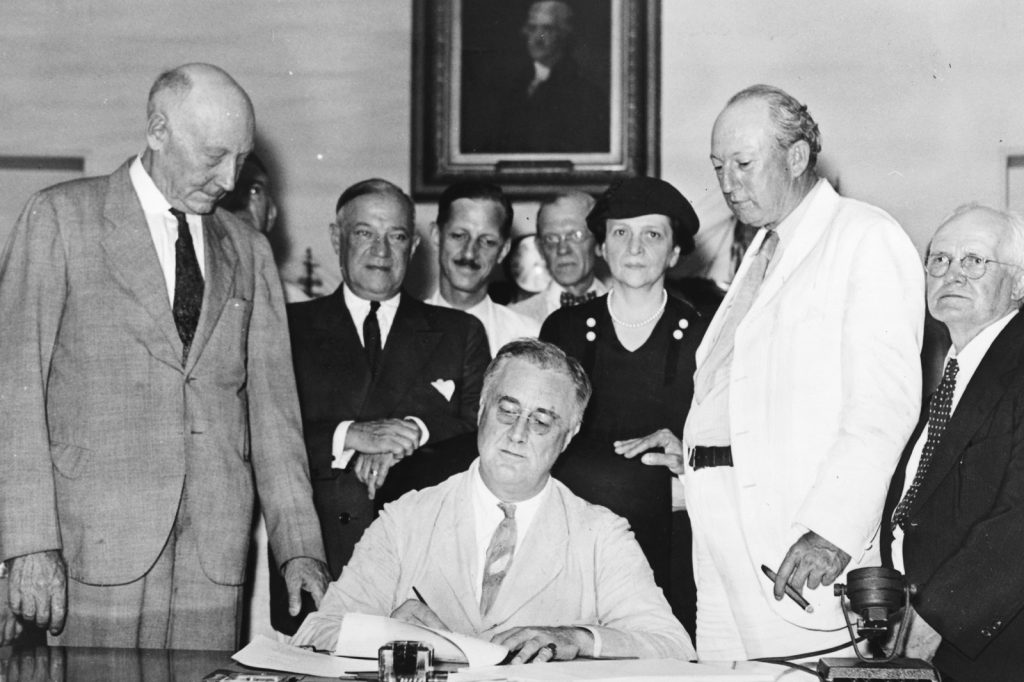
Photo: Social Security Online (Public domain)