
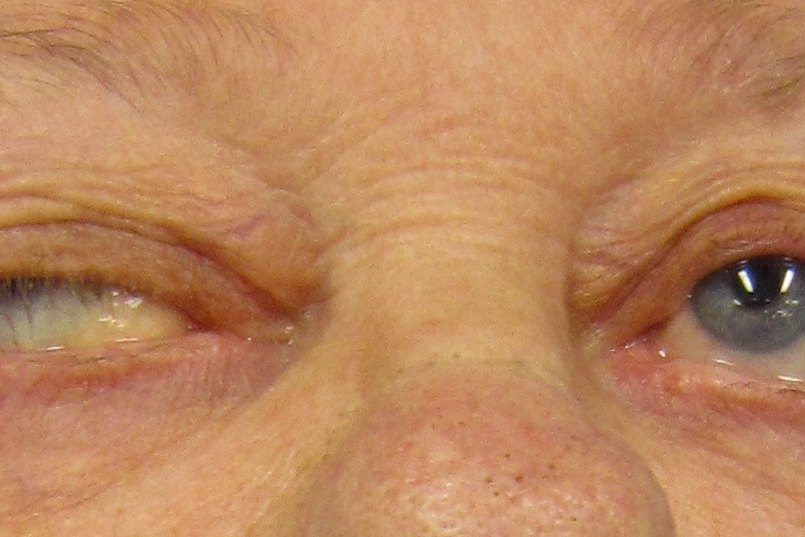
Generalized Myasthenia Gravis: Autoimmune Attack on Nerve-Muscle Junction Causes Progressive Weakness
Generalized myasthenia gravis is an autoimmune disorder where antibodies destroy acetylcholine receptors, leading to muscle weakness that worsens with activity and improves with rest.
The condition arises when the immune system mistakenly produces immunoglobulin G1 (IgG1) and IgG3 antibodies that target nicotinic acetylcholine receptors (AChR) at the neuromuscular junction. These antibodies block or destroy the receptors, preventing nerve impulses from triggering muscle contractions. This complement-mediated damage results in varying degrees of skeletal muscle weakness, most commonly affecting the muscles of the eyes, face, and swallowing.
Myasthenia gravis affects 50 to 200 people per million globally, with 3 to 30 new cases diagnosed per million each year. It most commonly occurs in women under the age of 40 and in men over the age of 60, and is uncommon in children. The initial symptom is typically painless weakness in specific muscles, not fatigue, which worsens during physical activity and improves after rest. Weakness and fatigue tend to be worse toward the end of the day. The disease often begins with ocular symptoms such as drooping eyelids or double vision and may progress to a generalized form involving weakness in the extremities or muscles governing basic life functions like breathing and swallowing.
With treatment, most patients can lead fulfilling lives and have a normal life expectancy. Treatment approaches include acetylcholinesterase inhibitors like pyridostigmine for symptomatic relief, immunosuppressants such as prednisone, mycophenolate, or azathioprine to reduce antibody production, and thymectomy in certain cases. For severe symptoms or sudden flares, plasmapheresis and high-dose intravenous immunoglobulin may be used. In October 2023, the FDA approved zilucoplan (ZILBRYSQ), a complement inhibitor, for adults with anti-acetylcholine receptor antibody-positive generalized myasthenia gravis. On October 16, 2026, the FDA approved a once-daily autoinjector for zilucoplan, providing a second self-administration option. The autoinjector was shown to deliver complete doses in 99.8% of uses in clinical studies, with high patient satisfaction and generally good tolerability, though injection-site pain occurred in some patients. UCB expects the autoinjector to become commercially available in the first quarter of 2027.
For families and patients, this means greater convenience and consistency in managing a chronic condition that can impact daily activities such as eating, talking, and walking. The human side of living with myasthenia gravis involves adapting to fluctuating weakness that can change hour by hour, making reliable, easy-to-use treatments especially valuable. As with any medical treatment, patients should consult their doctor to determine the best approach for their individual situation.
How Autoantibodies Disrupt Nerve-Muscle Signaling at the Neuromuscular Junction
In generalized myasthenia gravis, immunoglobulin G1 (IgG1) and IgG3 antibodies bind to nicotinic acetylcholine receptors (AChR) on the postsynaptic membrane of the neuromuscular junction. This binding blocks acetylcholine from activating the receptors, preventing the generation of muscle action potentials. Additionally, the antibody-bound receptors trigger the complement cascade, leading to membrane attack complex formation that damages the postsynaptic membrane and reduces receptor density.
This complement-mediated destruction of AChR results in fewer functional receptors available to bind acetylcholine released from the nerve terminal. As a result, even with normal nerve impulse transmission, the muscle fiber fails to depolarize sufficiently to initiate contraction. The loss of receptors is particularly impactful during repeated stimulation, explaining why weakness worsens with activity and improves with rest.
The reduction in receptor availability directly impairs the safety factor of neuromuscular transmission, making transmission unreliable especially during sustained or repetitive muscle use. This mechanism underlies the fluctuating weakness characteristic of myasthenia gravis, where muscles involved in eye movement, facial expression, swallowing, and limb movement become fatiguable due to failed signal transmission at the junction.
Symptom Progression from Ocular to Generalized Weakness
The initial symptom of myasthenia gravis is typically painless weakness in specific muscles, not fatigue, which worsens during physical activity and improves after rest. In about two-thirds of people, the first sign involves the muscles around the eye, presenting as eyelid drooping (ptosis) or double vision (diplopia). These ocular symptoms often worsen during activities like reading, watching television, or driving, particularly in bright conditions, leading some individuals to wear sunglasses for relief.
Myasthenia gravis generally starts with ocular weakness and may progress to a more severe generalized form over time. This progression is characterized by weakness spreading to the extremities or muscles governing basic life functions such as swallowing, talking, and breathing. The weakness and fatigue tend to be worse toward the end of the day, reflecting the disease’s fluctuating nature where symptoms can change hour by hour based on activity levels.
If ocular symptoms persist for three or more years without generalization, the likelihood of developing generalized myasthenia gravis is considered low. However, for many patients, the disease evolves from isolated eye involvement to broader muscle weakness, affecting mobility, speech, and respiratory function, which may necessitate interventions such as mechanical ventilation in severe cases.
Prevalence and Demographic Patterns of Generalized Myasthenia Gravis
Myasthenia gravis affects 50 to 200 people per million globally, with 3 to 30 new cases diagnosed per million each year. The condition most commonly occurs in women under the age of 40 and in men over the age of 60, while it is uncommon in children. These demographic patterns reflect a bimodal age distribution in disease onset, with early-onset cases predominantly affecting females and late-onset cases more frequently seen in males.
Sources
- Before you continue to Google
- Myasthenia gravis
- FDA Approves Autoinjector for Self-Administered Zilucoplan in Generalized Myasthenia Gravis | NeurologyLive – Clinical Neurology News and Neurology Expert Insights
Photo: James Heilman, MD (CC BY-SA 3.0)




