
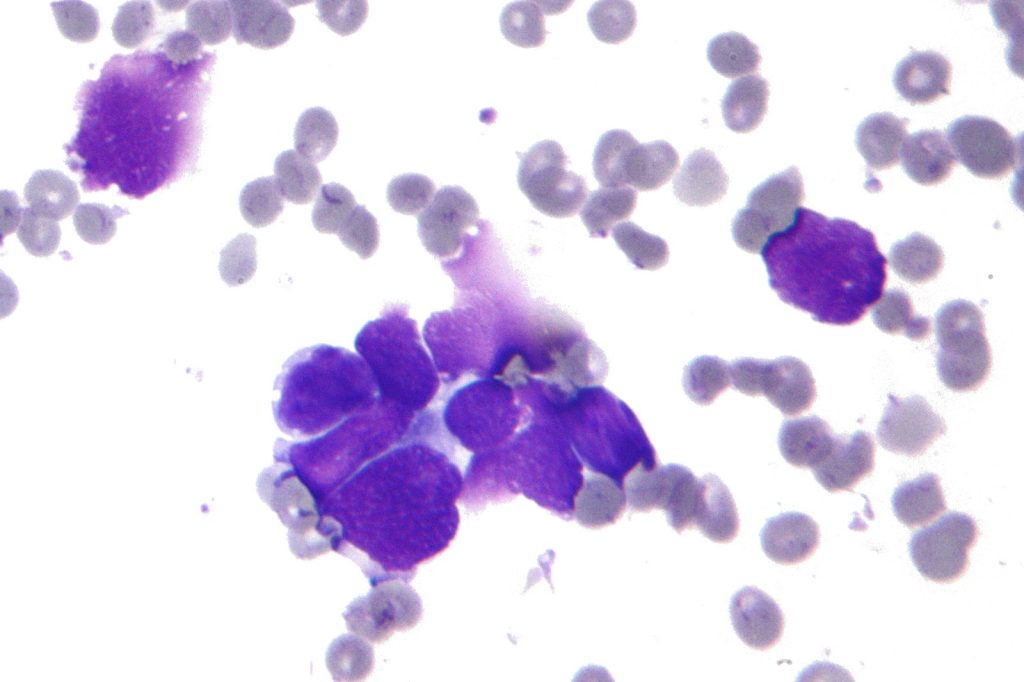
Barely 3% of people with advanced small cell lung cancer of the extensive stage survive past five years. Dr. David Carbone, who directs James Thoracic Oncology Center at Ohio State, cited that number when the FDA granted accelerated approval on May 16, 2024 to tarlatamab, sold as Imdelltra.
The drug is cleared for adults whose cancer kept growing after platinum chemotherapy, or came back after it. Amgen, which makes it, says no other bispecific T-cell engager aims at DLL3. The mechanism is simple to state. One arm of the molecule grabs DLL3 on the tumor cell, the other grabs CD3 on a T cell, and the immune cell is pulled close enough to kill.
What the trial supports
The approval rests on DeLLphi-301, a phase 2 study of 99 patients with relapsed or refractory disease. Tumors responded in 40% of them, and the responses lasted a median of 9.7 months. Look closer and the split is uneven. Among 69 patients whose platinum status was known, 27 had platinum-resistant disease, meaning it progressed within 90 days of their last platinum dose, and 52% of them responded. The 42 platinum-sensitive patients responded at 31%.
Results published in 2023 by New England Journal of Medicine put median progression-free survival at 4.9 months on the 10 mg dose. Median overall survival came to 14.3 months, but that figure was immature: over half of patients in both dose cohorts were still alive when follow-up ended.
The catch is the word accelerated. The FDA approved the drug on response rate and durability, not on proof that patients live longer. Amgen’s own release says continued approval may depend on confirming clinical benefit in later trials.
The cost of switching on the immune system
The prescribing information opens with a boxed warning: cytokine release syndrome, plus neurologic toxicity, including a condition known as ICANS. Fatigue, cytokine release syndrome, altered taste, fever, muscle and bone pain, reduced appetite, anemia, constipation and nausea were the most frequent reactions, each hitting 20% or more of patients. Cytokine release syndrome tended to appear around the first and second doses, was mostly mild to moderate (grade 1 or 2) and usually handled with supportive care. Amgen said 7% of patients permanently stopped the drug because of adverse events.
Dosing starts at 1 mg by intravenous infusion over an hour on day 1 of the first cycle, then 10 mg on day 8 and again on day 15, and every 2 weeks after that until the disease progresses or toxicity becomes unacceptable.
Patient advocates welcomed the news. Laurie Fenton Ambrose, who heads GO2 for Lung Cancer, said the treatment landscape for small cell lung cancer had seen “decades of minimal advancements.” Amgen’s Jay Bradner said Imdelltra is the company’s second bispecific engager of this type to win FDA approval.
Sources
- FDA Grants Accelerated Approval to Tarlatamab for ES-SCLC (OncLive)
- FDA Approves Tarlatamab for Extensive-Stage SCLC (Oncology Nursing News)
- FDA Approves Imdelltra (Tarlatamab-dlle) (Amgen news release)




