
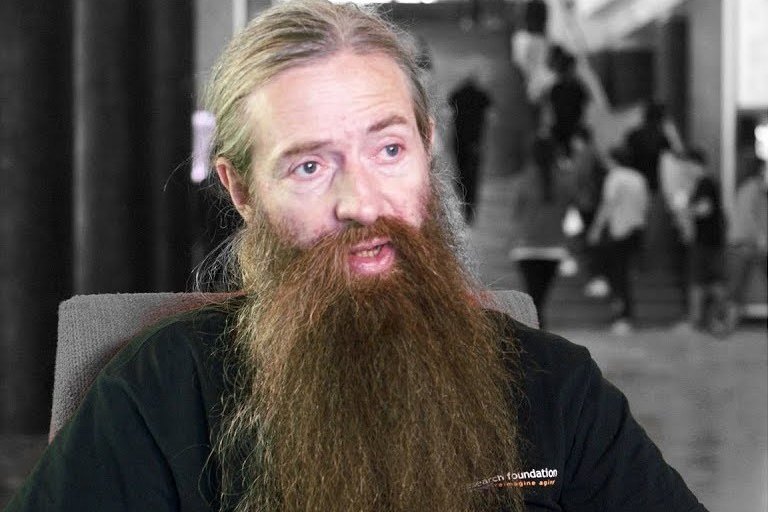
LONDON, July 10 — Aubrey de Grey, the British biomedical gerontologist whose radical vision of defeating aging has made him a polarizing figure, has been the subject of renewed debate following the release of new analyses of his foundational work. De Grey’s long-dismissed theories are now forcing a reckoning among mainstream biologists. De Grey first laid out his strategic framework in 2002, proposing the Strategies for Engineered Negligible Senescence, or SENS.
The core argument is that aging is not an inevitable biological mystery but a collection of seven specific types of molecular and cellular damage—damage that can be periodically repaired. The seven categories he identified include cell loss, cellular senescence, mitochondrial mutations, nuclear mutations, intracellular aggregates, extracellular aggregates, and crosslinks.
This is not a vague theory of slowing decline; it is a repair-centric, engineering approach to the human body. What this signals is a fundamental departure from the traditional view that aging is a natural, unstoppable process. To operationalize this vision, de Grey co-founded the SENS Research Foundation in 2009 in Mountain View, California.
The initial budget was $1 million, a modest sum for a project that aimed to rewrite the biological rulebook. The foundation’s key projects have included developing therapies to remove senescent cells—so-called “zombie cells” that accumulate with age and drive inflammation.
This field, known as senolytics, produced a landmark 2015 study by Dr. James Kirkland at the Mayo Clinic. That study demonstrated that the drug combination of dasatinib, a cancer drug, and quercetin, a plant flavonoid, extended lifespan in aged mice by 36 percent. For those watching the broader stakes, that figure was a proof of concept that the damage-repair model could yield measurable results in a mammalian system.
De Grey’s own rhetoric has been characteristically bold. He has claimed that the first person to live to 1,000 years may already be alive. That statement has drawn widespread criticism from mainstream biologists, who argue that such projections are not just speculative but scientifically irresponsible.
The broader stakes of this debate are immense: if de Grey is right, the entire architecture of healthcare, insurance, pensions, and global demographics must be rethought. If he is wrong, the field risks a credibility crisis that could set back serious aging research by decades.
The foundation’s trajectory, however, has not been smooth. In 2021, de Grey left the SENS Research Foundation amid financial and management disputes. According to IRS filings, the foundation’s annual revenue was $2.3 million in 2020.
That figure, while significant for a niche research organization, is a fraction of what major pharmaceutical companies spend on a single drug trial. The departure signaled internal fractures, but it did not erase the foundation’s research output or the influence of de Grey’s ideas on a new generation of biotechnologists.
Critics remain entrenched. Dr. Leonard Hayflick, who discovered the Hayflick limit in 1961—showing that human cells divide only about 50 times before stopping—has argued that aging is inevitable and cannot be “cured.” From a strategic standpoint, the Hayflick limit represents a hard biological constraint that de Grey’s repair model must address. The question is whether periodic repair can outpace the cumulative damage that even Hayflick acknowledged.
The debate is not merely academic; it has real implications for research funding, regulatory pathways, and public expectations. De Grey’s framework identifies seven distinct categories of molecular and cellular damage. Cell loss refers to the death of cells that are not replaced, leading to tissue atrophy.
Cellular senescence involves cells that stop dividing but do not die, secreting inflammatory signals that damage surrounding tissue. Mitochondrial mutations accumulate in the energy-producing organelles of cells, potentially driving metabolic decline.
Nuclear mutations are errors in the DNA of the cell nucleus, which can lead to cancer or dysfunction. Intracellular aggregates are clumps of misfolded proteins inside cells, such as those seen in neurodegenerative diseases. Extracellular aggregates are similar clumps that accumulate outside cells, such as amyloid plaques.
Crosslinks are abnormal bonds between proteins in the extracellular matrix, stiffening tissues like arteries and skin. Each of these categories represents a distinct target for therapeutic intervention.
The SENS Research Foundation’s strategy has been to fund research that develops repair technologies for each type of damage, rather than attempting to slow aging through a single intervention. This is a fundamentally different approach from the mainstream gerontology focus on caloric restriction, mTOR inhibition, or other metabolic pathways. The most concrete success to date has been in the field of senolytics.
The 2015 study by Dr. James Kirkland at the Mayo Clinic, using dasatinib and quercetin, provided a clear signal that clearing senescent cells could extend healthspan and lifespan in a mammalian model. The 36 percent lifespan extension in aged mice was not a fluke; it has been replicated and extended in subsequent studies. What this signals to the broader scientific community is that the damage-repair model has at least one validated proof of concept.
The question now is whether this can be translated to humans, and whether similar success can be achieved for the other six categories of damage.




