
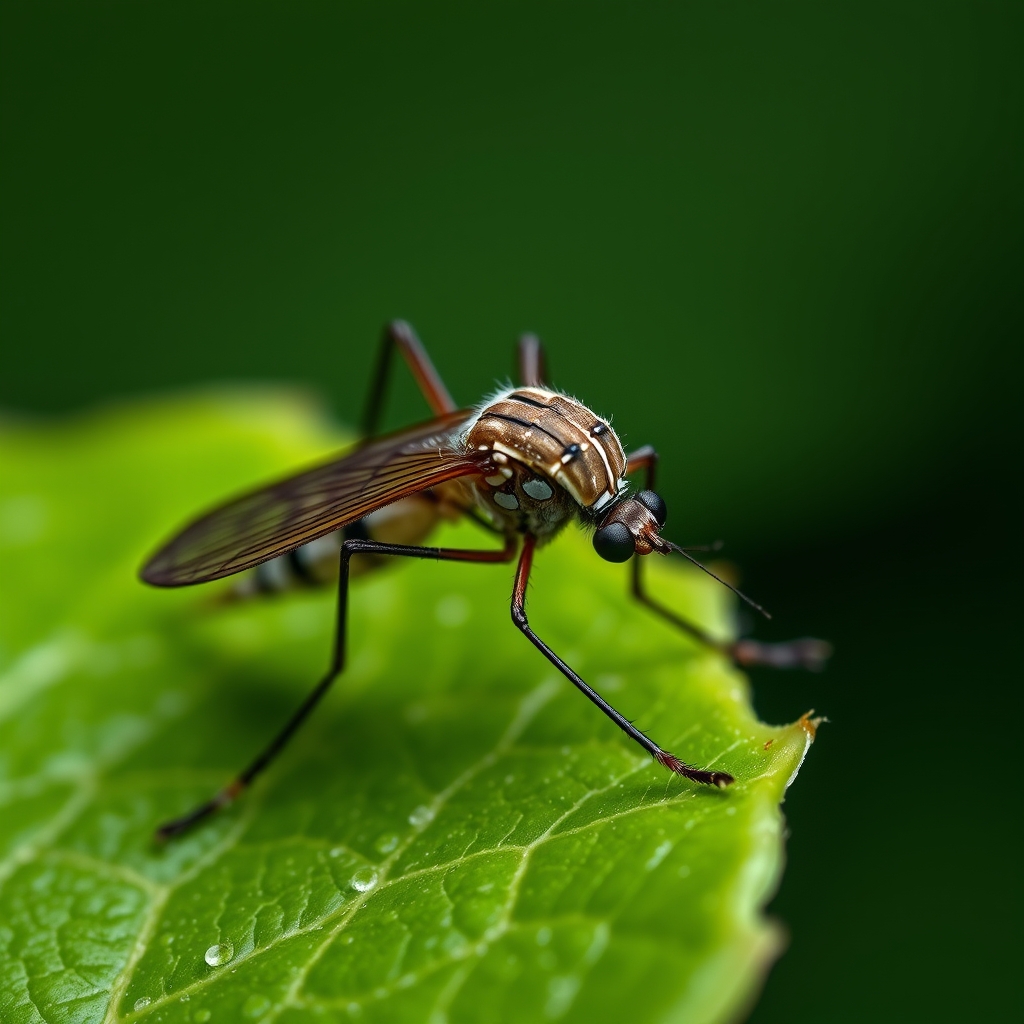
Seventy per cent of the world’s dengue burden sits in Asia. That is the figure Google’s Debug team cites when it explains why a mosquito programme that began in Singapore now wants to work in the United States. In June 2026 the company asked federal regulators for clearance to let loose as many as 32 million lab-reared male mosquitoes across California and Florida.
The US Environmental Protection Agency is reviewing the request for an experimental use permit. According to a federal register notice, the plan covers up to 16 million mosquitoes a year over two years. A public comment period was due to close on 5 June, after which the agency will decide. The application sits under docket number EPA-HQ-OPP-2025-3951, and the EPA considers the permit potentially significant at regional and national level.
How the insects work
The released insects are all male, and males do not bite or carry disease. They are raised with Wolbachia, a bacterium found naturally in many insects. When such a male mates with a wild female, the eggs she lays do not hatch, and the local population shrinks with each generation. No chemical spraying is involved. Google’s initial focus is Aedes aegypti, the species behind most cases of chikungunya, dengue, Zika and yellow fever.
Scale is the engineering problem. Google says it uses automated rearing systems, and AI-powered computer vision to sort males from females, since releasing females would make matters worse. The aim is to get the insects out “in the right place and in the right numbers.”
The Singapore record
Singapore is the programme’s first overseas base for research and development. Citing the country’s national environment agency, Google said in a blogpost on 11 May that releases of millions of Wolbachia males had cut the Aedes aegypti population by 80-90% and brought a reduction in dengue incidence of more than 70% after 6 to 12 months. New Atlas reported the figure as a 70% fall in cases within a few months. Google has said it will expand the Singapore site.
Linus Upson, who leads Debug, put it this way: “Our success in Singapore gives us the confidence to expand.”
Who is behind it
Much early coverage named Verily, the Alphabet life-sciences company, as the applicant. The Guardian’s reading is more precise: Verily was the key driver for years, but Google fully acquired Debug as of December 2024, and the filing was made by Google LLC.
A caution comes from Yale epidemiologist Chantal Vogels who told New Atlas that programmes of this kind can be costly and need continuous releases.
Sources
- Debugging: Google requests permission to release 32m mosquitoes in California and Florida (The Guardian)
- Google's Parent Company Is Releasing 32 Million Mosquitoes (GotFort)
- Google wants to spread mosquitos to fight deadly diseases (New Atlas)




