
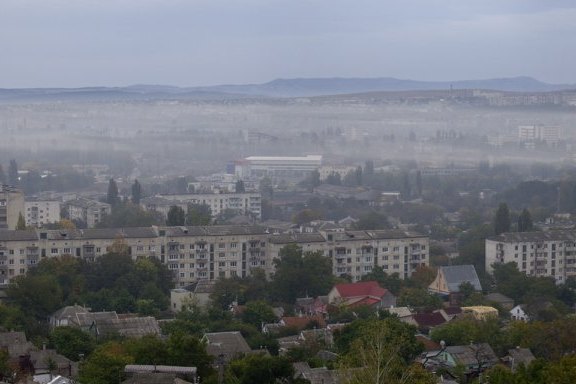
Ozone killed 107,800 people early in India in 2015. Fine particles killed 1,090,400. Those two numbers come from the State of Global Air 2017 report, released by the Health Effects Institute (HEI) in the US, and they put India just behind China on particulate deaths.
China recorded 1,108,100 premature deaths from PM2.5 that year. India has closed the gap quickly. PM2.5 deaths there rose 48 per cent from 1990, against 17.22 per cent in China.
What the HEI found
Globally, long-term exposure to fine particulate matter contributed to 4.2 million premature deaths in 2015 and a loss of 103 million healthy years of life. The report examined 79 health risk factors. It ranked PM2.5 as the fifth highest risk factor for deaths from heart disease, stroke, lung cancer, chronic lung disease and respiratory infections. Another 254,000 deaths came from ozone and its effect on chronic lung disease. As many as 92 per cent of the world’s people live in areas with unhealthy air.
“We are seeing increasing air pollution problems worldwide and the new report explains why air pollution is a major contributor to early death,” said Dan Greenbaum, HEI’s president. “We have seen progress in some parts of the world, but serious challenges remain.”
The analysis builds on the Global Burden of Disease project of the Institute for Health Metrics and Evaluation, which involves more than 2,000 researchers tracking more than 300 diseases and injuries across 195 countries and territories.
India’s ozone problem
India now has the most ozone-related early deaths in the world. They are 33 per cent higher than in China and have jumped 148 per cent since 1990, while China’s have stayed roughly flat. In South Asia, India’s ozone deaths are 13 times Bangladesh’s and 21 times Pakistan’s. For particulates, India’s toll is nine times Bangladesh’s and eight times Pakistan’s.
Ozone monitoring in India is thin. HEI scientists said the estimates come from a chemical transport model, though available measurements, mostly from aircraft campaigns, show ozone rising in north India.
Michael Brauer, who worked on the study, said population growth and ageing are part of the reason. “For ozone, the increase in exposure is so large that it overwhelms the improvements in underlying chronic obstructive pulmonary disease mortality,” he said. Robert O’Keefe, HEI’s vice-president, warned that ozone “is likely to become more important in India and as we know from US story it is harder to manage and control.”
Elsewhere
The European Union ranks third for health risks from particulates and ozone. The US ranks sixth for particulates and fourth for ozone. US exposure to fine particulate matter fell about 27 per cent, though 88,000 Americans and 258,000 Europeans still face a higher risk of early death from particle levels.
The World Health Organization put the 2019 figure for outdoor air pollution at 4.2 million premature deaths worldwide. About 89 per cent of them were in low- and middle-income countries, with the heaviest burden in the WHO South-East Asia and Western Pacific regions. By WHO’s breakdown, 68 per cent of those deaths came from ischaemic heart disease and stroke, 14 per cent from chronic obstructive pulmonary disease, 14 per cent from acute lower respiratory infections and 4 per cent from lung cancers. In 2019, 99 per cent of the world’s population lived where WHO air quality guideline levels were not met.




