
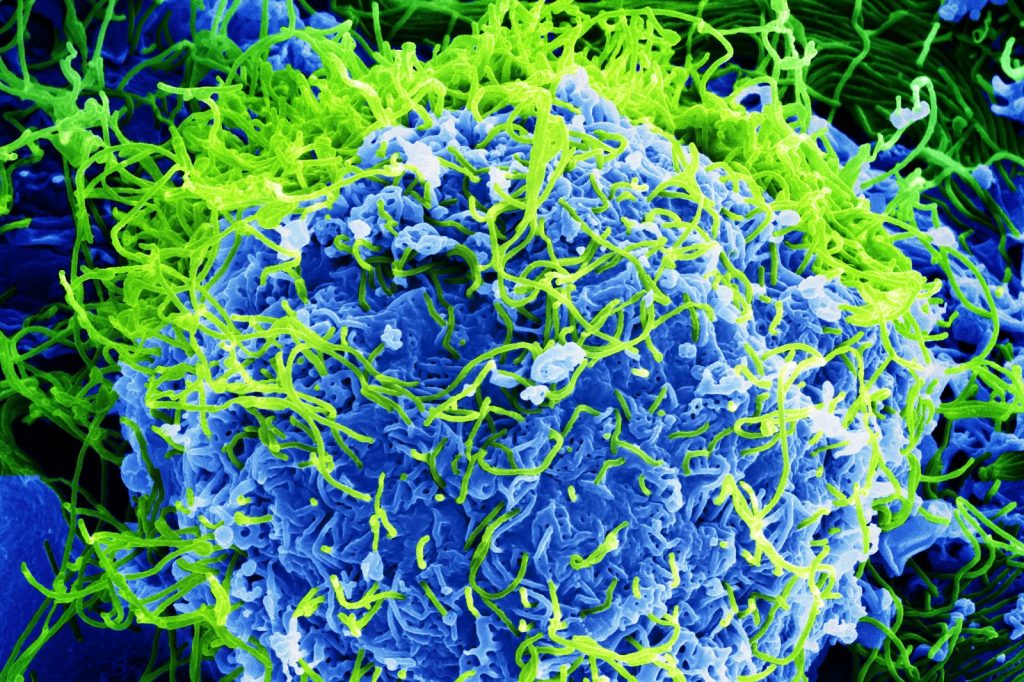
“We have recorded roughly 131 deaths in total and we have around 513 suspected cases,” Congo’s health minister, Samuel Roger Kamba, told viewers on national television on a Tuesday in May 2026. Then he added a caution that says a lot about how hard the count is to pin down: the deaths were those found in the community, “without necessarily saying that they are all linked to Ebola.”
The disease behind those numbers is Bundibugyo, a rare strain of Ebola. Only two outbreaks of it had been recorded before, in 2007-08 and 2012. There is no approved vaccine and no approved treatment for it, which is why the World Health Organization called the event extraordinary when it declared the outbreak a global health emergency in mid-May. It is the 17th Ebola outbreak in Congo since 1976, when the virus was first found there, according to Reuters as cited by Global Times.
Weeks of silence
The virus moved unseen for weeks. Health experts and aid workers told the Associated Press that authorities in Ituri province tested for the more common Ebola type, got negative results, and so missed what was happening. Bunia, the provincial capital, is where the first known death occurred.
By the time the alarm sounded, the geography was wide. On the WHO’s account, as of the Saturday before the declaration, eight cases were laboratory-confirmed in Ituri. Another 246 were suspected, along with 80 suspected deaths, spread over three or more health zones: Bunia, Rwampara and Mongbwalu. Two unconnected cases were confirmed in Kampala, Uganda, on consecutive days, both in people who had travelled from Congo. A further confirmed case turned up in Kinshasa. Within days, WHO chief Tedros Adhanom Ghebreyesus said 30 cases were confirmed in Congo and that one of the two Kampala patients had died.
Tedros told the World Health Assembly he had not taken the declaration “lightly.” He said he was “deeply concerned about the scale and speed of the epidemic,” pointing to cases in urban areas, deaths among health workers and heavy movement of people.
What it means on the ground
For families in Bunia, Butembo and Mongbwalu, towns that together hold well over a million people, the fear was immediate. Health workers in full protective gear passed residents wearing cloth masks. “I know the consequences of Ebola, I know what it’s like,” a resident, Noëla Lumo, told the AP.
Gold mining keeps people on the move here, and parts of eastern Congo are held by armed rebels, which complicates every delivery of aid. Africa CDC said the city setting in Bunia and Rwampara, the movement of miners and the insecurity all raised the danger of further spread. UNICEF’s Bunia office received an initial 16 tons of supplies, mostly disinfectant, soap, protective gear and water purification tablets, for distribution to three Ituri treatment centers.
Vaccines were the open question. Jean-Jacques Muyembe, a virologist with the national biomedical research institute, said Congo was waiting on an experimental Oxford vaccine, built for other Ebola types, from the US and Britain: “We will administer the vaccine and see who develops the disease.” The WHO’s team leader in Congo, Dr. Anne Ancia, was blunt about timing. Any approved option was two months away, and “I don’t see that in two months we will be done with this outbreak,” she said. Aid groups including Doctors Without Borders and the Red Cross were already working there; neither the US CDC nor Africa CDC had staff on the ground.
One American doctor treating patients at a Bunia hospital caught the virus and was moved to Germany for care. No one had yet identified “patient zero.”
Sources
- WHO chief concerned as Congo Ebola deaths hit 134 | The Asahi Shimbun: Breaking News, Japan News and Analysis
- WHO concerned by 'scale and speed' of Ebola spread in DRC
- WHO declares Ebola outbreak in DR Congo and Uganda a public health emergency of international concern – Global Times




