
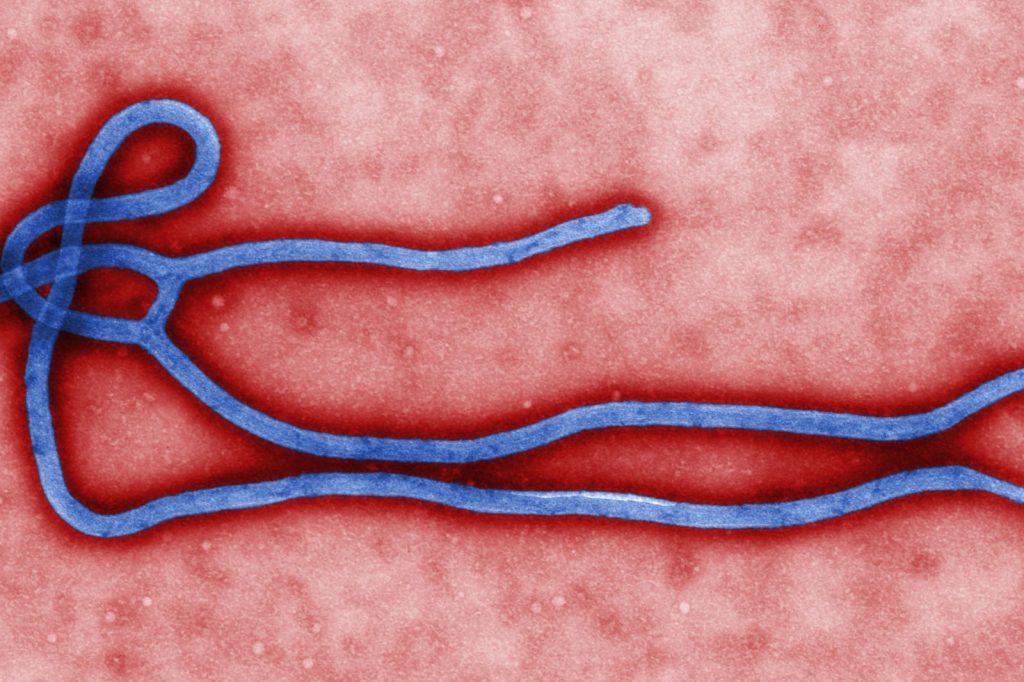
Congo and Uganda declared an Ebola outbreak on 15 May 2026, after laboratory tests in both countries confirmed the Bundibugyo virus. Within two days the World Health Organization had named it a global emergency.
The determination came on 17 May from Director-General Tedros Adhanom Ghebreyesus. “After having consulted the DRC and Uganda where the Ebola disease caused by Bundibugyo virus is known to be currently occurring,” he wrote on X, “I determine that the epidemic constitutes a public health emergency of international concern.” It was Congo’s 17th Ebola outbreak. The agency stressed it was not a pandemic.
A strain with no shield
Bundibugyo is a rare variant, first spotted in western Uganda in 2007. Its symptoms mirror other Ebola infections, running from fever and vomiting to bleeding and organ failure. The difference is what doctors cannot reach for. WHO said there is no approved vaccine and no antiviral aimed at it, which sets it apart from strains that have experimental or licensed tools.
The count climbs
The early figures moved fast. As of Saturday 16 May, Ituri had eight lab-confirmed cases, 246 suspected ones and 80 suspected deaths. Two confirmed cases, one of them fatal, turned up in Kampala among people who had travelled from Congo, and another was reported in Kinshasa.
Five days later the picture had widened. WHO’s update on 21 May counted 746 suspected cases in Congo, with 176 deaths among them, plus 85 confirmed cases across both countries, two of them in Uganda, with ten confirmed deaths. Case fatality among the confirmed stood at 12%. The virus had pushed out of Ituri, into the provinces of North Kivu and South Kivu. Most of the burden fell on three health zones, Mongbwalu, Rwampara and Bunia, which together accounted for 96% of suspected cases. Four health workers had died.
Uganda’s two cases were imported, and local spread there had not been confirmed. An American surgeon working in Congo also tested positive; WHO said exposure was thought to date to a procedure on 11 May, and he was moved to an isolation unit in Berlin.
Why the real number may be higher
WHO itself doubted the tallies. It warned that early samples were testing positive at a high rate, and that death clusters across Ituri “all point towards a potentially much larger outbreak than what is currently being detected and reported.” It named insecurity, a humanitarian crisis, heavy population movement and informal health care in the east as accelerants, and compared the setting with the 2018-19 epidemic that hit the same two provinces.
Tracking contacts has been the weak point. In Ituri, 1603 contacts had been listed by 21 May, and the follow-up rate was only 21%, hampered by insecurity and movement restrictions. Teams were working to set up treatment centers, step up surveillance and lab confirmation, and talk with communities.
Sources
- Ebola disease caused by Bundibugyo virus – Democratic Republic of the Congo
- WHO declares Ebola outbreak in DR Congo and Uganda a global health emergency | The National




