
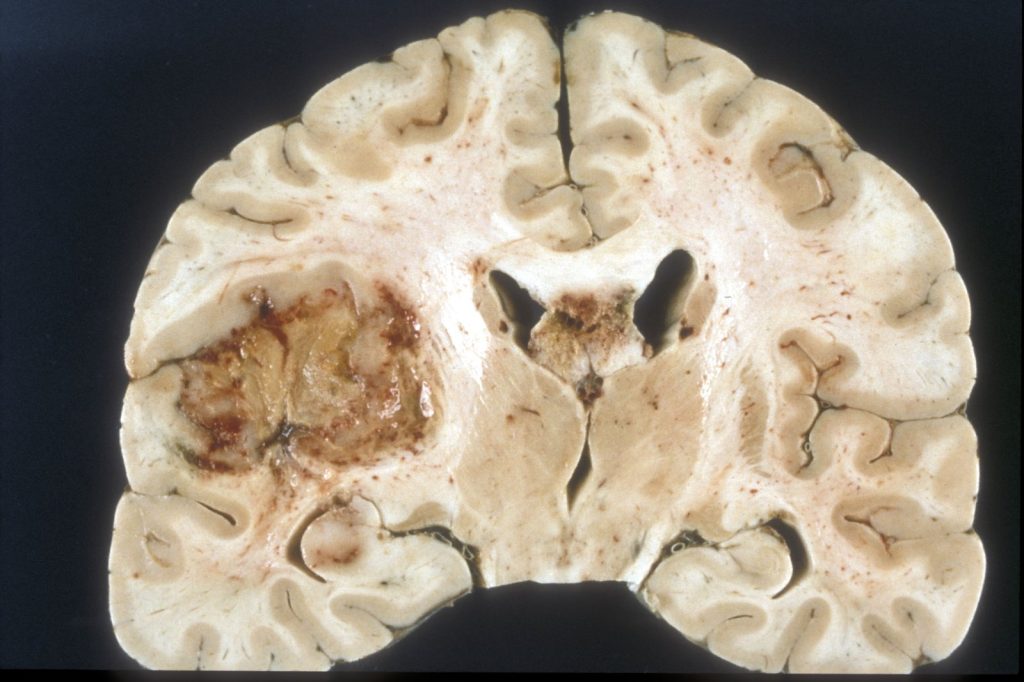
For decades, the blood-brain barrier has been the rule that keeps glioblastoma patients alive just 15 months. That rule may be changing. Scientists have found a way around it using vitamin B12, essentially exploiting the body’s own delivery system to get a cancer-killing compound into the brain.
The study, published this week, targets glioblastoma directly. It’s the kind of tumor that resists surgery, radiation and chemotherapy.
The barrier is why. It lets in essential nutrients but blocks almost everything else, including most cancer drugs. That’s the policy problem: the brain’s security system is too good.
Researchers solved it by attaching a cancer-killing agent to vitamin B12. The body has a special transport system that shuttles B12 into the brain.
The drug hitched a ride. In animal models, it slipped past the barrier, reached the tumors, and started killing cancer cells. This is not a cure yet.
Animal studies are a first step. They don’t always predict human results. The next phase — testing in people — takes years.
Safety checks are rigorous. But the approach matters because it uses the body’s own plumbing.
No invasive surgery. No risky injections into the brain. The policy angle is straightforward.
Right now, treating brain diseases means either accepting the barrier’s limits or breaching it with dangerous methods. This B12 trick changes the calculus.
If it holds up in human trials, it could rewrite how doctors deliver drugs to the brain for a range of neurological conditions. Not just cancer. Parkinson’s.
Alzheimer’s. Anything where the barrier blocks treatment. Think about what that means for drug approval.
Current rules assume the barrier is a fixed obstacle. New drugs for brain conditions have to prove they can get past it, often through invasive means.
That raises costs, slows development, and limits options. A delivery system that piggybacks on a vitamin could streamline that process. The FDA would need to adapt its frameworks.
Clinical trials would shift focus from “can we get it in?” to “how much gets in and how fast?” There’s also the cost question. Vitamin B12 is cheap.
It’s already approved for human use. Attaching a cancer drug to it is not the same as inventing a new molecule from scratch. That could lower development costs and, eventually, drug prices.
But that’s speculative. The study hasn’t reached humans yet. For glioblastoma patients, the clock is always ticking.
Most survive less than 15 months even with aggressive treatment. The barrier has frustrated oncologists for decades.
This work adds a tool to the arsenal. It’s not the only one — other researchers are trying ultrasound, nanoparticles, and focused radiation to open the barrier temporarily. But the B12 trick is elegant.
It doesn’t force the door open. It uses the key that’s already there.
The next few years will tell whether this works in people. If it does, the policy implications ripple outward. Drug delivery to the brain becomes a logistics problem, not a biological wall.
Rules that govern neurological treatments would need rewriting. The barrier’s reign as the gatekeeper of brain health may be ending. For now, it’s a promising step.
Not a revolution. But a real one.
And for a disease that has killed so many, so fast, any step forward is news.
{“@context”: “https://schema.org”, “@type”: “NewsArticle”, “headline”: “Vitamin B12 Transport System Used to Deliver Glioblastoma Treatment Past Brain Barrier”, “description”: “For decades, the blood-brain barrier has been the rule that keeps glioblastoma patients alive just 15 months. That rule may be changing. Scientists have found…”, “datePublished”: “2026-07-03T08:09:00+00:00T09:30:00+00:00”, “author”: {“@type”: “Person”, “name”: “Ava Anderson”}, “publisher”: {“@type”: “Organization”, “name”: “InfoPulse Today”, “url”: “https://newsfeed.infopulsetoday.com/”}}




