
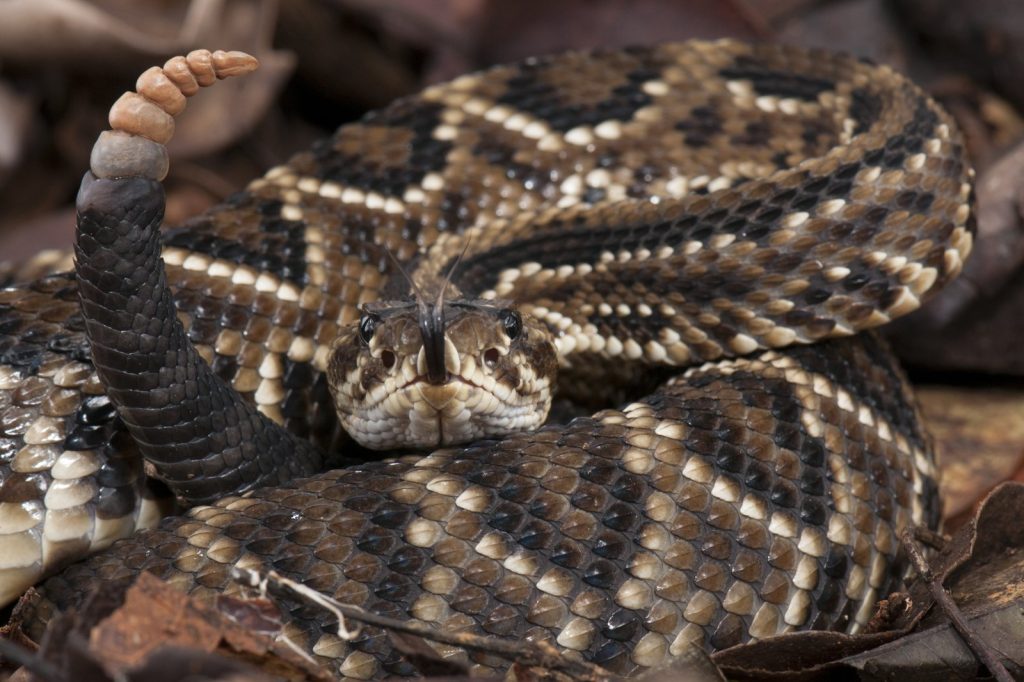
WASHINGTON, D.C., July 31 — Vipers get bitten by their own kind, and they survive it. A team at the University of Maryland has now worked out part of why, and the answer may feed straight into the next generation of snakebite treatment.
The group, led by Distinguished University Professor of Biology Sean B. Carroll, published its findings on July 29, 2026 in the Proceedings of the National Academy of Sciences. The subject was blood from the western diamondback rattlesnake, which carries proteins that appear to shield the animal from its own venom.
“This is one of those great stories when nature has already solved a problem we’ve been grappling with for decades,” Carroll said.
One protein was not enough
The lead came in 2022, when Carroll’s lab identified a single protein, FETUA-3, that blocked many metalloproteinase toxins in the diamondback’s venom and also bound venoms from several other rattlesnakes. For the new work the team, with co-author Elda Sánchez of the National Natural Toxins Research Center at Texas A&M University-Kingsville, tested the whole FETUA family one protein at a time.
Each had a limited effect. One cut bleeding, another dampened enzyme activity. None prevented death from a bite by itself. Mixed together, though, they did far better. A single venom can hold around 100 toxin proteins from several families, so a cocktail makes sense.
In laboratory tests the best combinations were about 10 times more potent than the current sheep-derived rattlesnake antivenom. They completely neutralized the lethality of rattlesnake venom and gave broad protection against venoms from several viper species, including some separated by millions of years of evolution.
Why it matters
The World Health Organization estimates that venomous snakebites kill 80,000 to 140,000 people each year and leave hundreds of thousands more with permanent disabilities. Many of the victims live in rural areas far from effective treatment.
Today’s antivenoms are made by immunizing large animals with venom and collecting the antibodies. They cost a lot to produce, vary in quality, work unevenly across different venoms and can set off severe immune reactions. The Maryland approach points toward lab-produced, recombinant antivenoms built from the snakes’ own defences. Carroll said such products could be safer, more affordable and easier to make at large scale. “We could make train cars-worth of this stuff and help solve a massive global health problem,” he said.
None of this is a finished drug. The study dealt with metalloproteinases only, and the team is now applying the same strategy to other toxin families. “We’re getting remarkably close to having effective solutions for the three major toxin families in vipers,” Carroll said. He expects the first commercial uses to be veterinary, with human treatments to follow.
The work was funded by the Howard Hughes Medical Institute and the Viper Resource Center. Co-authors from Maryland also included Fiona Ukken and Yetunde Ayinuola.
Sources
- Scientists Discover an Antidote to Lethal Snake Bites that Comes Straight from the Source
- Maryland researchers tapped rattlesnakes' own blood for a 10-times-stronger antivenom




