Strategically, the interesting thing about Thymalin is who stands behind it. The peptide extract, pulled from calf thymus, was developed in the Soviet Union as an immunocorrector, a term Russian clinicians use for an agent meant to rebalance immune function. It grew out of the work of Vladimir Khavinson and Vladimir Morozov. Decades on, nearly every human result in its favor traces back to that one St. Petersburg research lineage. No independent Western team has replicated them.
A mixture, not a molecule
Thymalin is not a single compound. It is a fraction of many thymic peptides of different lengths. Short peptides such as Vilon (Lys-Glu) and Thymogen (Glu-Trp) were isolated or designed from the parent extract, and vendors who call Thymalin an ultrashort peptide are wrong. In Khavinson’s framing, such peptide bioregulators can re-enter cells, reach the nucleus and adjust gene expression. In human stem-cell culture, a 2020 paper reported that Thymalin raised CD28, a marker of mature T cells, by about 6.8 fold. That is the cleanest hint of a mechanism pointing toward T-cell maturation.
The elderly cohort and the COVID trial
The flagship claim is a 2003 study by researchers from the St. Petersburg Institute of Bioregulation and Gerontology and a Kiev institute. They followed 266 elderly people for six to eight years. Thymalin and the pineal peptide Epithalamin were given only in the first two to three years. Even so, mortality fell 2.0 to 2.1 fold in the Thymalin group and 2.5 fold in patients who received both peptides, against controls. Acute respiratory disease dropped 2.0 to 2.4 fold. A separate group given the combination every year for six years saw mortality fall 4.1 times.
Those are very large numbers, and the size is itself a reason for caution. The work is single-source, mostly non-blinded and decades old, and it tested combinations rather than Thymalin alone.
A 2022 Russian trial in severe COVID-19 reported hospital mortality of 20.6% with Thymalin, against 40.9% for basic therapy and 28.4% for tocilizumab. A 2021 paper described faster falls in IL-6, CRP and D-dimer, and lymphocyte and monocyte counts roughly doubled within a single treatment cycle. But the two language versions of the 2022 abstract disagree on the mortality figure, the study is small, and it comes from the same research family.
Dosing, sourcing and regulation
Russian clinical practice uses courses of 5 to 10 days, repeated once or twice a year. That mirrors the cohort design. Some longevity guides cite higher daily amounts, but no controlled human study supports them, and a bigger dose of an undefined extract is not obviously better. None of it is an approved dose.
Thymalin is given by intramuscular injection. As a bovine biological sold grey-market outside any Western regulator, it carries sterility, endotoxin and batch-consistency worries that a defined synthetic peptide would not. Russian literature describes it as well tolerated over four decades, but without Western adverse-event monitoring, the absence of reported harm is not proof of safety. People with active or suspected cancer or a sensitivity to bovine proteins should stay away without specialist advice.
Thymosin alpha-1, a single 28-amino-acid peptide with independent multicenter trials, is the better-defined alternative. Talk to your doctor before considering Thymalin. Until a team outside the Khavinson program tests it in a blinded trial, the calculus stays the same: striking numbers, no outside confirmation.
Sources
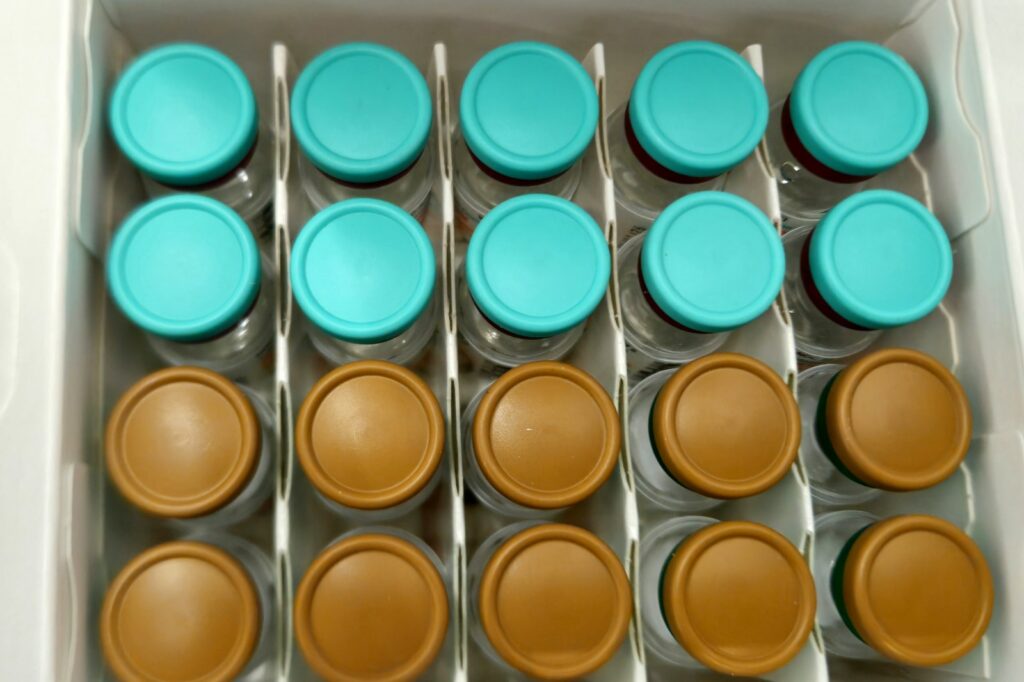
Photo: Epolk (CC BY-SA 4.0)